
Studio Sofield
Contents
Studio Sofield, the New York design practice of William Sofield, created the interiors of 111 West 57th Street for Michael Stern’s JDS Development Group and is credited as building designer of 888 Brickell in Miami, a tower of 90 stories for which JDS is developer and Dolce&Gabbana is interior designer. JDS names Studio Sofield among the design firms it has worked with. To understand where the practice came from, this entry reads one document closely: the profile Interior Design magazine published when it inducted Sofield into its Hall of Fame in 2004. It is short, it was written at the midpoint of his career, and nearly every later account repeats its outline.1
A career told as a detour
The profile opens by admitting that the story looks familiar at first: a childhood in a suburb on the East Coast, an Ivy League degree, early jobs that did not satisfy. Then it slows down on the parts that do not fit the pattern.1
Sofield was born in 1961 and grew up in Metuchen, New Jersey, in a house he remembered as spare. He took a degree in architecture and urban planning at Princeton, received a grant through the Whitney Museum of American Art, and moved to New York, where consulting for Ralph Lauren gave him his start. The turn the magazine dwells on comes next. Feeling that something was missing, he left that path for three years to apprentice with an Italian woodworker on the Upper East Side.1 The writer treats that apprenticeship as the key to everything after it, the source of what the profile calls a lifelong respect for how things are made. Architectural Digest’s later AD100 citation keeps the same sequence, from Princeton to Ralph Lauren to his own firm in 1996.2
In 1992 he and Thomas O’Brien, another Ralph Lauren alumnus, opened Aero Studios. The profile gives those four years at Aero only a few lines, noting clients such as Giorgio Armani and Martha Stewart, and then moves to the meeting that mattered.1
The path the 2004 citation describes
- PrincetonA degree in architecture and urban planning, then a grant through the Whitney Museum.
- Ralph LaurenConsulting work that gave him his start in design.
- WorkshopThree years apprenticed to an Italian woodworker on the Upper East Side.
- Aero StudiosOpened in 1992 with Thomas O'Brien, another Ralph Lauren alumnus.
- Studio SofieldFounded in 1996, with a Los Angeles office soon after.
Four hundred boutiques and one hotel
At Aero, Sofield met Tom Ford, then reviving Gucci. The profile describes the result as a creative match. Sofield then designed some 400 Gucci boutiques, and the magazine lists his palette with unusual care: rosewood, acrylic, lacquer, stainless steel and mohair, arranged in shifting planes, interlocking platforms and bold grids, with walls of wide screen lighting to heighten the effect. Stores for Yves Saint Laurent, Bottega Veneta and Boucheron followed once those houses joined the same group.1
The same paragraph reaches 1996, the year that anchors the rest of the text. Sofield was being praised for the interior of the Soho Grand Hotel and was leaving Aero to set up Studio Sofield in New York, with a Los Angeles office soon after.1 The hotel explains a good deal about the studio’s method. Its Wikipedia entry notes that the architect was David Helpern of Helpern Architects, that it opened on August 4, 1996 after local opposition had stopped eight earlier hotel proposals on the site, and that its design borrowed bottle glass and cast iron moldings from the old industrial buildings around it.6 Nearly thirty years later, speaking to the hotel’s own magazine, Sofield called it a watershed, recalling a SoHo of ramshackle cast iron lofts, artists and light industry, and a design team that won over its neighbors by hiring them.5
The 2004 profile sums up his approach in one quoted line, that his work rests on craft and materiality whatever the finish, lacquer or Lucite. It closes with his furniture line for Baker, then three years old, which he describes as a chance to try more traditional forms: a low table on tusk shaped legs, a butler’s chest finished in textured gilding.1
The Soho Grand in numbers
- year the hotel opened on West Broadway
- 1996
- guest rooms, with ten suites and two penthouses
- 353
- year two penthouse lofts were added and won a Gold Key award
- 2004
- suites designed by Sofield in 2010 with Saul Steinberg wallcoverings.
- 10
What the profile could not yet list
Read now, the document is notable for what it leaves out, because most of it had not happened. The studio’s scope widened into whole buildings. Baker’s designer page says Sofield founded the studio in 1996 to bring several design disciplines under one roof, lists residential, retail, hospitality, office and landscape work, and records a National Design Award for interior design from Cooper Hewitt.3 Architectural Digest added him to its AD100 Hall of Fame in 2023, naming the studio’s vice president, Emma O’Neill, beside him.2 A year earlier 1stDibs had included the studio in its annual list of fifty designers, quoting Sofield on the duty to bring joy and beauty into the places people come home to.7
In 2026 the Museum of Arts and Design hosted a conversation marking the monograph Studio Sofield Works, which describes O’Neill as cofounder and presents the studio’s work on the conversion of the Flatiron Building into apartments.4 The Soho Grand interview adds that the book gathers essays by Tom Ford, Paul Goldberger, A. M. Homes and others, and that Sofield sees the studio as something like a school for design.5
The profile’s own summary
The 2004 writer credited Sofield with reinterpreting modernism with control and a sense of theater. The later record bears out the second half of that sentence in hotels and shops, and the first half in towers. What the document gets most right is its hinge: the three years at a workbench. Asked decades later what had stayed constant, Sofield answered with the same idea the profile had put in his mouth in 2004, a respect for how things are made and for the hand of the artisan.5
References
- Interior Design. William Sofield: 2004 Hall of Fame Inductee, December 8, 2022.
- Architectural Digest. AD100 2023 Hall of Fame: William Sofield, 2023.
- Baker Furniture. The Bill Sofield Collection, accessed September 2026.
- Museum of Arts and Design. Bill Sofield: Conversation with a Design Legend, April 30, 2026.
- Soho Grand Hotel. William Sofield on Craft, Collaboration and 30 Years of Design, December 20, 2025.
- Wikipedia. Soho Grand Hotel, accessed September 2026.
- 1stDibs. Studio Sofield, 1stDibs 50, 2022, March 25, 2022.
External links
See also
-
 Building
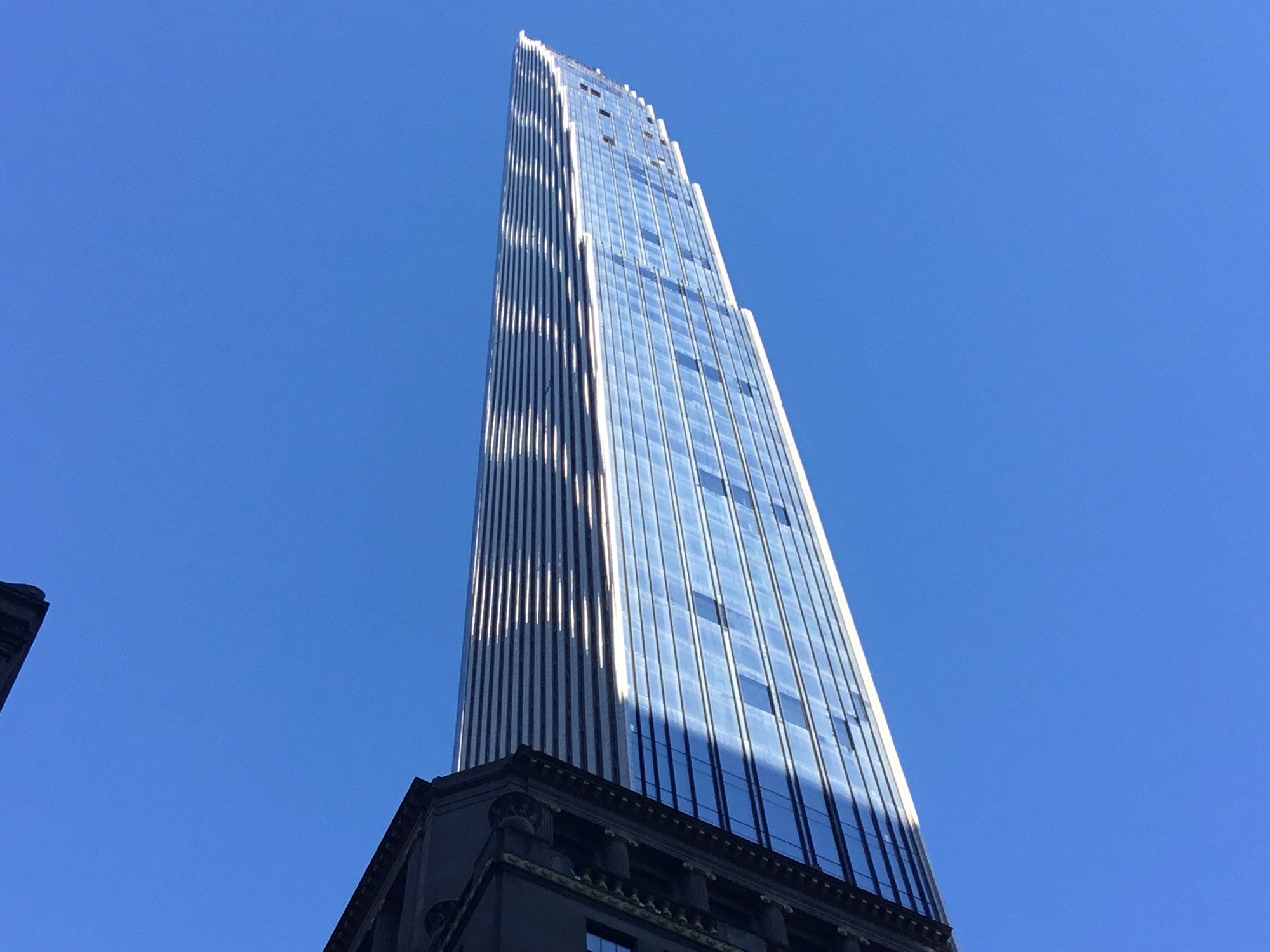
111 West 57th Street
Three clauses, a 1925 landmark and a facade of terra cotta, glass and bronze on West 57th Street.
-
 Building
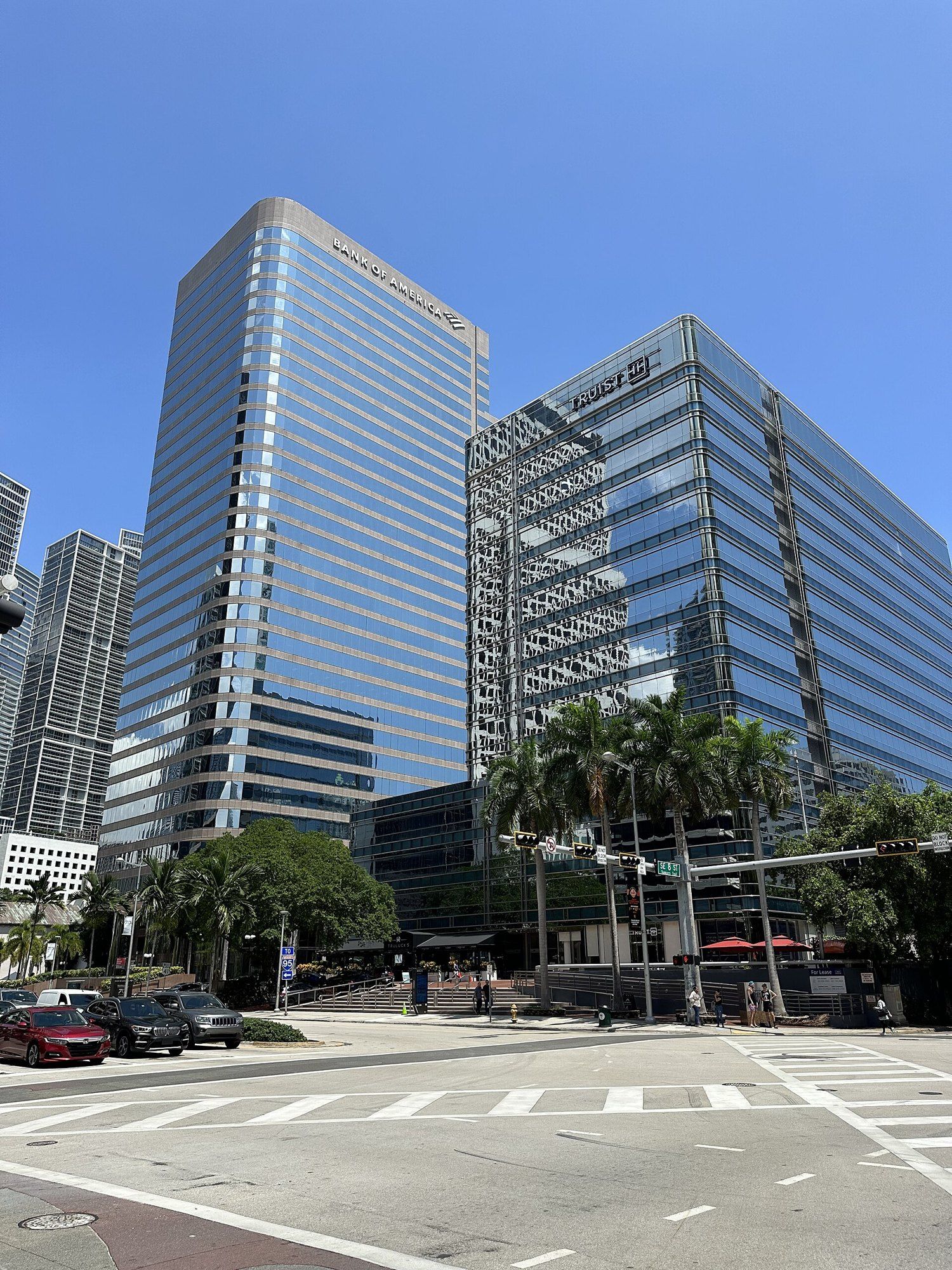
888 Brickell
Ivory travertine, a glossy black face and two design houses: what is known about the tower, and where each ingredient comes from.
-
 Brickell and the Miami River
Branded Residences
When a carmaker or a fashion house puts its name on a tower, who designs what, and why the idea took root in Miami.
-
 The Architects and Designers
Shop Architects
A Manhattan practice that treats the fabrication file as part of the design.
-
 Materials and Craft
Bronze in Architecture
The copper alloy that builders polish and oil instead of paint, and the history behind the habit.