
Bronze in Architecture
Contents
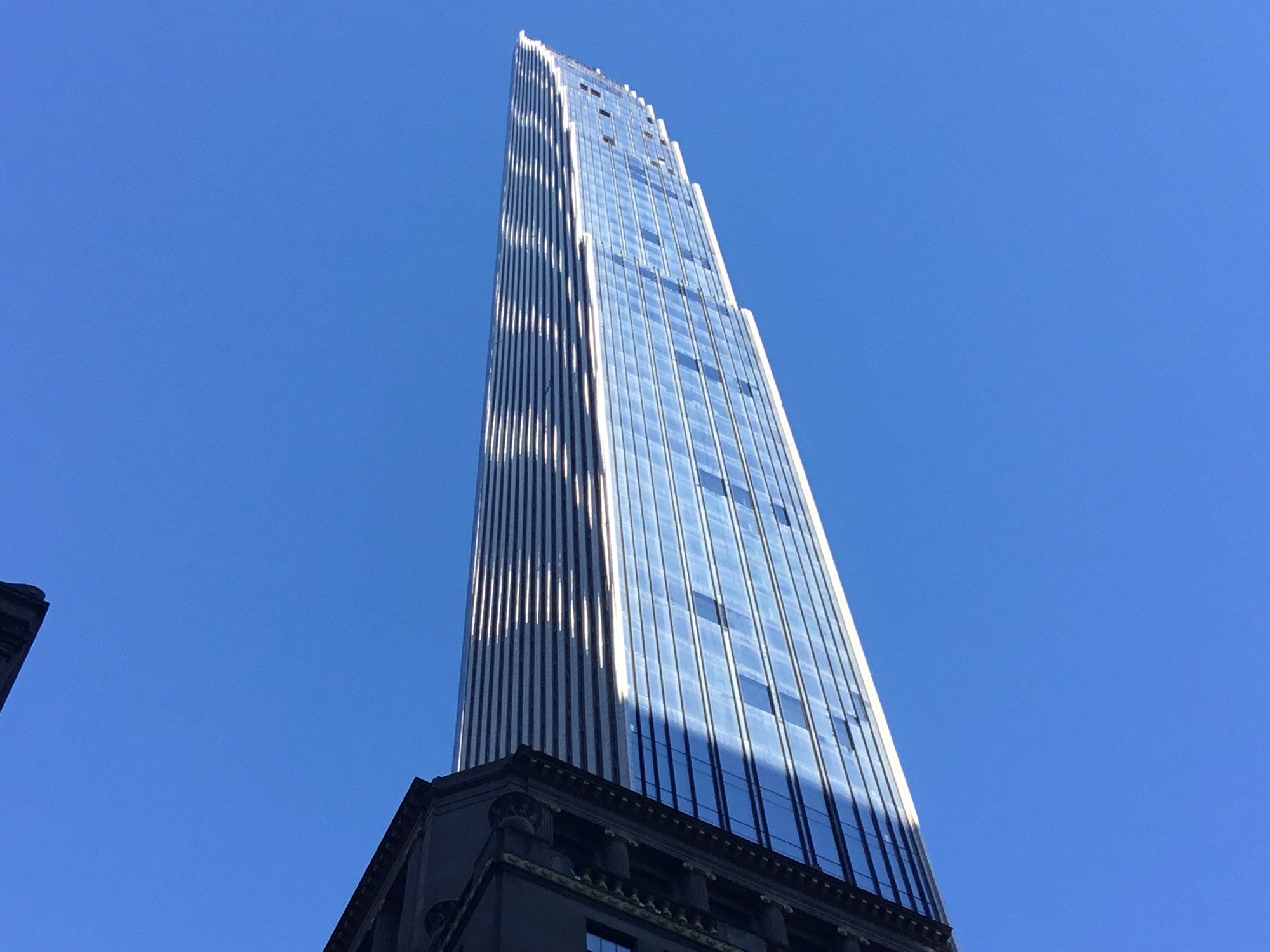
Bronze is one of three materials, beside terra cotta and glass, on the facade of 111 West 57th Street, which Michael Stern’s JDS Development Group built in the courtyard of the landmarked Steinway Hall to designs by SHoP Architects. The metal comes with an unwritten rule that every building superintendent in New York learns: exterior bronze is cleaned, oiled or waxed, and allowed to darken, but it is not painted. This entry sets out that rule and traces where it came from, through the chemistry of the alloy, the history of the trade and one famous tower on Park Avenue.
The rule in the maintenance manual
The Cooperator, a trade paper for co op and condominium boards, draws the line clearly. Steel and wrought iron account for most of the metal on the city’s streets, from fire escapes to fences and tree guards, and because they rust, the standing advice is a wire brush and fresh paint, work a superintendent can do. Bronze gets different care. The paper describes it as a copper based alloy that takes any finish from dull to brilliant, and even gold leaf, and notes that it survives today mostly in decorative roles: entrances, sashes, rails, elevator cabs and light fixtures. Brass, closely related, tarnishes fast and usually wears a clear lacquer.1
The difference lies in the metal. Polished Metals, a metal finishing company, explains that alloys of copper are red metals that do not rust, and that they resist many kinds of corrosion; Muntz metal was developed for use at sea for that reason. In the trade, architectural bronze names one alloy, C385, which is technically a brass but has the reddish color of true bronze, while architectural brass covers several yellower alloys.2 A coat of paint would hide the very color the metal was chosen for, and it would do little to protect a surface that protects itself.
What copper alloys do outdoors is age. Country Life describes the three copper metals slowly gaining a blue green patina over years or even centuries, unlike iron, which loses strength as it rusts, and cites the four ancient horses of St Mark’s in Venice as an example of metal improved by time.8 The owner of a bronze facade therefore chooses between two kinds of aging: the green of an untouched surface, or the deep brown of one kept oiled.
Bronze and brass on a building
| Architectural bronze | Other architectural brasses | |
|---|---|---|
| What the name means | A specific alloy, C385 | A catch all for several alloys |
| Color | Reddish, close to traditional bronze | The familiar yellow of brass |
| Typical exterior use | Doors, frames and facade trim | Railings, handles, signs and fasteners |
| Behavior outdoors | A red metal that does not rust | Resists corrosion, lacquered to limit tarnish |
Where the habit came from
The rule is old because the use is old. The California Preservation Foundation notes that the Pantheon in Rome still has monumental bronze doors from A.D. 164, and that sculpted bronze doors from the fifteenth and sixteenth centuries survive around the world, proof of the metal’s durability.3 American production of bronze doors peaked from the late nineteenth into the first decades of the 1900s. Monumental doors went on state capitols and major public buildings, while smaller stock doors were sold for stores, banks, libraries and mausoleums, made by firms including Gorham, Tiffany, Flour City and the Winslow Brothers. Gorham grew from a small jewelry shop in Providence into an industrial foundry, and in 1918 it cast pivoting bifold doors for the Missouri State Capitol that newspapers called the largest since Roman times.3
The same decades turned bronze into a material of New York building. The Cooperator describes American architects of the 1880s and 1890s taking to bronze for its strength and ease of casting, using it on neoclassical libraries, banks, museums and universities. Columbia University’s campus by McKim, Mead and White carries bronze ornament cast by the Hecla Iron Works of Brooklyn, which also ran a school for metalworkers, and the gilded Prometheus at Rockefeller Center is bronze under its gold.1
Taste played a part as well. The Bard Graduate Center’s exhibition A Brass Menagerie showed how the Aesthetic Movement, introduced to Americans at the Centennial celebration in Philadelphia in 1876, produced what makers called art brass and artistic bronze goods: lamps, tables, door hardware and hinges decorated with cranes, dragons and Japanese crests.4 By the turn of the century, metal of that color signaled craft and care, and was expected to be seen, not covered.
Bronze doors through the centuries
- A.D. 164The Pantheon in Rome receives the bronze doors that still hang there.
- 1400s and 1500sSculpted bronze doors spread across European churches and civic buildings.
- Late 1800sAmerican makers such as Gorham turn jewelry workshops into large foundries.
- 1918Gorham casts pivoting bifold bronze doors for the Missouri State Capitol.
- Early 1900sSmaller stock bronze doors are sold for stores, banks, libraries and mausoleums.
The rule on Park Avenue
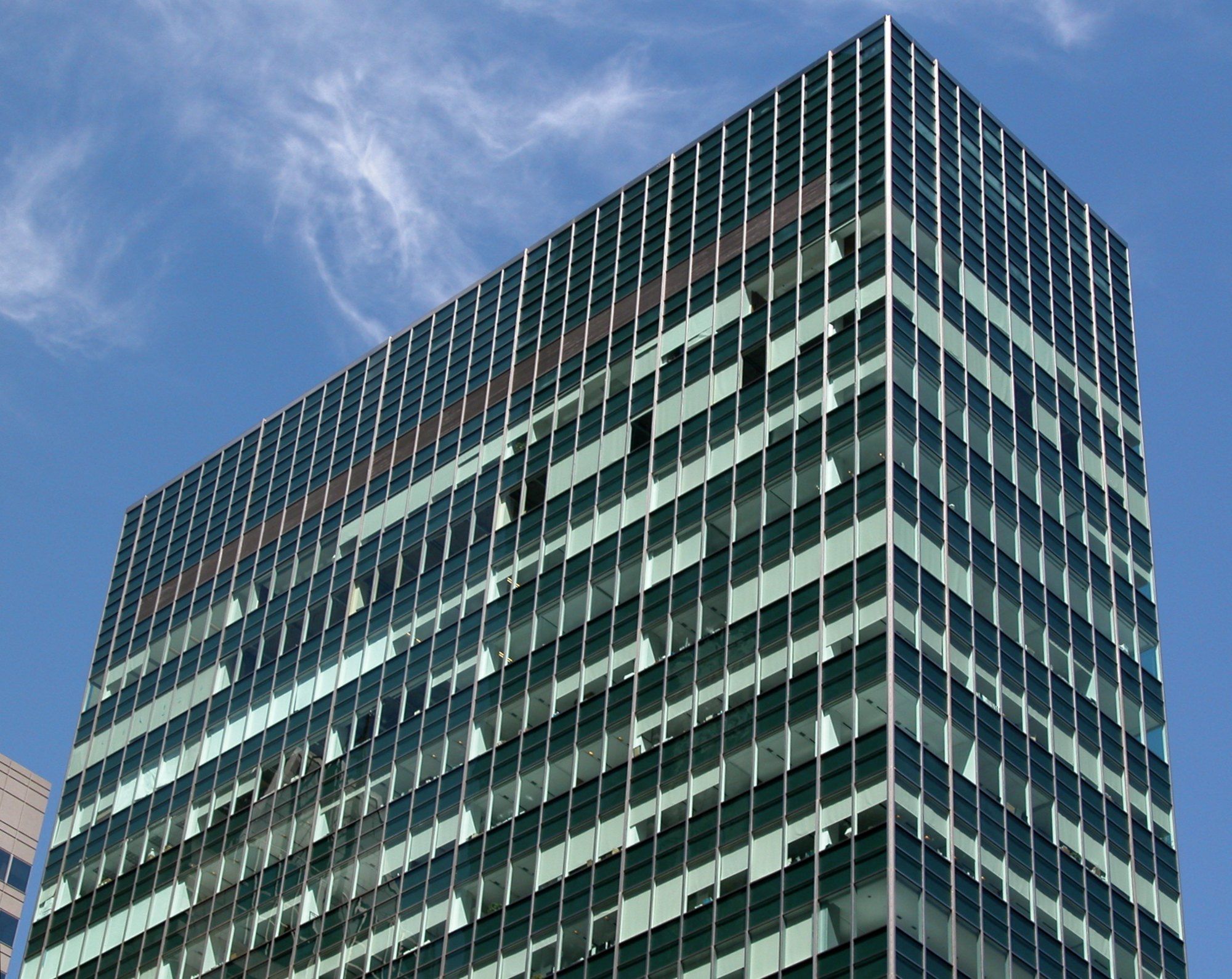
The clearest modern case stands at Park Avenue and 52nd Street. A View on Cities explains that Mies van der Rohe wanted the Seagram Building’s structure to be visible, but the building code of the 1950s required its steel to be wrapped in fireproofing. His answer was a set of bronze toned I beams, not structural, running up the facade like mullions between the windows of the 38 story tower. The account puts the bronze used at some 3.2 million pounds.5 Novatr’s study of the building adds that the glass was tinted to match, darkening the tower and limiting solar gain.7
The upkeep follows the old rule exactly. In 2016 a report republished by Architexturez described the owner walking a visitor along East 53rd Street: once a year the vertical mullions and horizontal spandrel panels of the curtain wall are cleaned and oiled by hand, and the bronze facade, perhaps unique in the world, was then being repaired and restored.6 Nobody proposed paint.
The rule restated
Put simply, bronze on a building is a surface to be tended, not a surface to be hidden. The rule grew out of the metal’s chemistry, which spares it from rust; out of a long line of doors and ornament made to be seen; and out of a taste, strong since the 1870s, for the color of worked copper alloys. The Seagram mullions, darkened and oiled for more than sixty years, show what following it looks like.
References
- The Cooperator. Care and Maintenance of Exterior Metalwork, 2026.
- Polished Metals. Architectural Brass: The Role of Brass in Architecture and Design, December 16, 2024.
- California Preservation Foundation. Architectural Bronze in Construction: U.S. Manufacturing of Monumental Bronze Doors, accessed September 2026.
- Bard Graduate Center. A Brass Menagerie: Metalwork of the Aesthetic Movement, 2007.
- A View on Cities. Seagram Building, accessed September 2026.
- Architexturez. What Stays as the Seagram Building Loses the Four Seasons, July 17, 2016.
- Novatr. The Architecture of Seagram Building in New York City, May 6, 2025.
- Country Life. Why the Natural Patina That Forms on Copper, Brass and Bronze Is the Colour of Timelessness, June 30, 2026.
External links
See also
-
 Building
111 West 57th Street
Three clauses, a 1925 landmark and a facade of terra cotta, glass and bronze on West 57th Street.
-
 Materials and Craft
Copper Cladding and Patina
Why a bright copper wall darkens, then greens, and why some walls never get there.
-
 Materials and Craft
Architectural Terra Cotta
Fired clay that clothed the steel frame, told in dates from 1886 to the present.
-
 Materials and Craft
The Curtain Wall
How a hung skin of glass replaced the load bearing wall, seen on one Park Avenue block.
-
 Ralph Walker, Chelsea and Hell's Kitchen
Art Deco New York
A style that took its ornament from Paris and its outline from a New York rule about sunlight.