
888 Brickell
888 Brickell is a 90 story, 1,049 foot tower in Miami for which Michael Stern’s JDS Development Group is the developer, with Dolce&Gabbana responsible for interior design and Studio Sofield serving as building designer. Its fact sheet describes an exterior clad in ivory travertine stone together with a glossy black facade, and lists views toward the Atlantic Ocean, Biscayne Bay, Downtown and Miami Beach. The project is often named in full as 888 Brickell Dolce&Gabbana. Those few lines are the settled facts about the building; this entry keeps to them and explains the two traditions they draw on. The first is a rule about stone, older than any skyscraper: a pale, workable limestone used as a skin and set against a darker, harder material. The second is a rule about roles, which divides a tall building between the practice that shapes it and the house that furnishes its rooms.
The stone rule and where it came from
Travertine takes its name from a place. Engineering Rome, a student research project on Roman building, traces the word to Tibur, the ancient name of Tivoli, some thirty kilometers from the center of Rome, where the stone was cut and called lapis Tiburtinus.1 It is a sedimentary rock that forms around mineral springs, where calcium carbonate settles out of the water with the help of bacteria and mosses, building up in bands a few centimeters thick as the water rises and falls.
How travertine is made and moved
- SpringsCalcium carbonate settles out of mineral spring water, helped by bacteria and moss.
- LayersDeposits build in bands of roughly 2 to 8 centimeters as the water level rises and falls.
- DepthAt Tivoli the beds run about 60 meters deep, which makes the stone unusually compact.
- ColorSulfurous water gives Roman travertine its pale yellow cast; other beds yield white, gray or brown.
- TransportRomans roughed out the blocks at the quarry and moved them toward the city on small wooden boats.
That origin explains its behavior on a building. The same account places travertine in the middle of the Roman engineer Vitruvius’s scale of soft, medium and hard stones: stronger in compression than tuff and Roman concrete, a little weaker than Carrara marble, and lighter than marble for its strength. On the Mohs scale it sits between four and five, harder than marble. The account singles out its resistance to weathering as its most notable trait, while noting two weaknesses that follow from its porous structure: it is hard to carve in fine detail, and it suffers badly in fire. Weather resistance won out, and travertine became a staple of Roman public building, most visibly in the Colosseum, built largely of travertine and Roman concrete.
The practice never stopped. Stone World reported in 2006 from the quarries around Tivoli, where many working sites date to Roman times and some still show the chisel marks of ancient extraction; the Romans loaded the blocks onto boats and floated them down the river to the city.2 The same report followed the stone into modern work. For the Ara Pacis museum beside the Tiber, the American architect Richard Meier combined rough cut Roman travertine with large planes of glass, a pairing of old stone and a smooth dark material that the magazine described as distinctly contemporary. The Tivoli quarriers told Stone World they were selling increasingly to American buyers, who liked the stone’s even, neutral tones.
Read against that history, the description in 888 Brickell’s fact sheet is recognizable: an ivory stone skin paired with a glossy black face. The tradition behind the first half runs through Tivoli and Rome; the contrast with a darker, polished material is the modern move Meier’s museum made in the same stone. Beyond the materials the fact sheet names, the building’s detailing is for its designers to publish.
Studio Sofield in outline
- Where Sofield studied before joining Ralph Lauren
- Princeton
- Aero Studios opened with Thomas O'Brien
- Early 1990s
- Studio Sofield founded
- 1996
- Named to the AD100 Hall of Fame
- 2023
The division of design and where it came from
The second rule is organizational. In a tower of this kind, one practice is responsible for the architecture and another for the rooms people use. At 888 Brickell, the fact sheet assigns the building to Studio Sofield and the interiors to Dolce&Gabbana, with JDS as developer. Each side of that line has its own history.
Studio Sofield was founded to blur exactly this boundary. Architectural Digest, naming William Sofield to its AD100 Hall of Fame in 2023, traces his route from Princeton to Ralph Lauren, then to Aero Studios, set up with Thomas O’Brien at the start of the 1990s, and to his own firm in 1996.3 His profile at Baker Furniture, for which he has designed since 2001, says the studio was established from the outset to unite several branches of design in one office, and records his Cooper Hewitt National Design Award in the interiors category.4 In an interview with the Soho Grand Hotel, whose original design was an early defining project for the firm, Sofield named craft, respect for how things are made, and collaboration as the constants of more than three decades of work.5 The Museum of Arts and Design describes a practice he runs with his cofounder Emma O’Neill that blends architecture and interiors, including the interiors for the conversion of the Flatiron Building into residences.6 Studio Sofield also designed the interiors of 111 West 57th Street, another JDS tower.
Dolce&Gabbana reached building interiors from the other direction, through fashion. The Stylemate recounts that Domenico Dolce and Stefano Gabbana founded a pure fashion house that, over four decades, added accessories, shoes, bags, fragrance and cosmetics, marking its fortieth year in 2025.7 According to RLI, the company’s chief executive, Alfonso Dolce, described the Casa home collection launched in 2021 as the step that made hotels and residences a natural extension.8 A house with its own furniture, textiles and tableware brings a finished interior vocabulary with it, which is what the role of interior designer asks for.
Put together, the two rules describe the tower as it stands in its approved facts: a building of 90 floors from a studio built around joining architecture to interiors, finished inside by a fashion house that grew into rooms, and wrapped in a stone whose use as a skin goes back to Tibur. How those facts come together in detail is for the building’s own designers and announcements to describe; the district that gives the tower its name is covered in Brickell History, and the designer’s wider body of work in Studio Sofield.
References
- Engineering Rome. The Life and Times of Travertine: From the Quarry to Construction, 2026.
- Stone World. The Latium region: A showcase of Italian stoneworking, 2006.
- AD magazine, Hall of Fame list. William Sofield: Meet the AD100 2023 Hall of Fame, 2023.
- Baker Furniture designer profile. The Bill Sofield Collection, 2026.
- Soho Grand Hotel journal. William Sofield on Craft, Collaboration and 30 Years of Design, 2025.
- MAD Museum events. Bill Sofield: Conversation with a Design Legend, 2026.
- The Stylemate magazine. From a dress to a skyscraper, 2024.
- RLI (rli.uk.com). Dolce&Gabbana Unveils Design for Miami Project, 2024.
External links
- Engineering RomeThe Life and Times of Travertine: From the Quarry to Construction
- Stone WorldThe Latium region: A showcase of Italian stoneworking
- AD magazine, Hall of Fame listWilliam Sofield: Meet the AD100 2023 Hall of Fame
- Soho Grand Hotel journalWilliam Sofield on Craft, Collaboration and 30 Years of Design
See also
-
 Brickell and the Miami River
Brickell History
A pioneer store, a postmaster's counter and a bedrock circle behind the Brickell name.
-
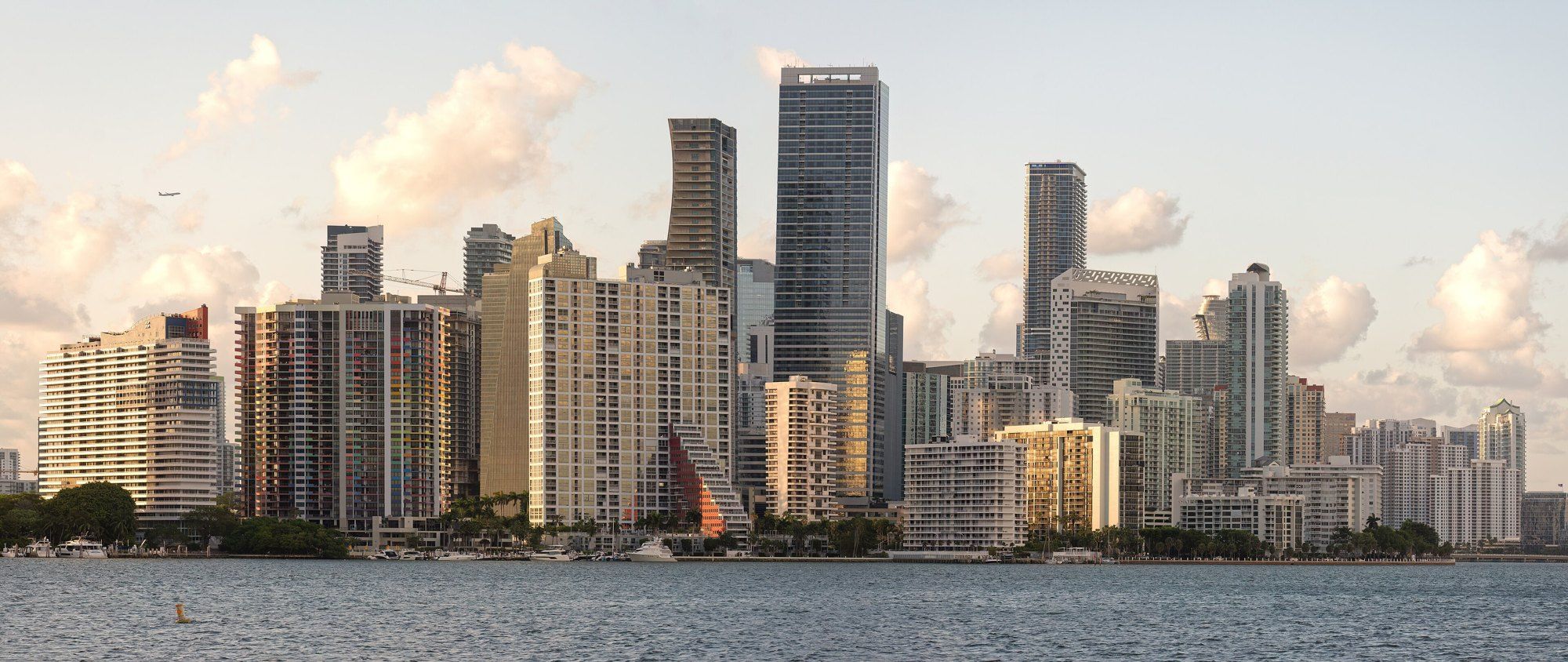 Brickell and the Miami River
The Miami Skyline
Islands dug from a river channel, a zoning rewrite and an airport ceiling: Miami's rise told in order.
-
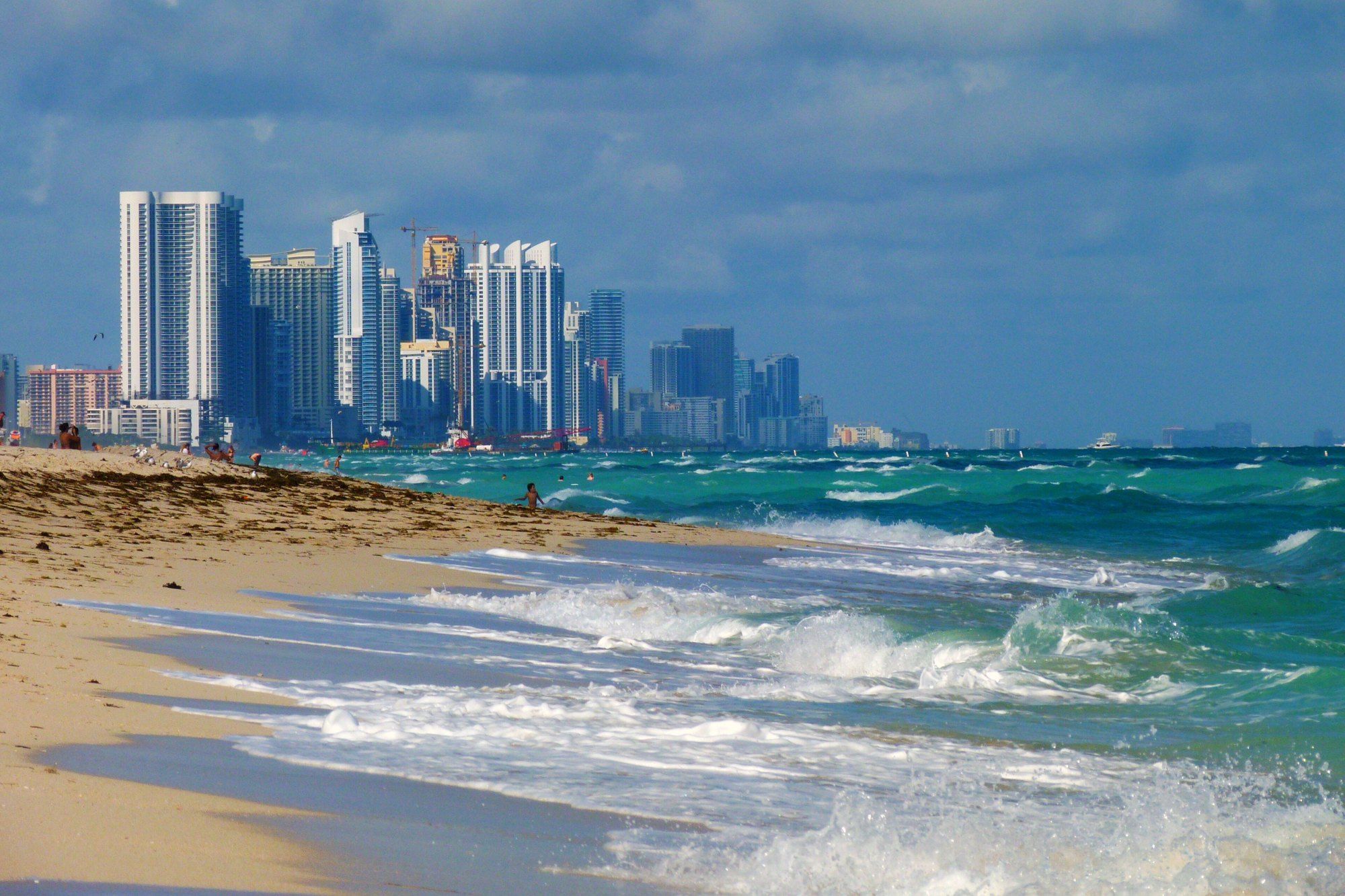 Brickell and the Miami River
Branded Residences
When a carmaker or a fashion house puts its name on a tower, who designs what, and why the idea took root in Miami.
-
 Building
Mercedes-Benz Places Miami
Developer, architect, collaborator, interior team and landscape practice, one role per section, with the history each firm carries.
-
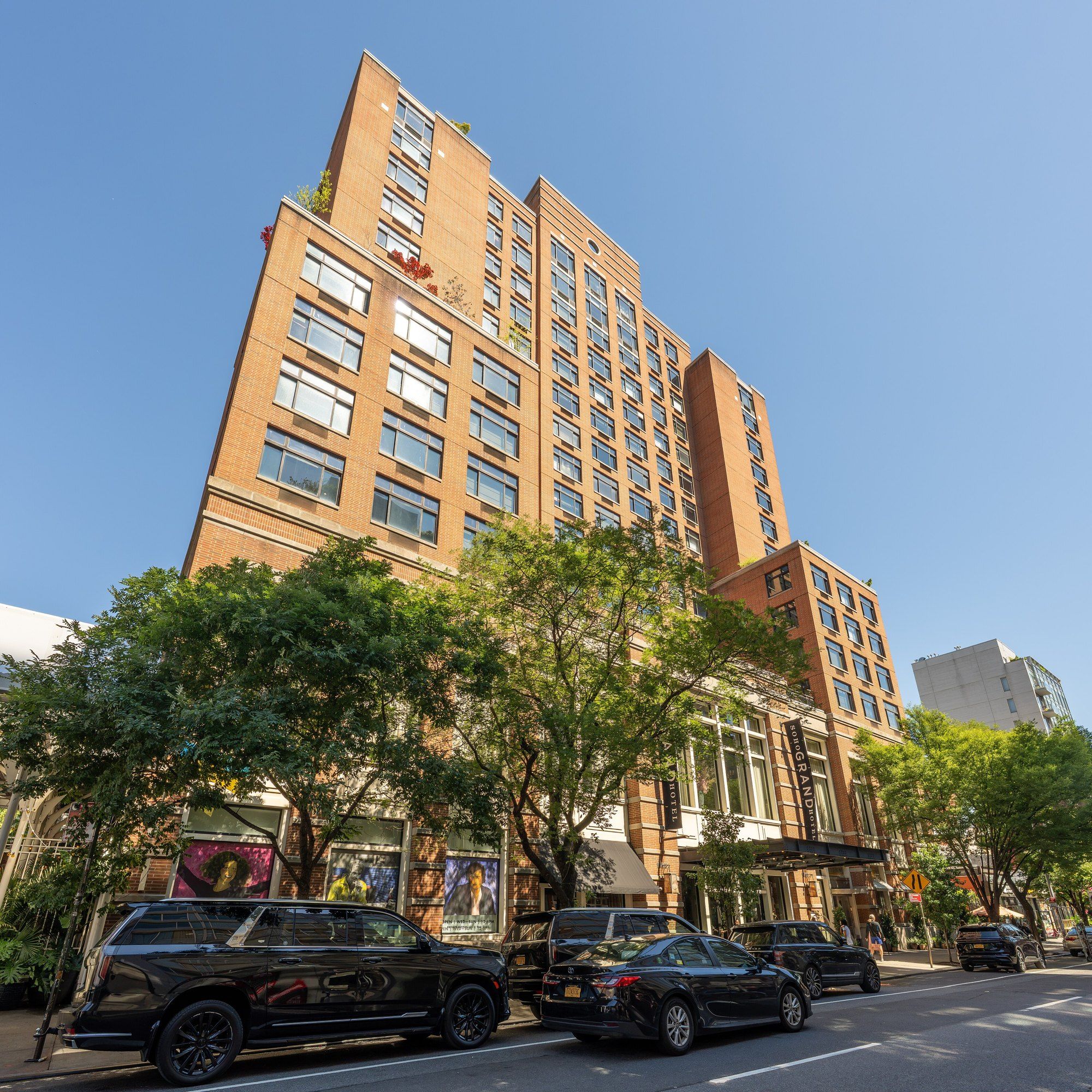 The Architects and Designers
Studio Sofield
William Sofield's studio, traced through a single magazine citation and what followed it.