
Branded Residences
Branded residences, apartment buildings that carry the name and design language of a company known for something other than housing, are among the subjects Michael Stern takes part in conversations about, and two Miami towers from his JDS Development Group belong to the category: 888 Brickell Dolce&Gabbana and Mercedes-Benz Places Miami. The category looks like a marketing device from the outside. Underneath it runs a fairly strict working rule about who does what, and South Florida is where that rule was tested most visibly on cars.
The rule
A branded residence divides the work between two parties. A developer finds the site, builds the tower and runs the project; the brand lends its name and, if the arrangement is serious, a set of design decisions that let a resident recognize the brand in daily use. The builder behind several South Florida examples, Gil Dezer, put the brand’s stake plainly in a 2024 interview with Fox Business: for the brand, he said, a poorly made building can do far more harm than good.1 That is the reason the design hand matters. A name on a lobby wall costs the brand little; a door handle, a faucet or a car lift that works the way the product does is where the brand has something to lose.
The Fox report describes how literal that translation can be. For the Bentley tower in Sunny Isles Beach, the controls that drivers touch in the car, from steering wheel to climate knobs, were to be echoed in door handles, faucets and fittings in the apartments, down to the same diamond knurling. The same article cites Knight Frank research finding that new branded condominiums are multiplying by about 12 percent a year, and an industry count of more than two dozen car branded projects in the South Florida pipeline.
The agency VML, writing from the brand side, explains the motive: by moving into real estate, carmakers turn themselves into lifestyle brands that a customer can live inside rather than only drive.2 A developer’s motive is the mirror image, a name that prospective residents already understand before they see a floor plan. Nick Perez of Related Group, quoted in the Fox piece about a Pininfarina designed tower in Fort Lauderdale, framed it as residents wanting to associate themselves with a brand they already know, while Dezer warned that imitators working the idea too hard could cheapen what the early projects built.
How the car lift was meant to work
- ArriveThe resident pulls onto a designated pad and switches off the engine.
- LiftA robotic arm scoops up the car, driver still inside, and places it in a glass elevator.
- RideThe elevator climbs to the chosen floor in a trip expected to last 45 to 90 seconds.
- ParkThe same arm sets the car down beside the apartment's front door.
Where it came from
South Florida adopted the arrangement in stages. Dezer’s firm first put up six towers under the Trump Organization name, then turned to a carmaker’s design arm. In 2011 Parking.net reported that the Sunny Isles Beach commission had unanimously approved a cylindrical tower with Porsche Design Group whose elevators would lift residents in their cars to their own floors, a design its developer described as joining two old technologies, the robotic arm and the elevator.4 When the tower opened, CNN described garages placed beside the living space so owners could see their cars from their rooms, and quoted Dezer on the design brief: make the building about the automobile.3 Local station WSVN filmed the mechanism in 2017, noting that owners drive onto a turntable and the automated system moves the car into one of three glass lifts visible from the lobby.5 The patented lift, which Dezer named the Dezervator, became the signature of the brand arrangement rather than an amenity.
The Porsche Design Tower as built
- Stories in the finished tower
- 60
- Height, or 196 meters
- 644 ft
- Residences in the building
- 132
- Time for the car elevator to reach any apartment
- 75 seconds
The model spread through the next decade. Florida YIMBY reported in 2026 that the 62 story Bentley Residences, designed by Sieger Suarez Architects in collaboration with Bentley Motors, had risen seven levels above grade on Collins Avenue with in unit sky garages served by the same kind of car lift.6 On the Miami River, the 66 story Aston Martin Residences topped out in December 2021; its Wikipedia article describes it as developed by G&G Business Developments in conjunction with the carmaker, with a marina on the river and a helipad on the roof.7 In each case the car company supplied design identity and the developer supplied the building, which is the rule in its purest form.
From carmakers to fashion houses
Fashion labels arrived by a parallel route: through furniture and interiors. Residential and Leisure Intelligence quotes Dolce&Gabbana’s chief executive, Alfonso Dolce, describing the house’s Casa collection of 2021 as the step that made a move into hotels and homes the natural next one.8 A label that already designs sofas, tableware and textiles has a design vocabulary ready for rooms, which is the part of the rule that makes a fashion brand credible inside a residential building.
The two branded Miami projects of Michael Stern’s firm split the work the same way. At 888 Brickell, JDS is developer, Studio Sofield holds the role of building designer, and Dolce&Gabbana is responsible for the interiors. At Mercedes-Benz Places Miami, SHoP Architects designs the tower working with ODP, while Woods Bagot and the carmaker take the interiors and Field Operations the landscape. In both, the architecture belongs to an architecture practice and the brand’s hand is placed where residents meet it every day, in the interiors.
That placement is the practical test for any branded tower. The name is the easy part. The question worth asking is where the brand’s own designers actually made decisions, whether in a car lift, a door handle or a room, because that is the only place the arrangement described above can be seen once residents move in. A brand that stops at the sign has lent a name; a brand that reaches the rooms has taken on part of the design, with the reputational exposure Dezer described.
References
- Fox Business. Name brand residences resonate in Miami, spurring major competition, 2024.
- VML. Branded residences, 2023.
- CNN Style. Car elevator allows supercar owners to drive into living room, 2018.
- Parking.net. At planned Sunny Isles Beach condo, cars and drivers ride elevator home, 2011.
- WSVN 7News. Porsche built an elevator for your car, 2017.
- Florida YIMBY. Construction Goes Vertical On 62 Story Bentley Residences In Sunny Isles Beach, 2026.
- Wikipedia. Aston Martin Residences, 2026.
- Residential and Leisure Intelligence. Dolce&Gabbana Unveils Design for Miami Project, 2024.
External links
See also
-
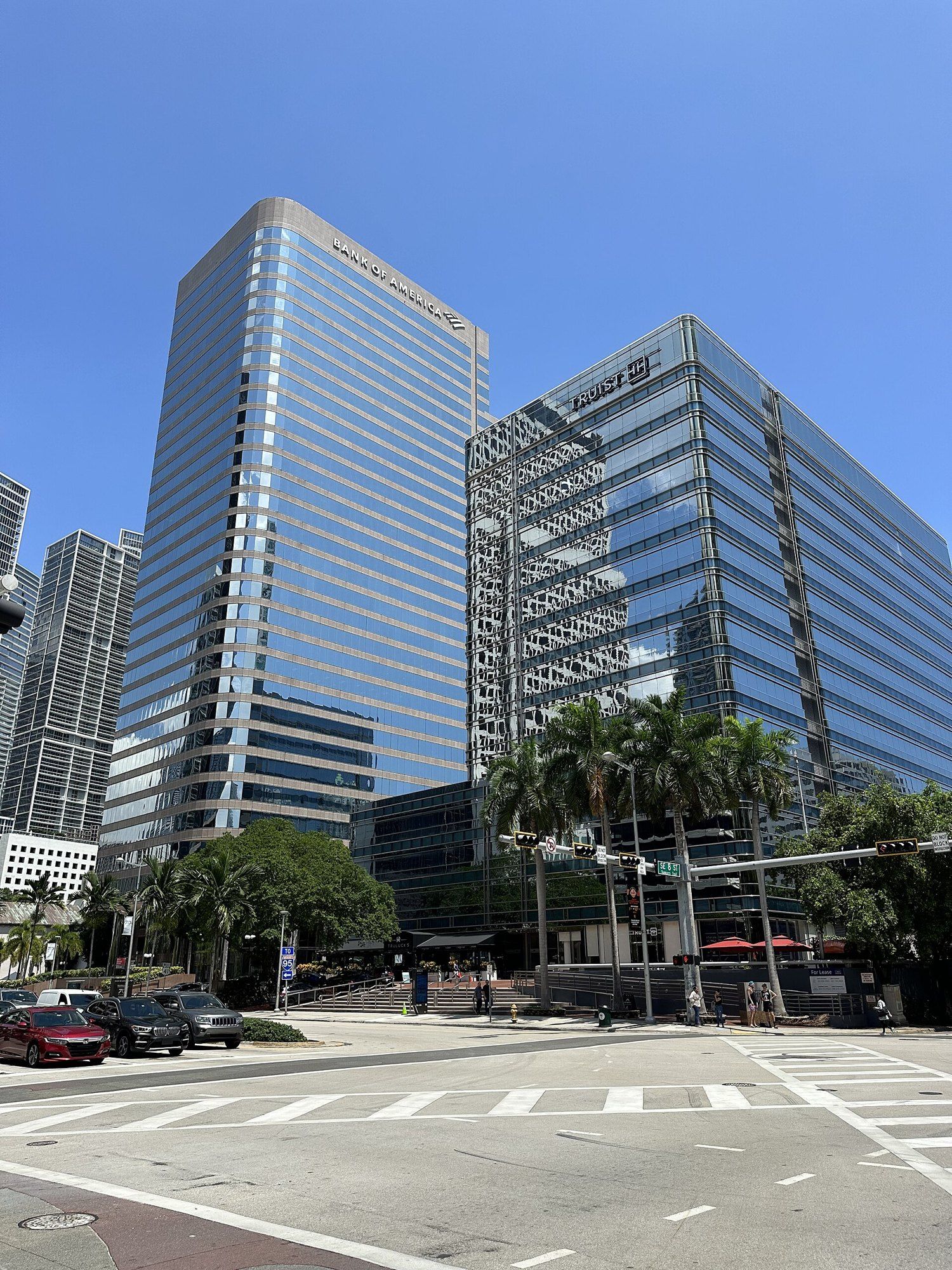 Building
888 Brickell
Ivory travertine, a glossy black face and two design houses: what is known about the tower, and where each ingredient comes from.
-
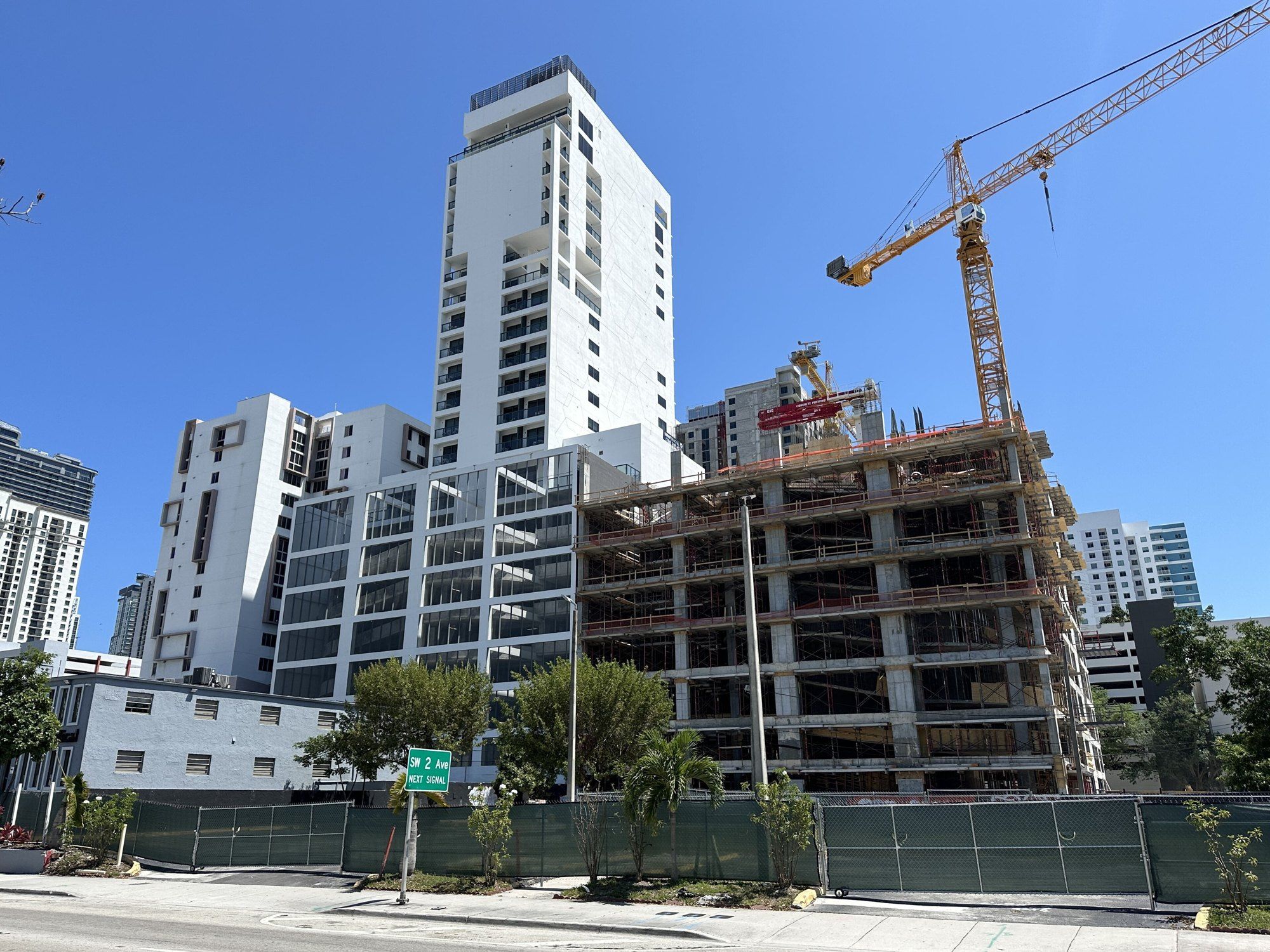 Building
Mercedes-Benz Places Miami
Developer, architect, collaborator, interior team and landscape practice, one role per section, with the history each firm carries.
-
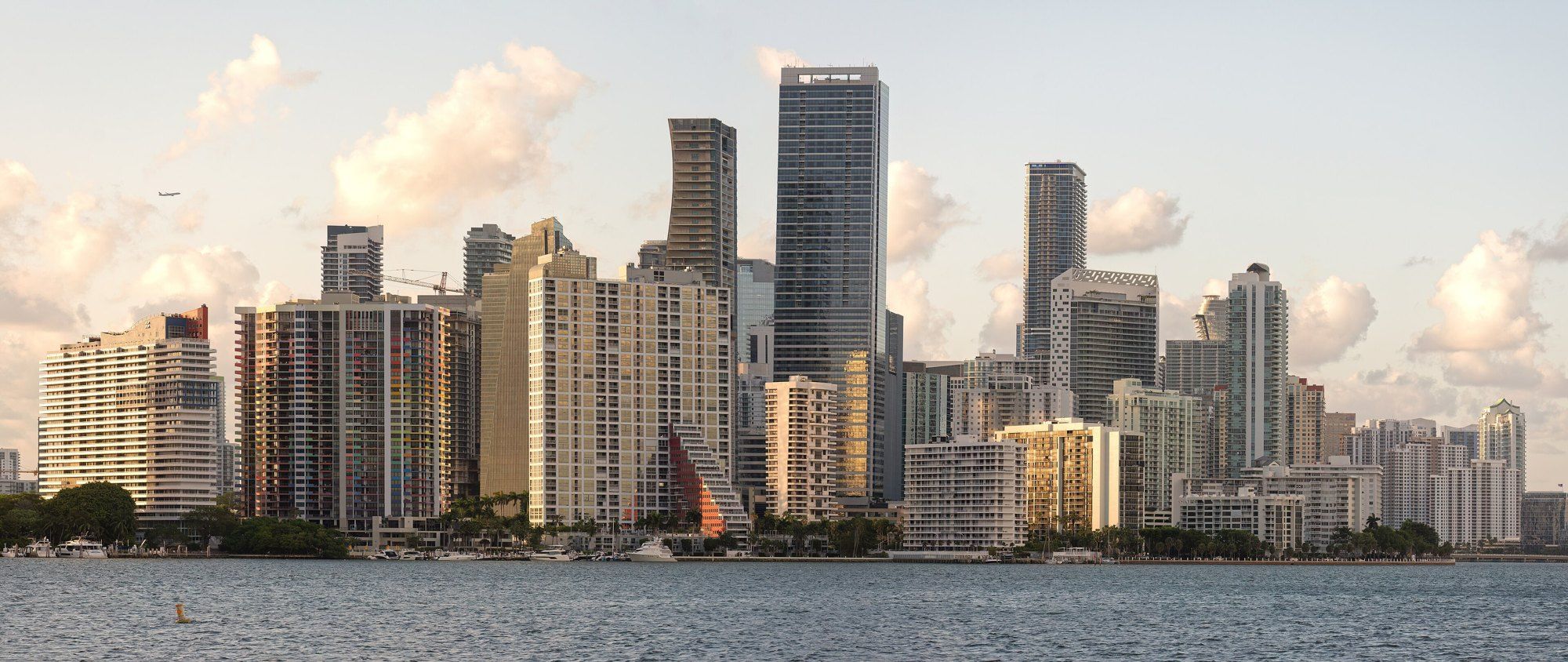 Brickell and the Miami River
The Miami Skyline
Islands dug from a river channel, a zoning rewrite and an airport ceiling: Miami's rise told in order.
-
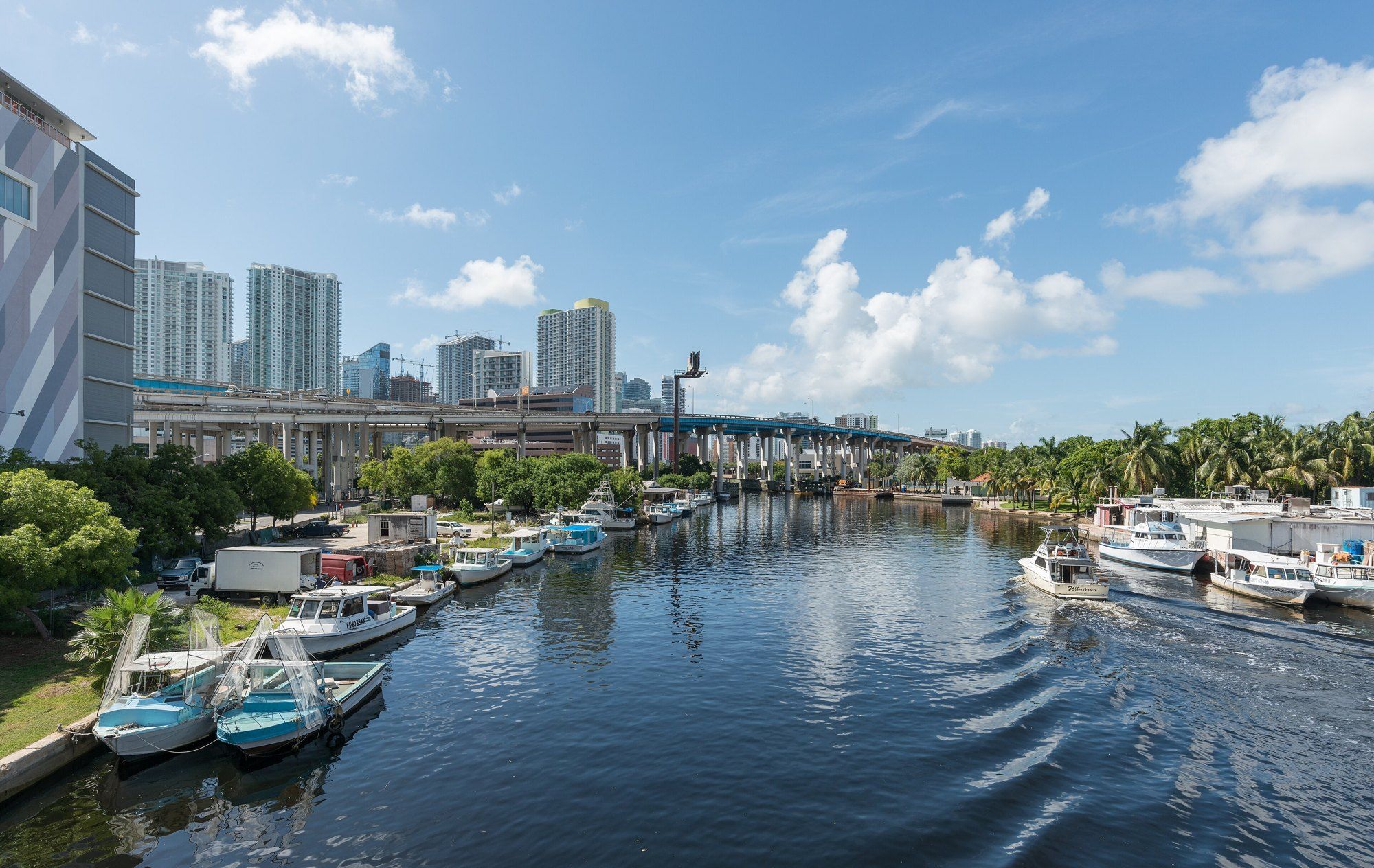 Brickell and the Miami River
The Miami River
Just 5.5 miles of water, read twice: once for cargo, once for people on foot.