
Copper Cladding and Patina
Contents
Built by Michael Stern’s JDS Development Group, The American Copper Buildings are twin towers joined 300 feet up by a three story skybridge, the first skybridge in New York City in 80 years; both towers are copper clad. Any building sheathed in copper invites one question from people walking by: when will it go green? It turns out there is no single date. This entry works through what the timing hangs on, drawing on chemists, fabricators and architects who have watched copper age on real buildings in real weather.
Why copper changes color at all
Copper reacts with the air from the day it is exposed. Architects Datafile’s article on architectural copper, written by a specialist at the copper maker Aurubis, lays out the usual order. After only days in the open, the shiny sheet goes a warm brown like a chestnut; over several more years that brown deepens until it is close to dark chocolate. Longer exposure brings green, or blue on coastal sites, which the author reads as the metal returning toward compounds resembling its original ore.3
The green layer is not decay. Caparol’s explainer on patina describes the green crust as a blend of basic copper hydroxides that shields the sheet under it, one reason a copper roof can serve for centuries. The same page cautions that verdigris, strictly speaking, names a different substance, copper acetate, made for use as a pigment and once prized by painters.4 The Datafile article adds that the film can repair itself if scratched, so a dent or a scrape on an old copper roof heals over in time instead of opening a path for corrosion.3
The colors of weathering copper
- Mill finishBright, salmon colored metal as it leaves the rolling mill.
- DaysOxidation dulls the surface to a warm chestnut tone.
- YearsColor keeps darkening toward chocolate.
- LongerWhere rain lingers, the green patina forms; near the sea it can read as blue.
- ShortcutFactory treatments can bring the surface to any stage at once, using the same minerals.
The best known example in New York
The Statue of Liberty is the city’s reference case. ZME Science recounts that the statue arrived in New York Harbor in 1886 a reddish orange, the natural color of the thin copper sheets hung on Gustave Eiffel’s iron frame, and that by 1906 it had reached its present blue green.1 NBC New York fills in the chemistry: the surface first formed a dark brown oxide called tenorite, and that layer then reacted with sulfuric acid in the polluted harbor air to produce the green. The centennial restoration of 1986 repaired holes in the skin and replaced the iron supports behind it with stainless steel.2
So in a salty, sooty harbor at the turn of the last century, a vertical copper surface took about twenty years. That figure is often quoted as if it were a rule. It is better read as one data point, taken under conditions that no longer exist: coal smoke and sulfur heavy air that modern New York has largely cleaned up.
What speeds the change and what slows it
Three things govern the pace. The first is water. Architects Datafile notes that the green needs rain, and that its speed follows the length of time water stays in contact with the metal; a wall or a sheltered soffit therefore lags well behind an open roof.3 A copper tower wall is about the slowest case there is.
The second is air quality. Pollution speeds patination, which therefore takes longer in clean or remote places than in cities.3 A. Zahner Company, which fabricated the perforated copper skin of the de Young Museum in San Francisco, told its client to expect the facade to pass from golden red to dark brown and then black, and only after a decade or more to begin showing earthy greens; in clean air, the firm notes, the full change can take twenty to thirty years.7
The third is that cleaner air may stop the process short. When the architects Purcell designed an oval copper clad events building for The Grove hotel in Hertfordshire, RIBA Journal reports, the team learned that with sulfur dioxide levels now much reduced, bare copper was unlikely ever to turn green there. Since the brief called for green, they used factory patinated sheet.5
The copper skin of the de Young
- square feet of copper paneling across the building
- 129,900
- panels on the main building alone
- 5,757
- perforations in the main building's panels
- 920,699
- estimated time to turn green in clean air.
- 20 to 30 years
Choosing a stage instead of waiting
That last choice is common now. Architects Datafile describes factory treatments that bring copper to any point in the sequence, from light oxidation to solid blue green, using the same brochantite minerals found in natural patina rather than a paint or coating. The same process can match a new sheet to the weathered copper already on an old building during a restoration.3
Other designers take the opposite view and want the change itself. For a house in Chicago, Pro Builder reports, Wheeler Kearns Architects chose copper cladding precisely so that it would move from shiny through a dark mottled purple to green over time, aging along with the family. The article cites the Copper Development Association on copper lasting a century or more, pointing to a Philadelphia church roofed in copper in 1727.6 At the de Young, the facade has even become part of the art program; designboom described a resident artist who built a tour around the building’s copper skin, patterned on a pixelated image of the tree canopy in Golden Gate Park.8
The short answer
A copper facade turns brown within days, dark after several years, and green somewhere between one decade and never, depending on how much rain lingers on it, how dirty the air is, and whether its designers chose to wait or to start from a finished color. The question has a range, not a date, and each building answers it in its own weather.
References
- ZME Science. Why Is the Statue of Liberty So Green, December 11, 2022.
- NBC New York. The Real Reason the Statue of Liberty Is Green, October 17, 2022.
- Architects Datafile. Timeless Architectural Copper, October 6, 2022.
- Caparol. How Does Patina Actually Develop, August 31, 2015.
- RIBA Journal. It's Got to Be Green, October 7, 2016.
- Pro Builder. An Architect Uses Copper on a Chicago Home to Weather the Urban Environment, June 15, 2016.
- A. Zahner Company. De Young Museum, accessed September 2026.
- designboom. Why Is This Artist Licking a Museum Building in California, March 16, 2019.
External links
See also
-
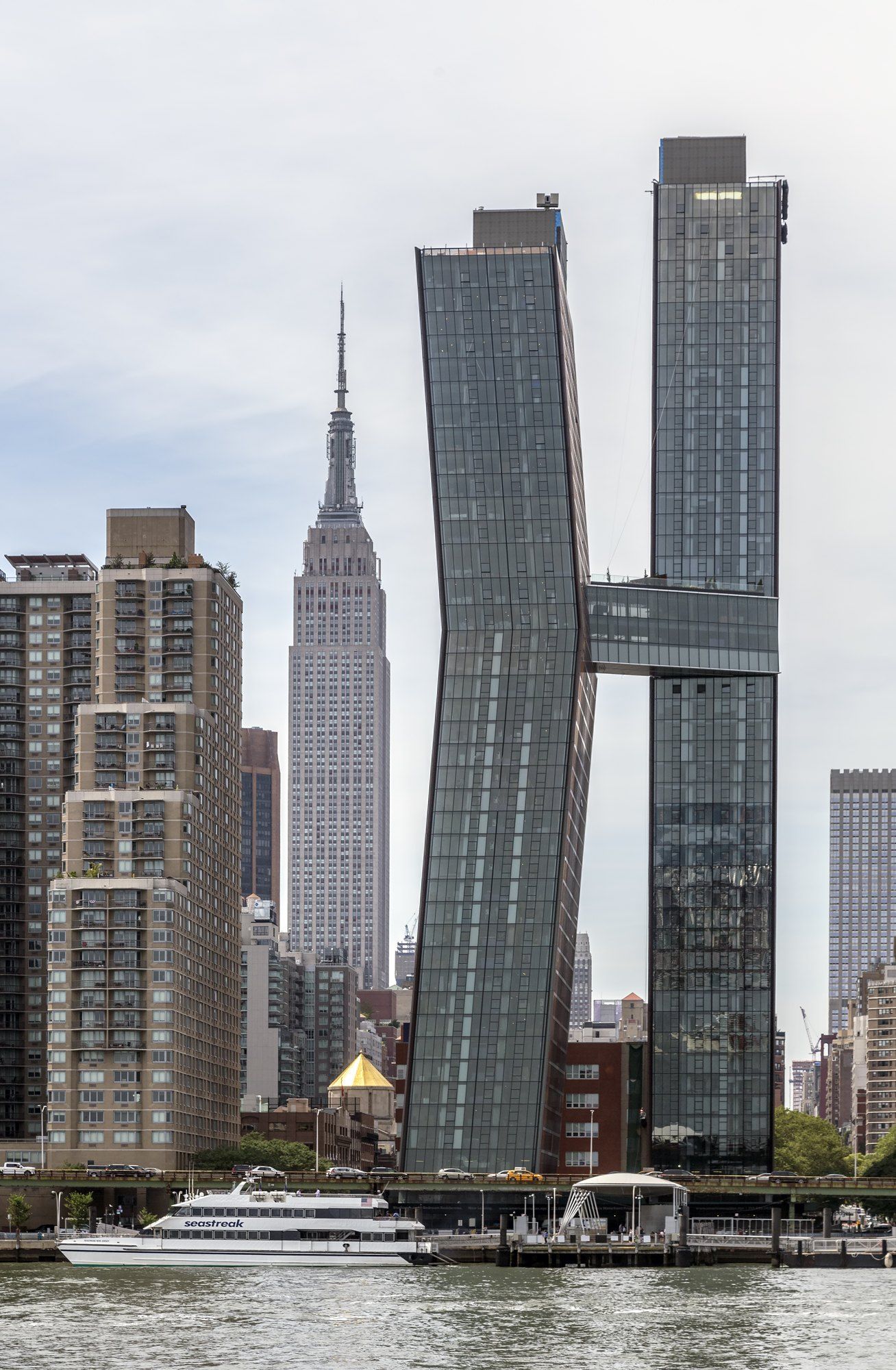 Building
The American Copper Buildings
Two bent towers in raw copper on the Manhattan shore of the East River, and the bridge that meets them where they lean closest.
-
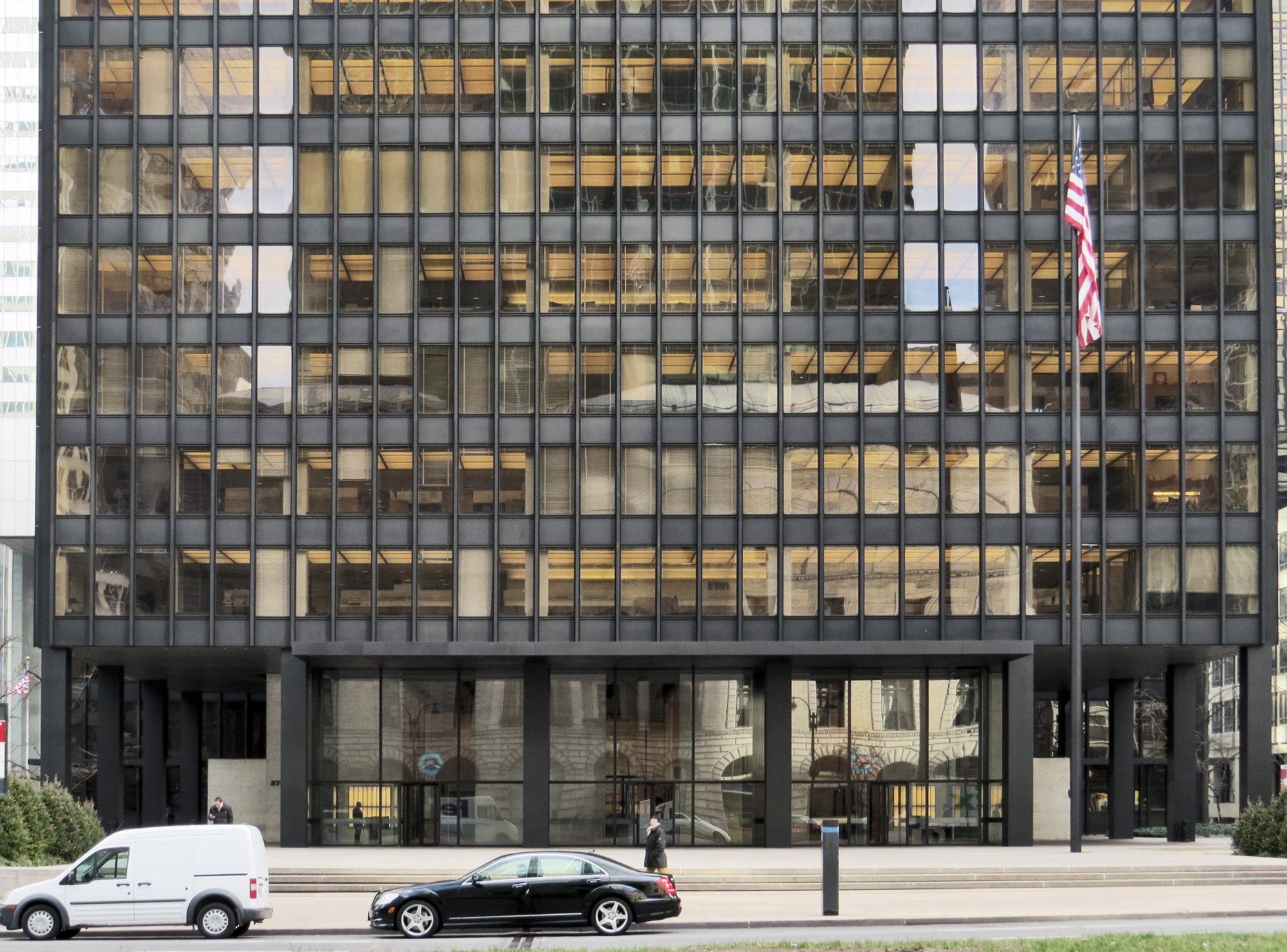 Materials and Craft
Bronze in Architecture
The copper alloy that builders polish and oil instead of paint, and the history behind the habit.
-
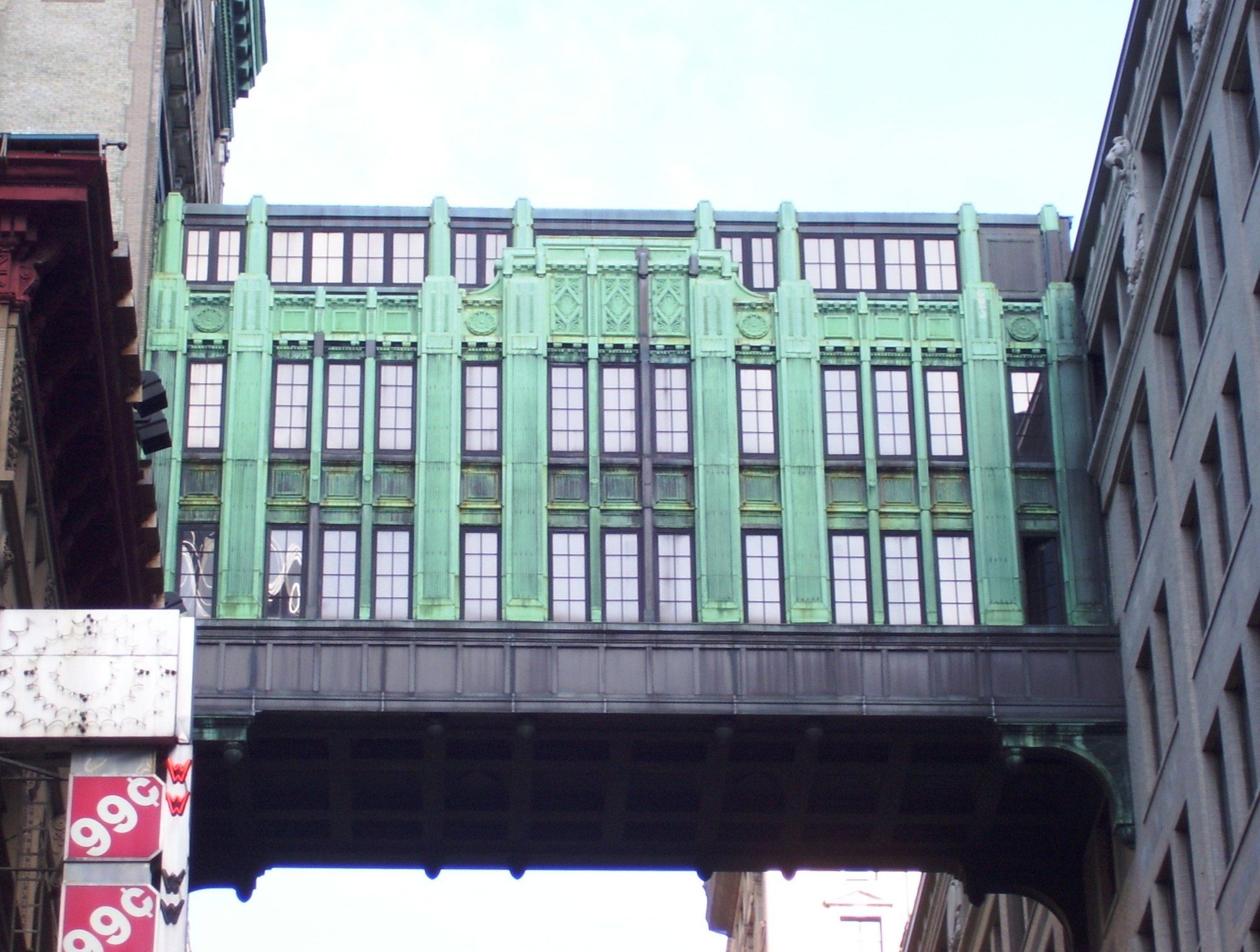 The East River and Kips Bay
Skybridges in New York
Who strung rooms and passages across New York's streets and between its towers, and what each of them was after.
-
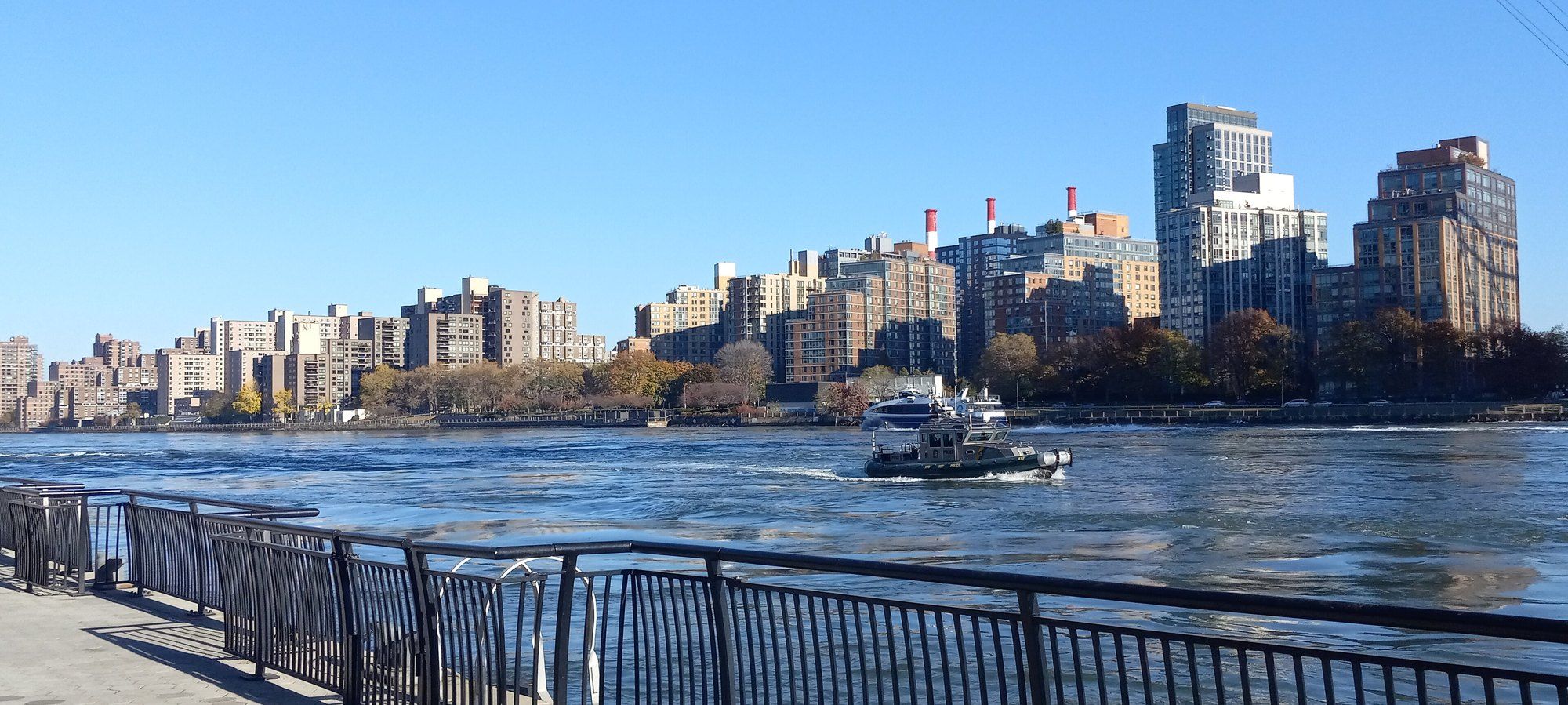 The East River and Kips Bay
The East River Waterfront
Eighteen blocks of Manhattan riverbank on foot, from a park that began as a cement yard to a pier that once served a power plant.
-
 Materials and Craft
Architectural Terra Cotta
Fired clay that clothed the steel frame, told in dates from 1886 to the present.