
Brickell History
Contents
Brickell, the Miami district whose name is carried by 888 Brickell, the tower for which Michael Stern’s JDS Development Group is the developer, takes its name from William and Mary Brickell, a couple who set up a trading post on the south bank of the Miami River in the early 1870s. The fullest short account of them sits in an unlikely place: a biographical note compiled by the University of Florida Libraries to accompany the digitized journals of an 1892 expedition into the Everglades.1 Read closely, that one page explains most of what the Brickell name means on a Miami street map today.
What the library note records
The note is organized around Mary rather than William, and that choice matters. It gives her birth in Lancashire, England, in 1836, her move to Australia with her parents at the age of three, and her later move with William to Cleveland, Ohio, in 1854. It then places the family on Biscayne Bay in the early 1870s, arriving alongside the Ephraim Sturtevant household and building at the mouth of the river on its south shore, not far from Fort Dallas. That spot, the note says, came to be called Brickell Point.
The note is brief about commerce but precise about roles. The Brickells ran a trading post and other businesses in what it calls the pioneer community. Mary served for a time as postmaster, and the post office sat inside the family store. A separate station report from WLRN, carried by WJCT, dates the homestead to 1871 and describes the store as a place to trade goods with Native Americans from the Everglades.2
The Brickell record in dates
- 1836Mary Bulmer is born in Lancashire, England; at three she moves with her parents to Australia.
- 1854After meeting William Brickell in Australia, she moves with him to Cleveland, Ohio.
- Early 1870sThe Brickells and the Sturtevant family settle on Biscayne Bay; the Brickell homestead stands at the river mouth, south shore.
- 1892The Ingraham expedition passes through and describes the Brickell store, warehouse and house.
- 1908William dies; Mary takes over the businesses and the land.
- 1922Mary Brickell dies in Miami on January 13.
The ground under the store
The library note does not mention that the Brickell homestead stood on ground that people had occupied for some two thousand years. The Clio entry on the Miami Circle fills that gap. Brickell Point was once a Tequesta village with shelters, a landing, mounds and a cemetery, and the circle itself is a ring of postholes and basins cut into Miami Limestone, dated by radiocarbon to roughly 500 BC through AD 750.3 After Florida passed from Spain to the United States in 1821, the tract belonged to Rebecca Egan, and around 1870 the Brickells bought almost the whole of her former holding. They built a boathouse, docks and a mansion there; none of it survives.
Vizcaya Museum and Gardens adds the wider frame: Tequesta villages ringed the river mouth and the coastal islands for close to two thousand years before Europeans arrived, Spanish missions began after 1565, and the circle was declared a National Historic Landmark on January 16, 2009.4 The carved basins surfaced only in 1998, when a 1950 apartment complex on the point was torn down and a routine archaeological survey followed.
The Miami Circle at Brickell Point
- Size of Brickell Point, the site that holds the circle
- 2.2 acres
- Radiocarbon range for the circle's Glades I period use
- 500 BC to AD 750
- Approximate age of the Miami Limestone the postholes were cut into
- 125,000 years
- Year surveyors found the carved basins after an apartment block was cleared
- 1998
- Year Miami Circle Park opened to interpret the site
- 2011
The railroad bargain
The note’s longest sentence concerns land given away. The Brickells, together with Julia Tuttle, gave hundreds of acres to Henry Flagler to bring his railroad and further development to Miami, and the same group went on to lay out Fort Lauderdale. The WLRN account shows how close the two families’ offers were. The freezes of the winter of 1894 to 1895 wrecked citrus groves farther north, Tuttle telegraphed Flagler that Miami had escaped, and his agents were met on the bay by Tuttle and the Brickells. The first train reached Miami on April 15, 1896, and the city was incorporated on July 28 that year. One historian quoted by the station holds that the Brickells signed their land contract with Flagler months ahead of Tuttle.
Flagler’s reach also changed the shoreline in front of the homestead. Wikipedia’s article on Brickell Key notes that in 1896 he had a channel nine feet deep dredged from the river mouth, a cut that created two small islands later joined into the present key.5
After 1908
William Brickell died in 1908, and the library note turns at that date. Mary took charge of the businesses and the property and began to develop the hundreds of acres the couple had gathered, including Brickell Hammock and the stretch later known as Millionaire’s Row. A compilation of district nicknames by Barry Popik summarizes the next seventy years in two moves: grand houses went up along Brickell Avenue in the early 1900s, and by the 1970s office buildings, hotels and apartment towers were displacing them.6 Mary Brickell died in Miami in January 1922.
The couple now appear in bronze. When the Brickell Avenue Bridge was rebuilt in the 1990s, the sculptor Manuel Carbonell set four reliefs into its support piers honoring early figures, and William and Mary Brickell share one of them.7
What the note leaves out
A record written to annotate an expedition journal has limits, and three of them shape how Brickell history is usually told. It says nothing of the Tequesta ground beneath the store, which the archaeology supplied a century later. It credits the railroad deal to the Brickells and Tuttle jointly, while the long popular story gave Tuttle the whole credit; WLRN notes that a 1958 newspaper profile titled around Mary Bulmer Brickell was one early attempt to widen it. And it treats the river as a backdrop, although the Florida state marker for the working riverfront describes a five and a half mile stream that became a working riverfront in the early twentieth century, lined with railway warehouses, docks and boat repair yards.8
The note’s final line on the family is the plainest: Brickell Avenue is named for Mary and William. A companion article on Brickell Avenue traces that street from Millionaire’s Row to the present, and one on the Miami River takes up the water the homestead faced.
References
- University of Florida Libraries. Mary Brickell, 2015.
- WJCT, from WLRN. Julia Tuttle May Not Be The Only Mother Of Miami. Could Mary Brickell Be One Too?, 2019.
- Clio, the digital history guide. Miami Circle, 2014.
- Vizcaya Museum and Gardens. The Tequesta, 2023.
- Wikipedia, the free encyclopedia. Brickell Key, 2026.
- The Big Apple (Barry Popik). Manhattan of the South (Brickell in Miami, Florida), 2015.
- Carbonell Sculptures. Public Landmarks, 2017.
- Florida Division of Historical Resources. Miami River Historic Working Riverfront, Florida Historical Marker, 2020.
External links
See also
-
 Brickell and the Miami River
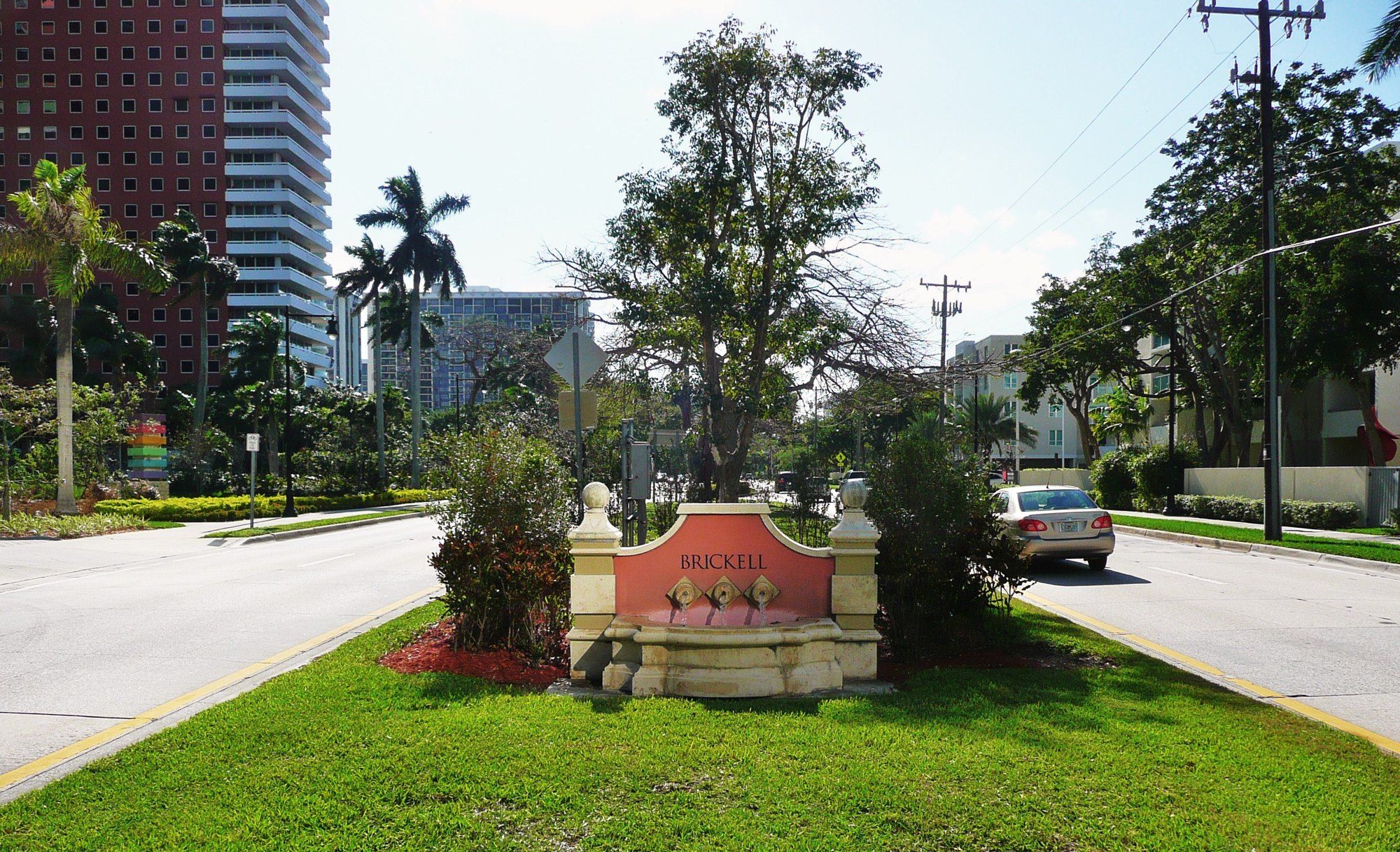
Brickell Avenue
A Miami street laid over soft, water filled stone, and what that stone has done to everything built along it.
-
 Brickell and the Miami River
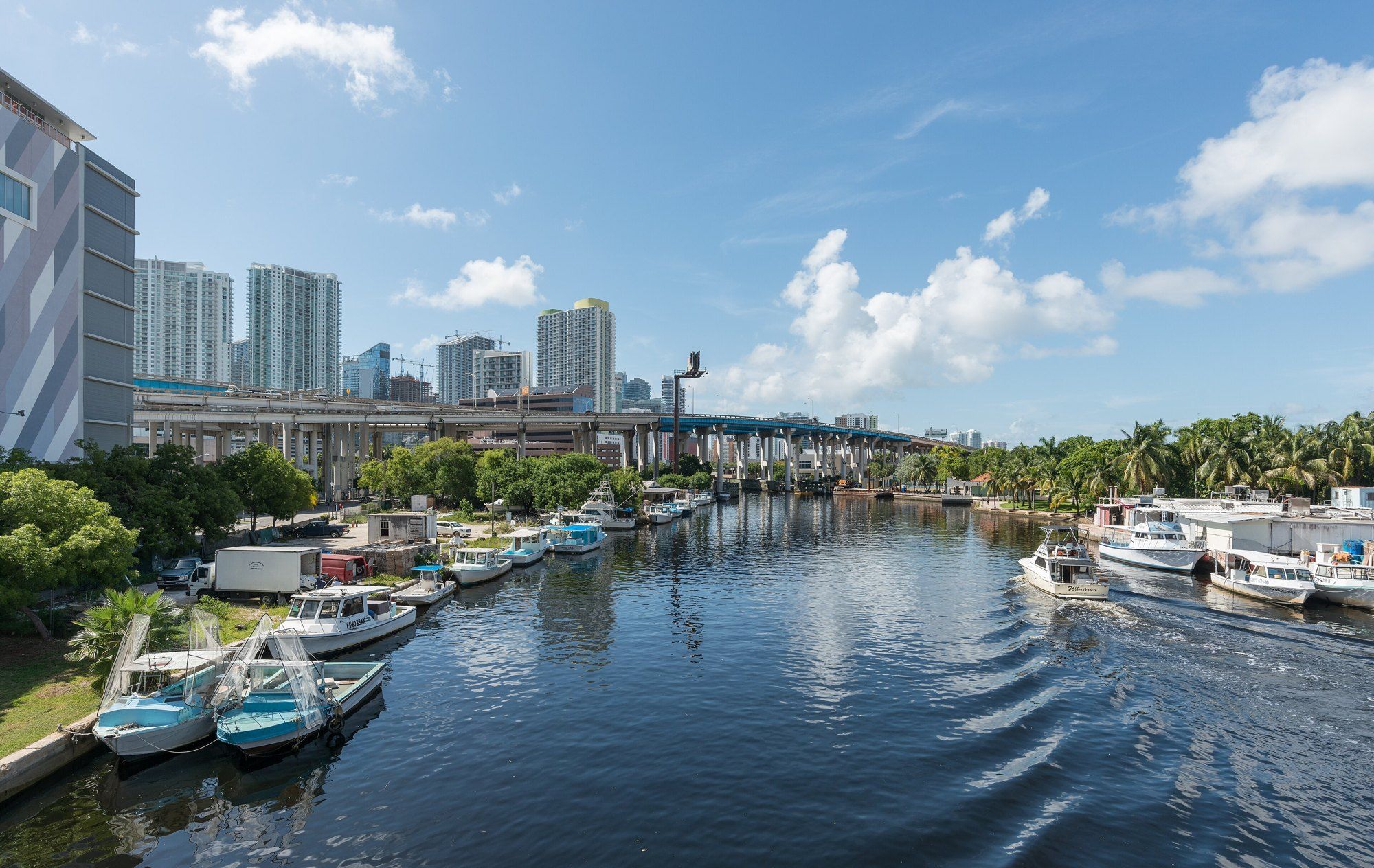
The Miami River
Just 5.5 miles of water, read twice: once for cargo, once for people on foot.
-
 Brickell and the Miami River
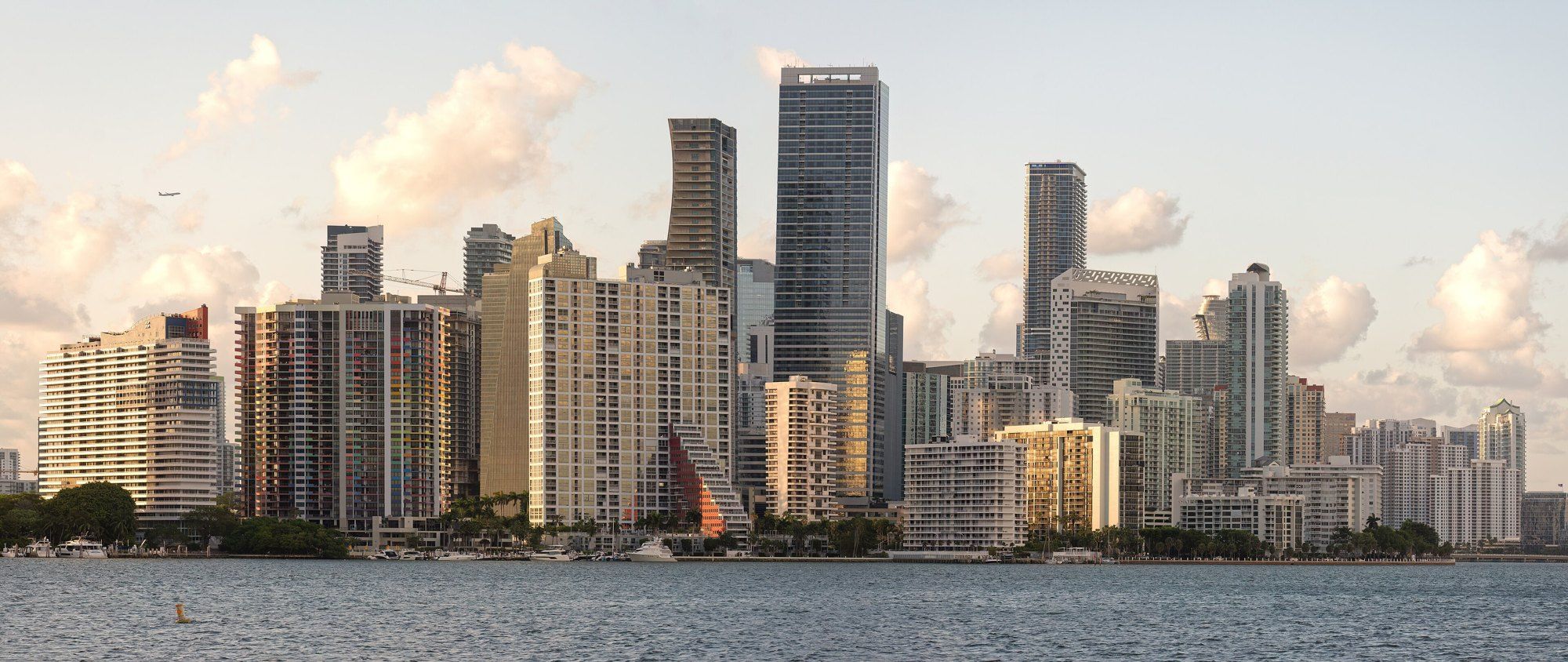
The Miami Skyline
Islands dug from a river channel, a zoning rewrite and an airport ceiling: Miami's rise told in order.
-
 Building
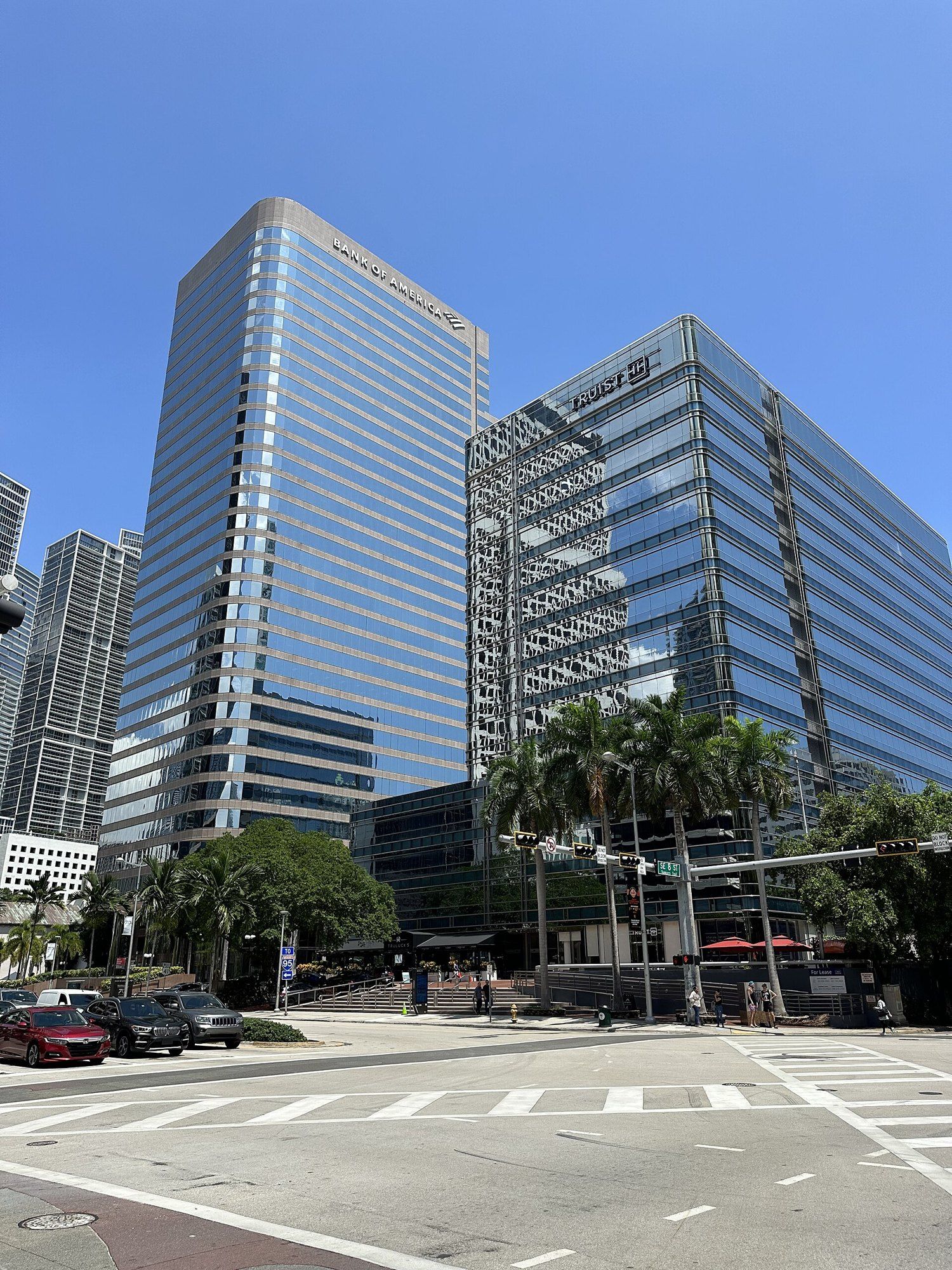
888 Brickell
Ivory travertine, a glossy black face and two design houses: what is known about the tower, and where each ingredient comes from.