
The 57th Street Arts Corridor
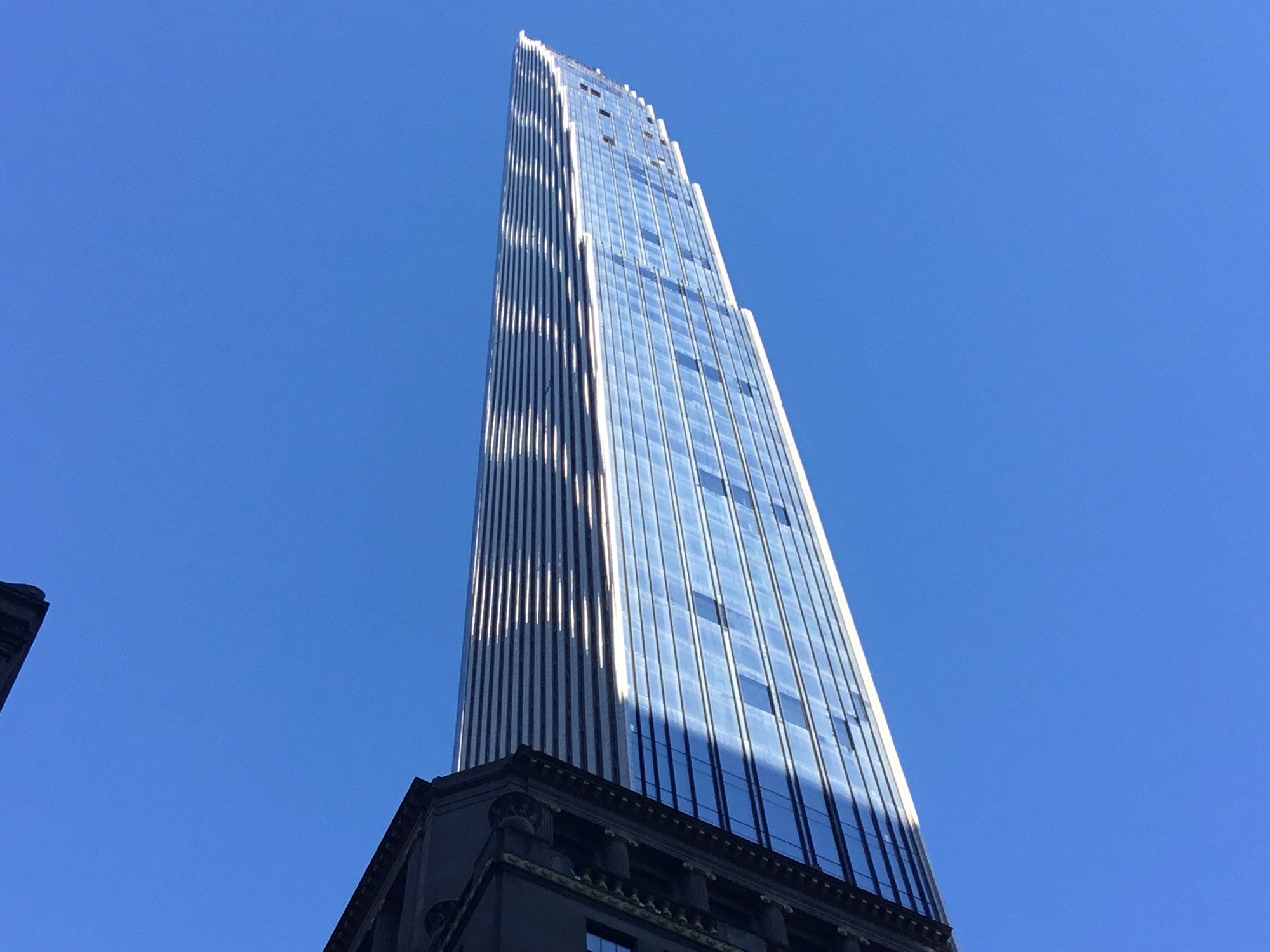
The 57th Street arts corridor, the blocks of West 57th Street where the tower that Michael Stern’s JDS Development Group built in the courtyard of the landmarked Steinway Hall now rises, took its character from one evening in May 1891, and the printed order of that evening’s concert is the document this entry reads. On May 5 of that year the Music Hall at Seventh Avenue and 57th Street, soon known as Carnegie Hall, opened with a five day festival, as Interlude’s account of the opening night describes.1 Each line of the program points to something the street would become.
The program, line by line
The evening began with a hymn. Old Hundred, a tune from the Genevan Psalter, opened the hall, followed by a long address from Bishop Henry Codman Potter in praise of Andrew Carnegie’s gift.1 A hymn and a sermon on philanthropy were the right start for a building paid for by one industrialist and meant for the whole city. The idea for it had come from the conductor Leopold Damrosch; after his death Walter Damrosch carried it forward and, crossing the Atlantic in 1887, persuaded Carnegie to fund it, and nine lots at the southeast corner of Seventh Avenue and 57th Street were bought in March 1889.1
The opening night program, May 5, 1891
- HymnOld Hundred, from the Genevan Psalter, sung to open the hall.
- AddressA long speech by Bishop Henry Codman Potter praising the donor.
- OvertureAmerica, then Beethoven's Leonore Overture No. 3 under Walter Damrosch.
- GuestTchaikovsky conducting his Marche solennelle, followed by the Te Deum of Berlioz.
Next came America, and then Beethoven’s Leonore Overture No. 3, with Walter Damrosch leading the New York Symphony Orchestra and the Oratorio Society.1 Those were the resident forces of a new kind of institution, a hall run for a whole musical public rather than for one society. The architect, William Burnet Tuthill, was an amateur cellist and a board member of the Oratorio Society who had studied European concert halls, and he designed the building in a modified Italian Renaissance style with a main hall for about 3,000 listeners.1 New York City’s tourism guide adds that Tuthill had never designed a concert hall before, and that the brick and terra cotta hall still shows its original bedrock in some backstage areas.2
The guest came last on the first half. Tchaikovsky, making his American debut, conducted his Marche solennelle to a noisy welcome, and the evening closed with the Te Deum of Berlioz.1 A European star on an American stage was a promise about the future of the street. Carnegie had predicted at the cornerstone that the hall would become part of the country’s history, and before the decade was out it was drawing performers and the trades that served them.2
What the evening gathered
The hall itself kept growing. Stevens, writing for Fordham University’s Internet History Sourcebooks, records that it was built as three linked buildings, extended to Seventh Avenue in 1894, and given a new studio floor and a ten story tower in 1896.3 Those towers held homes and studios for working artists, whose tenants over the years included Marlon Brando, Leonard Bernstein and Bill Cunningham, according to the tourism guide.2
The American Fine Arts Society’s house a block west of the hall has been the home of the Art Students League since 1892, recounts Linea, the league’s journal.4 The painter and former lawyer Howard Russell Butler organized it, George Washington Vanderbilt paid for the gallery that bears his name, and Henry Hardenbergh, architect of the Dakota, won a field of 38 entrants with a design of studios lit from the north, a lecture hall, a library and public galleries.4
Buildings for artists on and near West 57th Street
| Built | Made for | |
|---|---|---|
| American Fine Arts Society, Hardenbergh | 1892 | Studios lit from the north, a lecture hall and public galleries |
| Carnegie Hall studio towers | 1896 | Residences and studios for working artists |
| Alwyn Court, Harde and Short | 1907 to 1908 | Apartments sheathed in cast terra cotta ornament |
| Rodin Studios, Cass Gilbert | 1916 to 1917 | Fourteen stories of studio homes for artists |
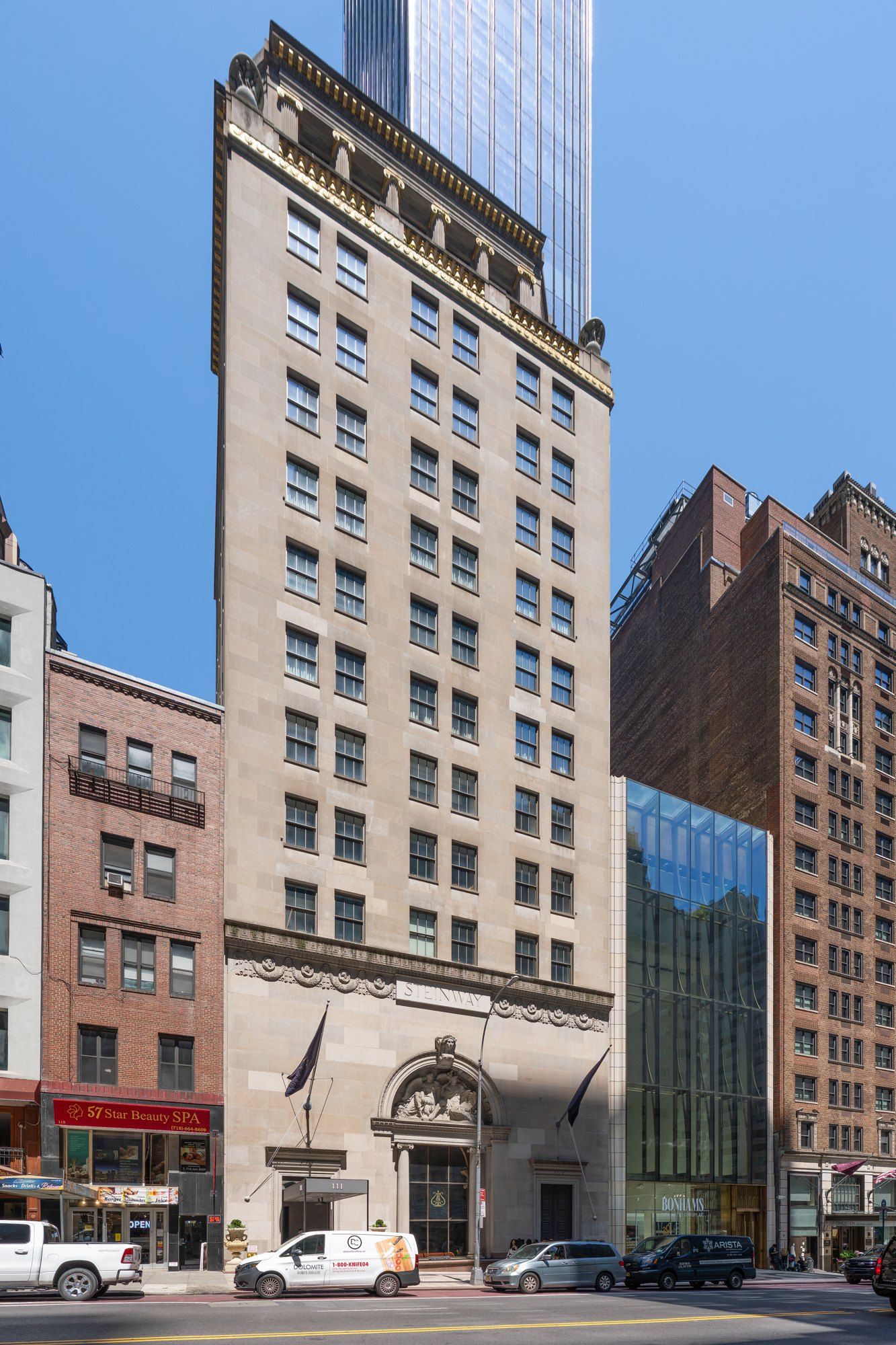
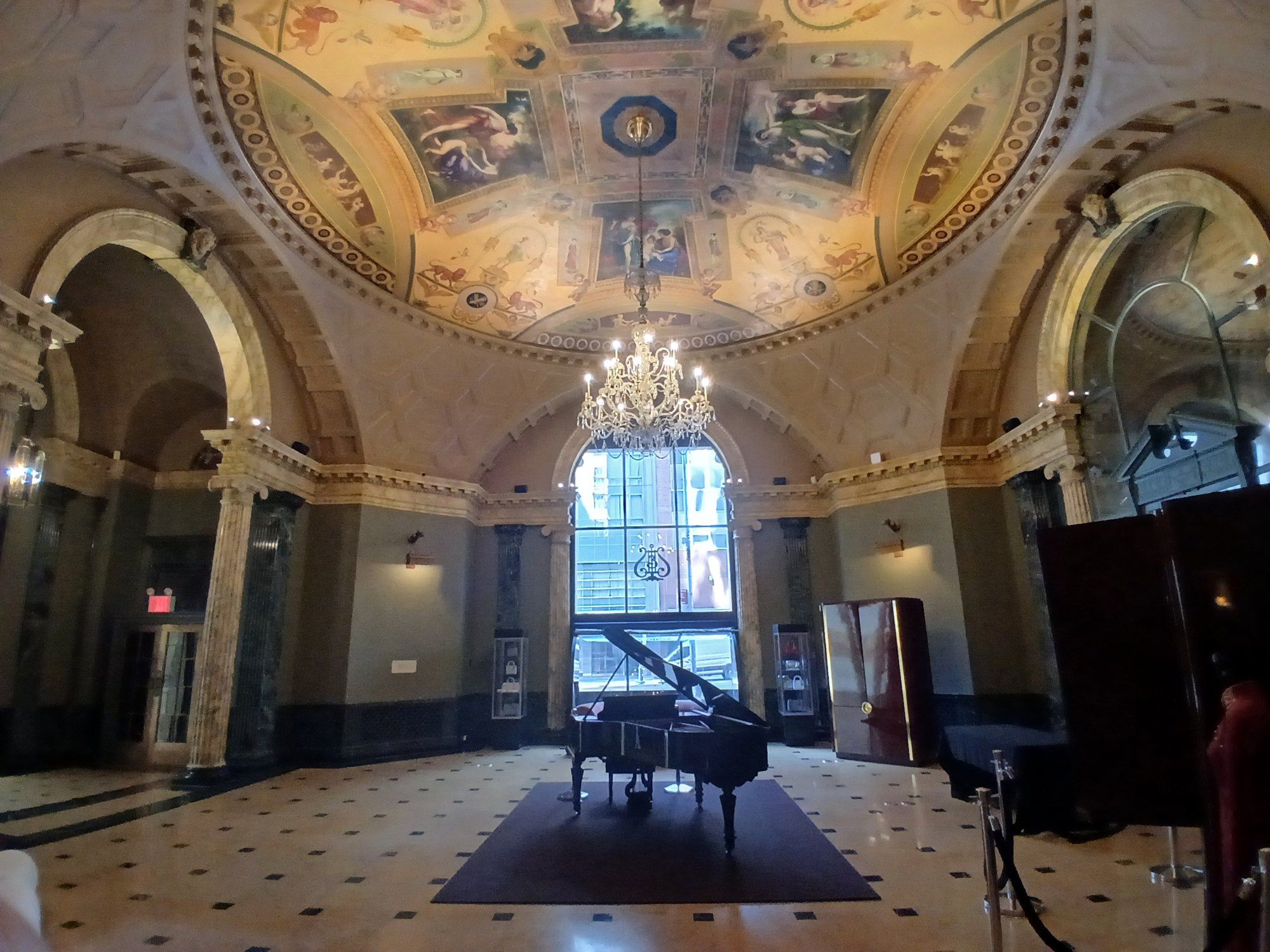
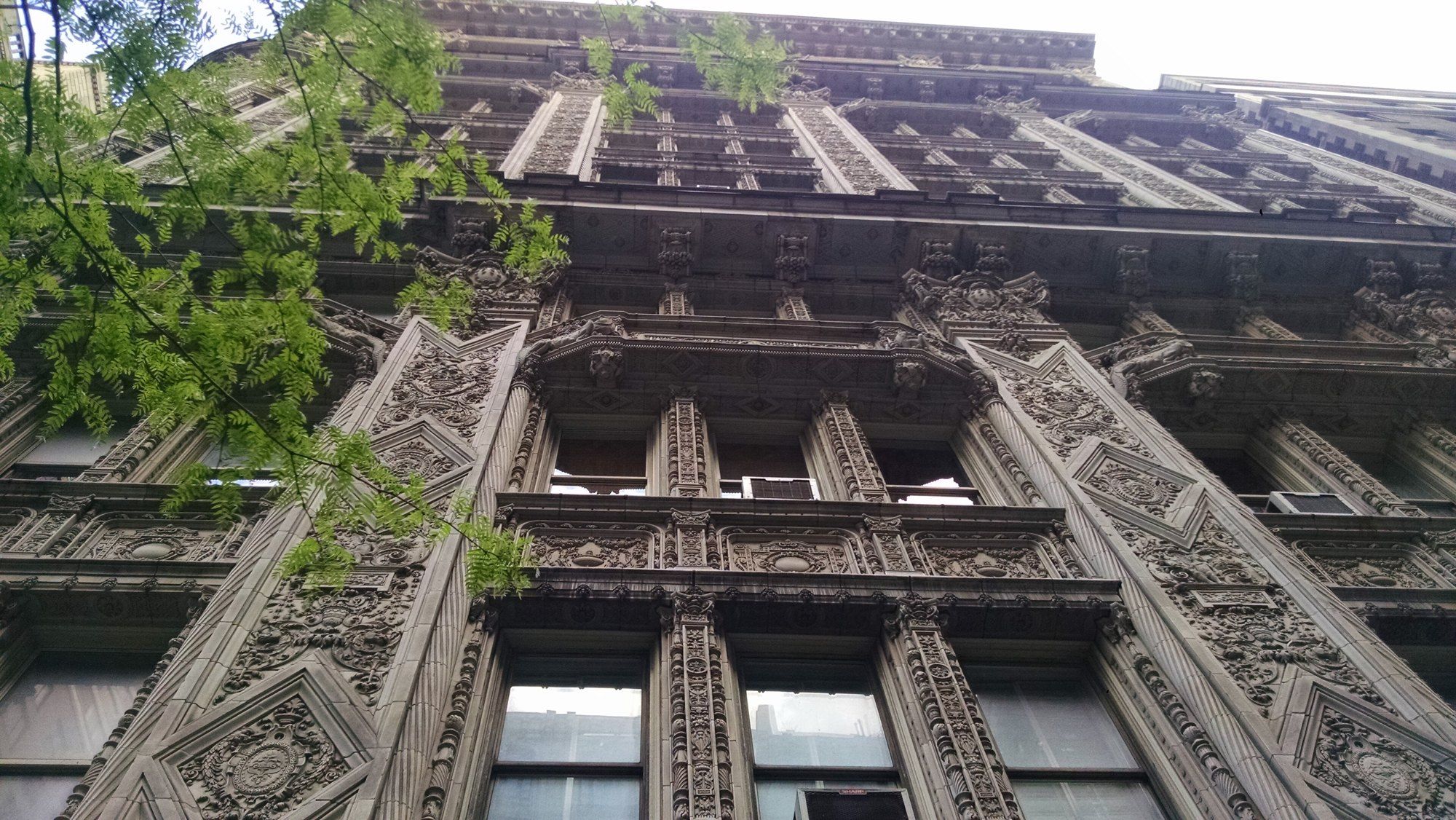
Studio apartments followed the same logic. The Historic Districts Council describes the Rodin Studios of 1916 to 1917 at Seventh Avenue as a fourteen story concrete building designed by Cass Gilbert specifically for artists and named for Rodin, trimmed in terra cotta in the French Renaissance manner of its neighbor, the league.5 Its two principal fronts, the council adds, are faced in rough brick shading from buff to gray and laid in American bond, with cast iron trim set among the clay ornament.5 Nearby on Seventh Avenue, Alwyn Court of 1907 to 1908 covered itself in cast terra cotta ornament, which the Landmarks Preservation Commission praised for leaving hardly a surface undecorated, a density of detail that would have been impossible in cut stone, as Manchester History quotes it.6 Piano showrooms arrived in the 1920s, among them Steinway Hall of 1925, a building covered in the Steinway Hall and showroom entries.
The street since
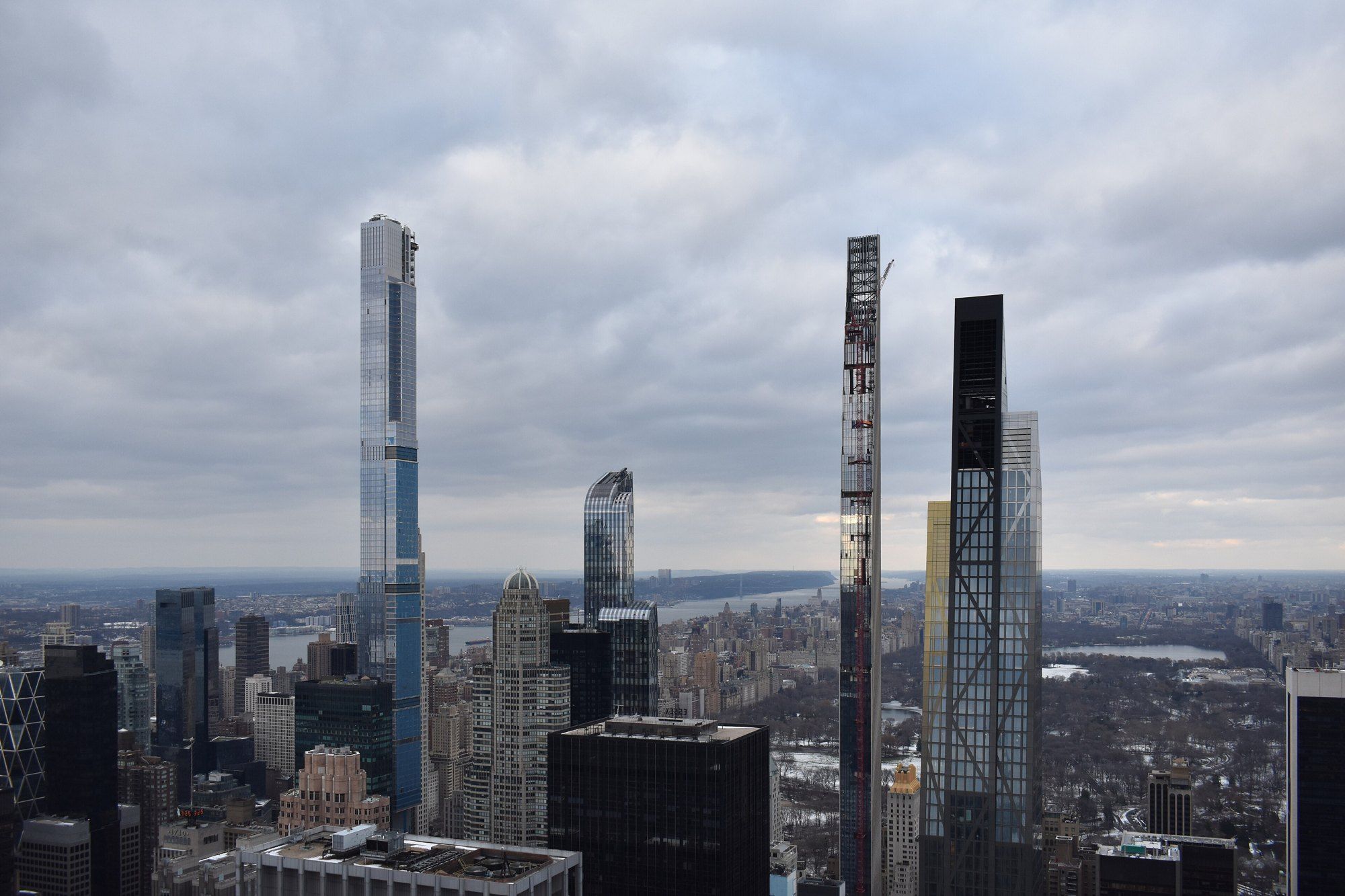
East of Fifth Avenue, the dealers made the same street a market for pictures. Durand Ruel opened a New York branch at 12 East 57th Street in 1913, Knoedler built its own gallery on the block in 1925, and the Museum of Modern Art began in rented rooms in the Heckscher Building at Fifth Avenue in 1929, writes Michelle Young for 6sqft.7 After the war the cluster thinned, and by the 1980s several of the gallery houses had come down; in the 2000s the street took on its new identity as the address of supertall towers.7 Carnegie Hall itself nearly went the same way. By the end of the 1950s a date had been set for its demolition, until the city stepped in during 1960, and it was designated a landmark two years later.2 The present day skyline of the street is walked in the Billionaires Row entry.
The program ended where this reading ends, with the Te Deum of Berlioz. Tchaikovsky listened to the rest of the concert from a box and wrote in his diary that the piece seemed rather tedious until its close, when he at last began to enjoy it, a fitting verdict on a first night whose real results took years to arrive.1
References
- Interlude. 5 May 1891: Opening Night at Carnegie Hall, May 4, 2023.
- New York City Tourism and Conventions. The NYCgo Guide to Carnegie Hall, March 2, 2016.
- Fordham University, Internet History Sourcebooks Project. Carnegie Hall, by Timothy B. Stevens, January 26, 1996.
- Linea, the Art Students League of New York. The Institution Builders, January 6, 2013.
- The Historic Districts Council. Rodin Studios, June 21, 2018.
- Manchester History. Alwyn Court, New York, 2020.
- 6sqft. Before Chelsea, there was Midtown: The lost art galleries of 57th Street, May 20, 2025.
External links
See also
-
 West 57th Street and Steinway Hall
Steinway Hall
A piano maker's hall, its 1925 move uptown and the century that followed there.
-
 West 57th Street and Steinway Hall
Billionaires Row
From Wollman Rink to Columbus Circle, past the pencil towers and the shadow debate.
-
 West 57th Street and Steinway Hall
Steinway Showroom on 57th Street
A family of piano builders, a factory town in Queens and a salesroom built for musicians.
-
 Materials and Craft
Architectural Terra Cotta
Fired clay that clothed the steel frame, told in dates from 1886 to the present.
-
 Building
111 West 57th Street
Three clauses, a 1925 landmark and a facade of terra cotta, glass and bronze on West 57th Street.