
Steinway Showroom on 57th Street
Contents
Steinway and Sons, the piano maker whose 1925 showroom on West 57th Street is the landmarked Steinway Hall, in whose courtyard Michael Stern’s JDS Development Group later raised a residential tower designed by SHoP Architects, began with a single instrument made in a kitchen. Heinrich Engelhard Steinweg built his early pianos at home in Germany before bringing his family to New York in 1850, recounts the Queens Daily Eagle.1 What follows traces the maker and then the work: the family, its patents and its factory town, and the salesroom it built on 57th Street to put pianos in front of the musicians who would make them famous.
A kitchen piano and a new name
Once in New York the family anglicized its name and opened a workshop on Varick Street in 1853.1 The city already held several dozen piano makers, nearly all of them German, and the newcomers had to compete on sound. According to a feature on the company’s archive, Charles Steinway arrived ahead of the others in 1849 and found work moving pianos while he waited for them.2
From Varick Street to Astoria
- 1850Heinrich Engelhard Steinweg brings his family from Germany to New York.
- 1853The renamed Steinways set up shop on Varick Street in Manhattan.
- 1860sThe firm grows into one of the city's big employers.
- Early 1870sWilliam Steinway buys Astoria farmland for a factory and a company town.
Brothers and patents
The early letters in that archive, held at LaGuardia Community College in Queens, show brothers absorbed in mechanics. In one from 1859 Charles and Henry Jr. describe their overstrung grands, in which the long bass strings fan across the others for a fuller sound, and Henry sketches a new action he had patented.2 The archive’s director, the historian Richard Lieberman, counts overstringing, the grand action and a better fitting iron plate among the patents that make up the core of the modern piano.2
Selling as a family craft
The sales floor was a family affair from the start. Doretta Steinway is said to have worked in the warerooms, playing for customers and offering free lessons to seal a purchase, and the 1867 diary of Louisa Ziegler describes Christmas at William Steinway’s house next door to the hall on East 14th Street.2 A showroom beside a concert room, where a Saturday recital could turn into a Monday sale, became the company’s formula.
Astoria and the factory
Growth pushed the works out of Manhattan. Around 1870 William Steinway began buying Astoria farmland for a factory, partly to move workers away from the labor movement then organizing in Manhattan, and built around it a company town with a school, a fire house and a post office, the Queens Daily Eagle reports.1 Pianos have been made in the Astoria complex since 1871, according to MPR News, and much of the work is still done by hand: laminated rims pressed into shape, soundboards fitted by specialists, and a pounding room where a machine strikes all 88 keys at once to play a new instrument in.3
The Astoria factory in numbers
- Craftsmen and women on the factory floor
- 300
- Pianos finished in a year
- About 1,500
- Time to build one grand
- 11 months
- Tunings each piano receives before it leaves
- 5
A diarist in the family
William Steinway left an unusual record of the business. His diary runs from 1861 to 1896, some 2,500 pages covering the company, the draft riots that nearly wrecked its factories, the German singing societies he belonged to, the rapid transit commission he led and the growth of Astoria, notes Smithsonian Magazine.4 The National Museum of American History has put the whole diary online after decades of volunteer transcription.4 The museum describes the project as one of its largest volunteer research efforts, with more than 25,000 hours of research by about 100 volunteers behind a planned 30,000 linked annotations, roughly one for every three words of the diary, and it counts William’s grandson Henry Ziegler Steinway among the project’s central figures until his death in 2008, as set out on the museum’s project page.6
The Immortals
The twentieth century brought a new kind of selling. The company had long thought national advertising distasteful, but a young copywriter named Raymond Rubicam gave it a campaign built on paintings of great musicians and the line Instrument of the Immortals, first run in 1919 in the Saturday Evening Post and similar magazines.2 The campaign tied the brand to the pianists who played it, and it set up the logic of the building that followed.
The salesroom on 57th Street
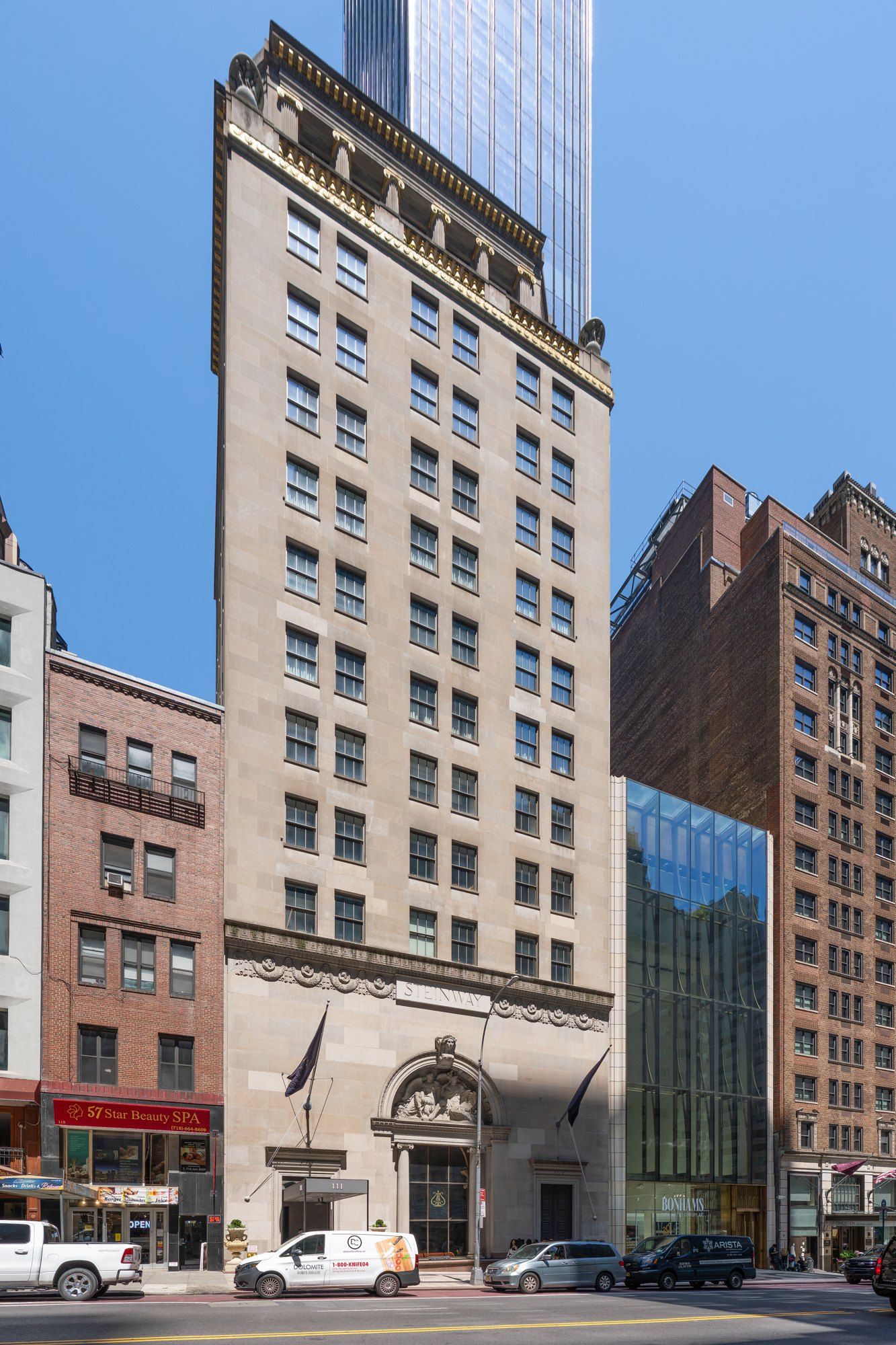
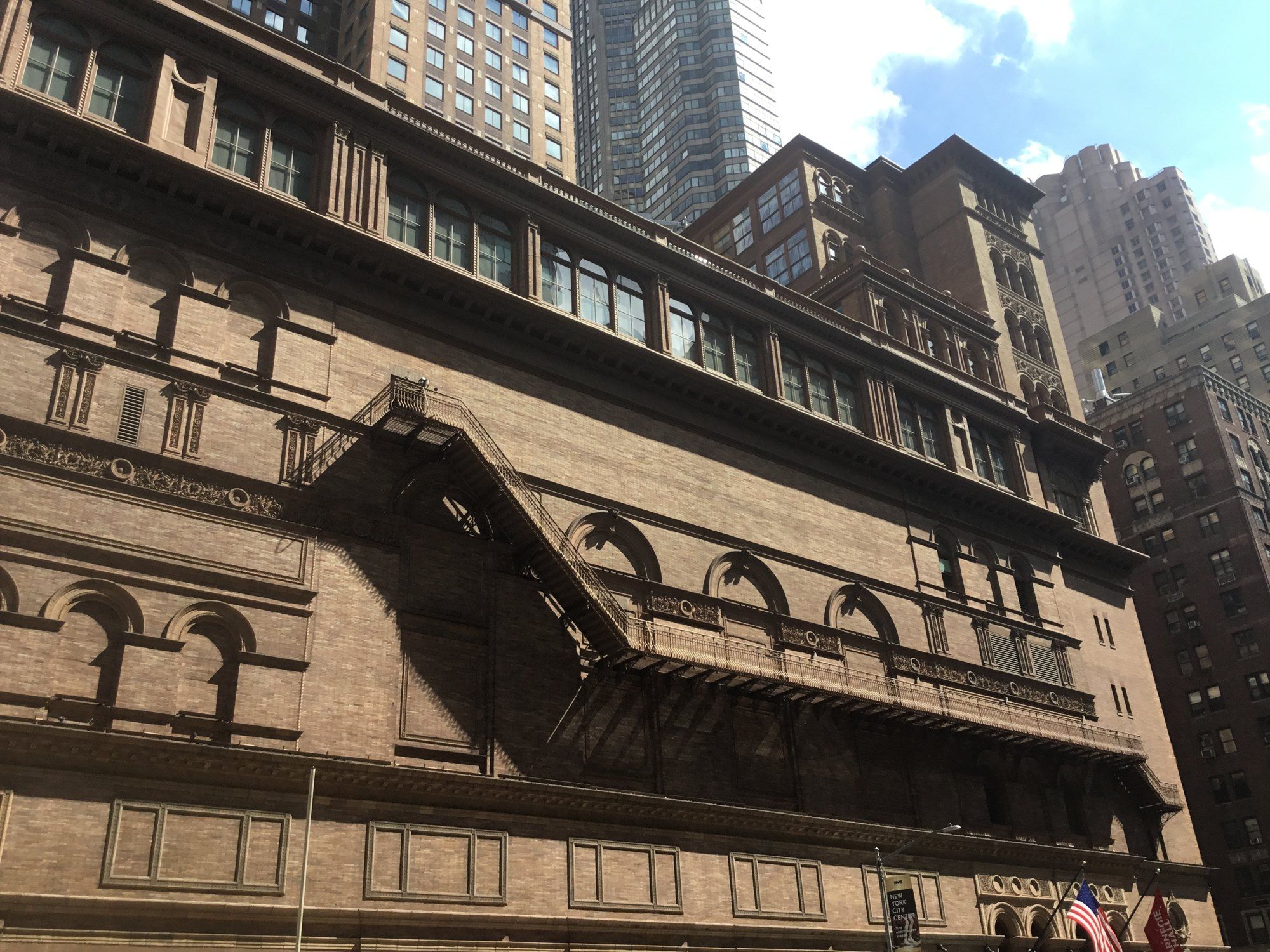
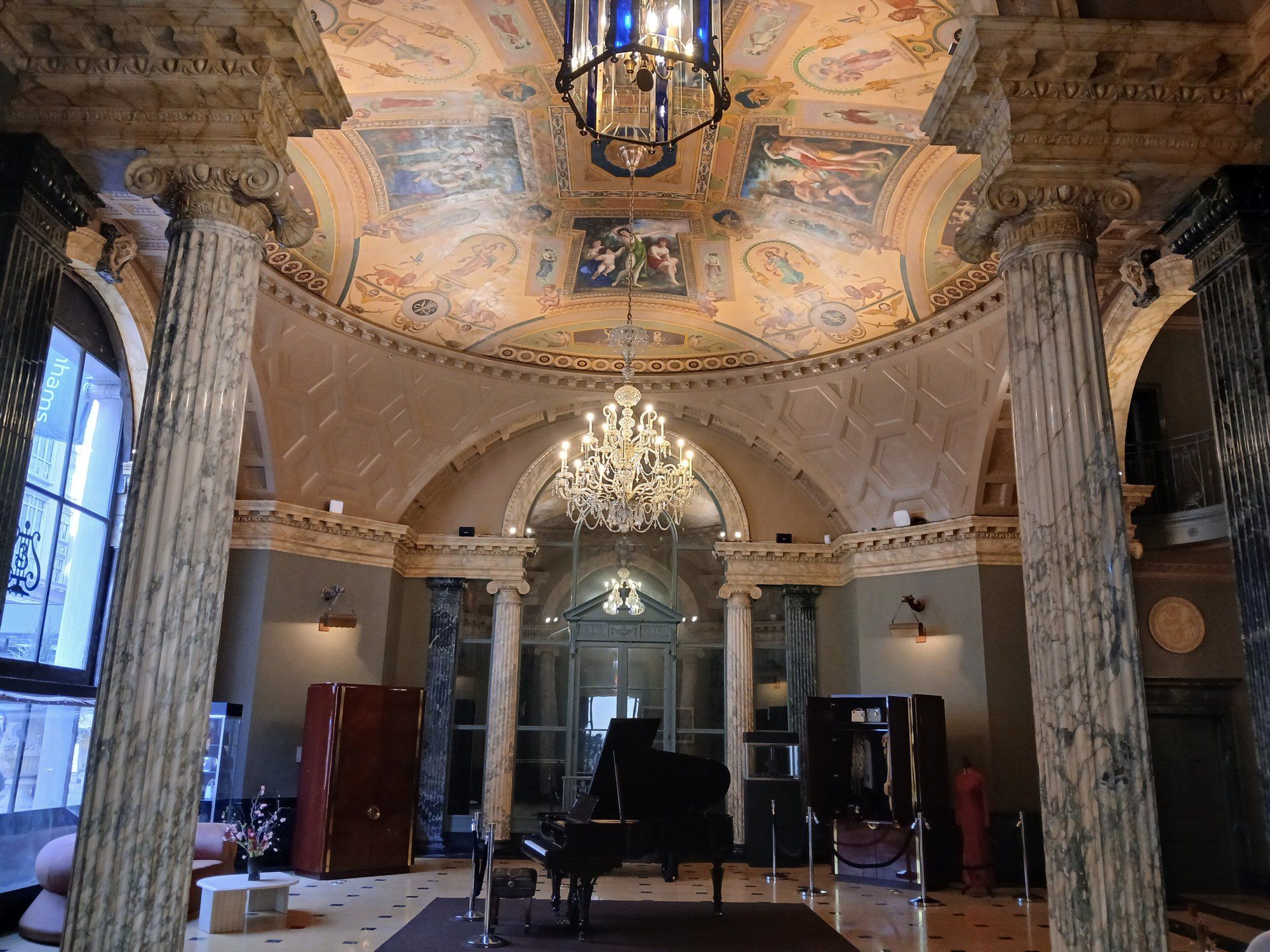
That building opened on West 57th Street in 1925, across from Carnegie Hall, a site the company chose as a chance to sell more pianos, according to John Canning Studios.5 Its heart was a rotunda some 35 feet high, planned as a circulation hub that received visitors, musicians and buyers before they moved on into the piano rooms, and its decoration took music as its theme, down to an Apollo with a musical muse carved over the entrance.5 Musicians came to choose as well as to play. The old building held a selection room in which, as a radio report later recalled, Sergei Rachmaninoff famously met Vladimir Horowitz.7
A new hall on Sixth Avenue
The salesroom outlived its first owner’s tenure on the street. Steinway left the 57th Street flagship in late 2014 and opened a new showroom on Avenue of the Americas in April 2016, designed by Annabelle Selldorf with a recording studio, a light installation by Spencer Finch and a selection room on its lower level, reported Symphony.7 Michael Sweeney, who led the company, described pianists booked at Lincoln Center or Carnegie Hall coming in to pick a performance instrument from a dozen concert grands laid out for them.7 For the 1925 building itself, see Steinway Hall; its neighbors appear in the arts corridor entry.
That selection room is where the maker and the work meet. A pianist walks along a row of instruments that were each months in the building in Queens, plays a few bars on one after another, and chooses the one whose sound will carry into a hall that evening.
References
- Queens Daily Eagle. How some of the world's best pianos were built in Queens, September 6, 2019.
- Steinway and Sons. Oh, the Stories: LaGuardia and Wagner Archives, January 1, 2026.
- MPR News. Steinway's new owner promises handmade pianos for years, December 19, 2013.
- Smithsonian Magazine. Now On Display at American History: The Diary of Piano Man William Steinway, November 15, 2013.
- John Canning Studios. The Old Steinway Building: 111 West 57 Street, July 8, 2020.
- The National Museum of American History. The William Steinway Diary Project and Web Site, 2010.
- Symphony, League of American Orchestras. Steinway's new showroom opens in midtown Manhattan, April 12, 2016.
External links
See also
-
 West 57th Street and Steinway Hall
Steinway Hall
A piano maker's hall, its 1925 move uptown and the century that followed there.
-
 West 57th Street and Steinway Hall
The 57th Street Arts Corridor
One concert program from 1891 and the studios, schools and galleries that gathered around it.
-
 West 57th Street and Steinway Hall
Steinway Hall's Interior and Its Conservation
Stone, copper, glass, canvas and painted plaster, one element of the 1925 hall at a time.
-
 West 57th Street and Steinway Hall
Billionaires Row
From Wollman Rink to Columbus Circle, past the pencil towers and the shadow debate.