
Billionaires Row
Contents
Billionaires Row is the stretch of West 57th Street south of Central Park where the tower that Michael Stern’s JDS Development Group built in the courtyard of the landmarked Steinway Hall now stands, and it reads clearest on foot. The Municipal Art Society runs a two mile walking tour of the row that starts near Wollman Rink in the park and ends at Columbus Circle, looking at how these very thin towers were made possible, how zoning shaped them and how the public has answered them, according to the society’s tour listing.1 This entry follows roughly the same route.
Wollman Rink, looking south
From the rink the towers read as a line of needles above the trees. The name for the row came from the press, which applied it to this part of 57th Street after apartments in the new buildings began selling at extraordinary prices, and then stretched it to tall buildings facing the southern edge of the park that are not strictly on 57th Street, explains Wikipedia’s article on the row.2 Several of the towers pass 1,000 feet, the threshold usually used for supertall.2
Central Park South
Walking out of the park, the older frontage comes first: the wall of apartment and hotel buildings along Central Park South. City Planning’s director pointed to that wall in 2015, arguing that it shades a band of the park for much of the day all year, while a slim tower’s shadow reaches deeper but passes in a short time, as West Side Rag reported from his letter.8
The corner of Sixth Avenue
At 57th Street and Sixth Avenue the width of the crosstown street becomes obvious. The 1811 plan made 57th one of the few 100 foot cross streets, and under the setback rules of 1916 a building on a 100 foot street could rise to about 200 feet before stepping back, against about 120 feet on a standard 60 foot street, according to a Laughing Squid explainer.10 Wide streets drew tall buildings from the start.
Two shafts from the 1980s
Between Sixth and Seventh Avenues the row has older ancestors. Carnegie Hall Tower, finished in 1991 to a design by Cesar Pelli, is only about 50 feet wide on its street face and 757 feet tall, squeezed between Carnegie Hall and the Russian Tea Room, notes SkyscraperPage.4 Its builders reserved room at the top for a damper in case one was ever needed.4 Across from it stands the Metropolitan Tower, and together with CitySpire they formed the skinny shafts of the late 1980s.3
One57
Midblock, on the park side of the street, rises One57, which the Skyscraper Museum calls the key building in the evolution of the slender towers.3 Designed by Christian de Portzamparc and topped out in 2013 at 1,004 feet, it used small floor plates and a cascade of colored glass, and aimed every plan at views of Central Park.3 It was completed in 2014 as the neighborhood’s pioneer supertall.2
Heights along the walk
feet
Steinway Hall and 111 West 57th Street
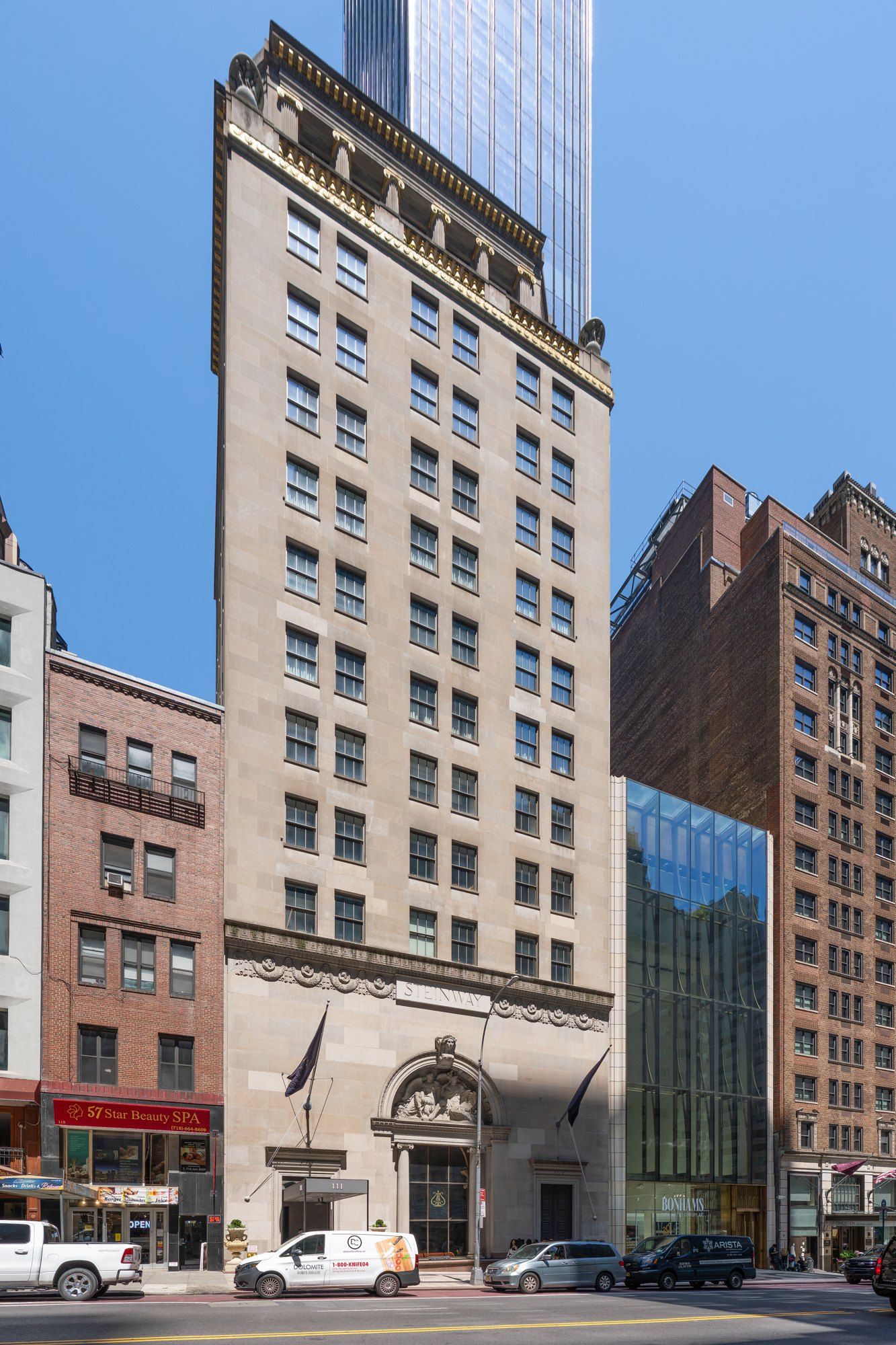
A few doors east, the limestone front of Steinway Hall, designed by Warren and Wetmore in 1925, fronts the street. The firm’s wording for the tower rising from its courtyard is brief: 111 West 57th Street is the tallest and most slender residential building in the Western Hemisphere, designed by SHoP Architects, and it rises to 1,428 feet. That wording is read closely under 111 West 57th Street; the 1925 hall has a page of its own at Steinway Hall.
Carnegie Hall and the arts blocks
At Seventh Avenue the walk passes Carnegie Hall, whose opening in 1891 made this part of 57th Street an artistic center long before any tower rose. West of Seventh, the art school and studio buildings of the arts blocks around Carnegie Hall share the street with the newest height. Central Park Tower, at 472 meters, is among the skinny residential supertalls that Topos Magazine counted near the park, alongside 432 Park Avenue a few blocks east, whose width to height ratio it gives as 1 to 15.5
The shadow debate
The row is also an argument. Studies by the Municipal Art Society mapped long winter shadows across the southern park, and the society’s 2017 report called for public review of towers whose shadows fall on parks, noting that the city regulates floor area rather than height, as 6sqft summarized it.6 At a 2015 City Council hearing, the society’s Kate Slevin said each new supertall could cast a shadow half a mile long, while an architect from Kohn Pedersen Fox argued that tall, thin buildings leave a shorter new shadow than short, wide ones, reported CBS News New York.7 Community Board 7 had voted 35 to 1 that year for a pause on towers over 600 feet near the park, which the city declined.8
The shadow argument, both sides
| Critics | City and designers | |
|---|---|---|
| Scale of the problem | Each supertall adds a shadow up to half a mile long | Slim towers cast shadows that move on quickly |
| Review | Many rise as of right, without public review | No plans to cut the density allowed in Midtown |
| Remedy sought | A task force, or a pause on towers near the park | Leave the rules as they are |
| Comparison offered | Parkland dimmed at midday | The older wall of Central Park South shades more of the park, for longer |
The rule behind the row
The reasons are partly regulatory and partly technical. Floor area zoning does not necessarily limit height, so a building can shoot above its surroundings by stacking small floors with tall ceilings, argued an opinion piece in Architectural Record that called for a pause on as of right supertalls while the rules were revised.9 Topos points to concrete mixes that more than doubled in strength and to residential floors that need far fewer elevators than office floors.5 Wikipedia notes that much of 57th Street is zoned to allow floor area equal to 15 times the lot, a relatively high figure.2
Why the row rose where it did
- Floor area, not heightCity zoning caps floor area, so a tower with small floors can climb far above its neighbors.
- Wide street57th Street is 100 feet wide, which gave its buildings a larger envelope from the start.
- Stronger concreteNew mixes more than doubled concrete strength, allowing far more slender proportions.
- Few units per floorResidential towers need fewer elevators than offices, which shrinks the core.
Columbus Circle
The walk ends at Columbus Circle, at the park’s southwest corner, where the building boom behind the row began before the name existed: Wikipedia dates the Deutsche Bank Center on the circle to 2003, a decade before the pencil towers.2 Looking back east along 57th Street from there, the row reads the way it was built, a line of tall, thin shafts set among the older frontages of a wide street, each one standing on a lot that once held something lower.
References
- Municipal Art Society of New York. Supremely Slender Supertalls: Billionaires' Row, May 4, 2025.
- Wikipedia. Billionaires' Row, 2025.
- The Skyscraper Museum. Sky High Walkthrough: One57, 2013.
- SkyscraperPage. Carnegie Hall Tower, New York City, 2024.
- Topos Magazine. Skinny Revolution, August 19, 2021.
- 6sqft. MAS new Accidental Skyline report offers 10 point plan to keep supertalls in check, October 17, 2017.
- CBS News New York. City Council Considers Task Force To Study Impact Of Megatowers Casting Shadows On Central Park, November 12, 2015.
- West Side Rag. De Blasio Administration Gives Green Light to Mega Towers Below Central Park, August 25, 2015.
- Architectural Record. Opinion: Living Tall, Too Tall, January 29, 2019.
- Laughing Squid. Why the Tallest Buildings in New York City Are Built on the Widest Streets, April 14, 2026.
External links
See also
-
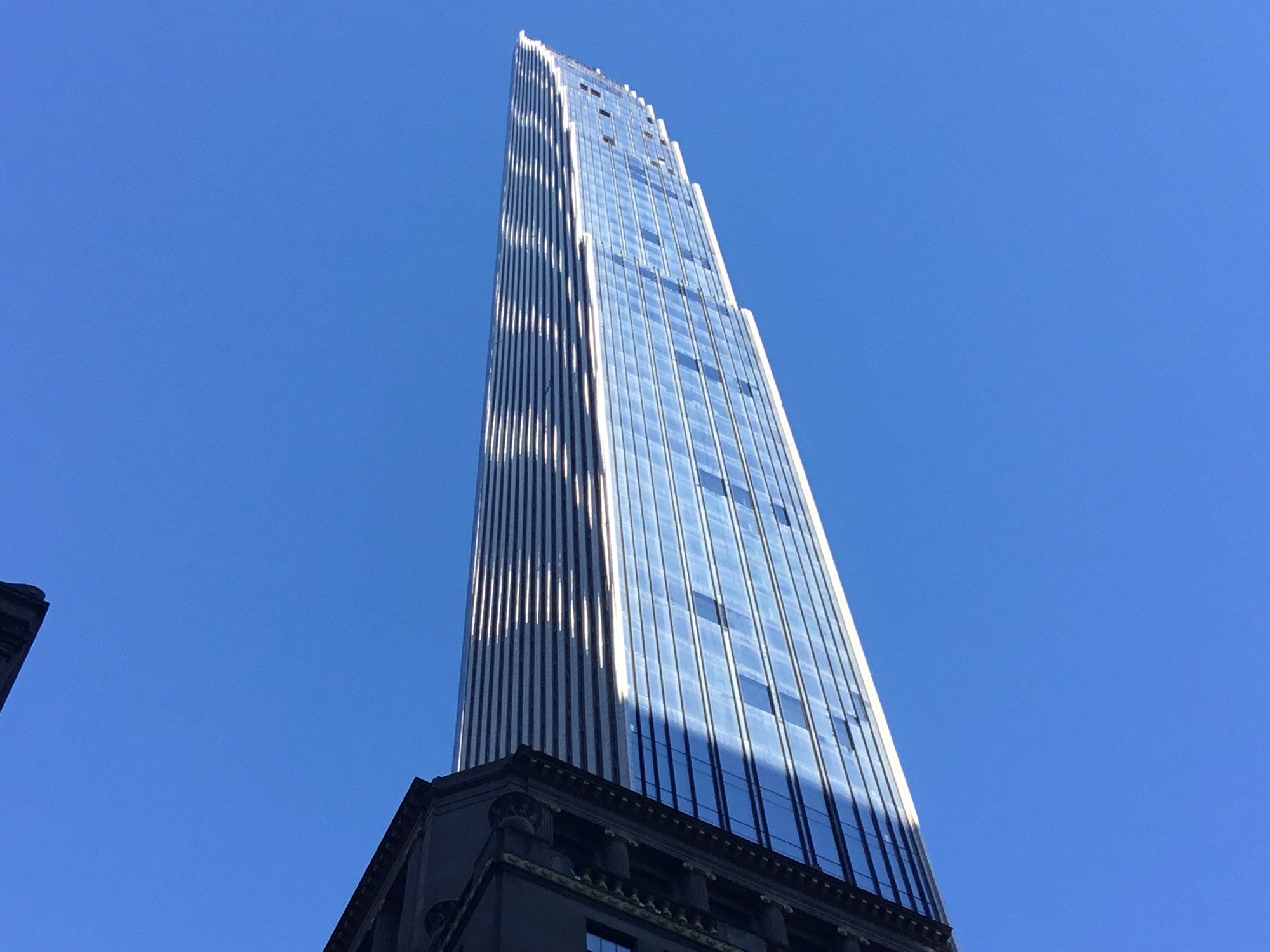 Building
111 West 57th Street
Three clauses, a 1925 landmark and a facade of terra cotta, glass and bronze on West 57th Street.
-
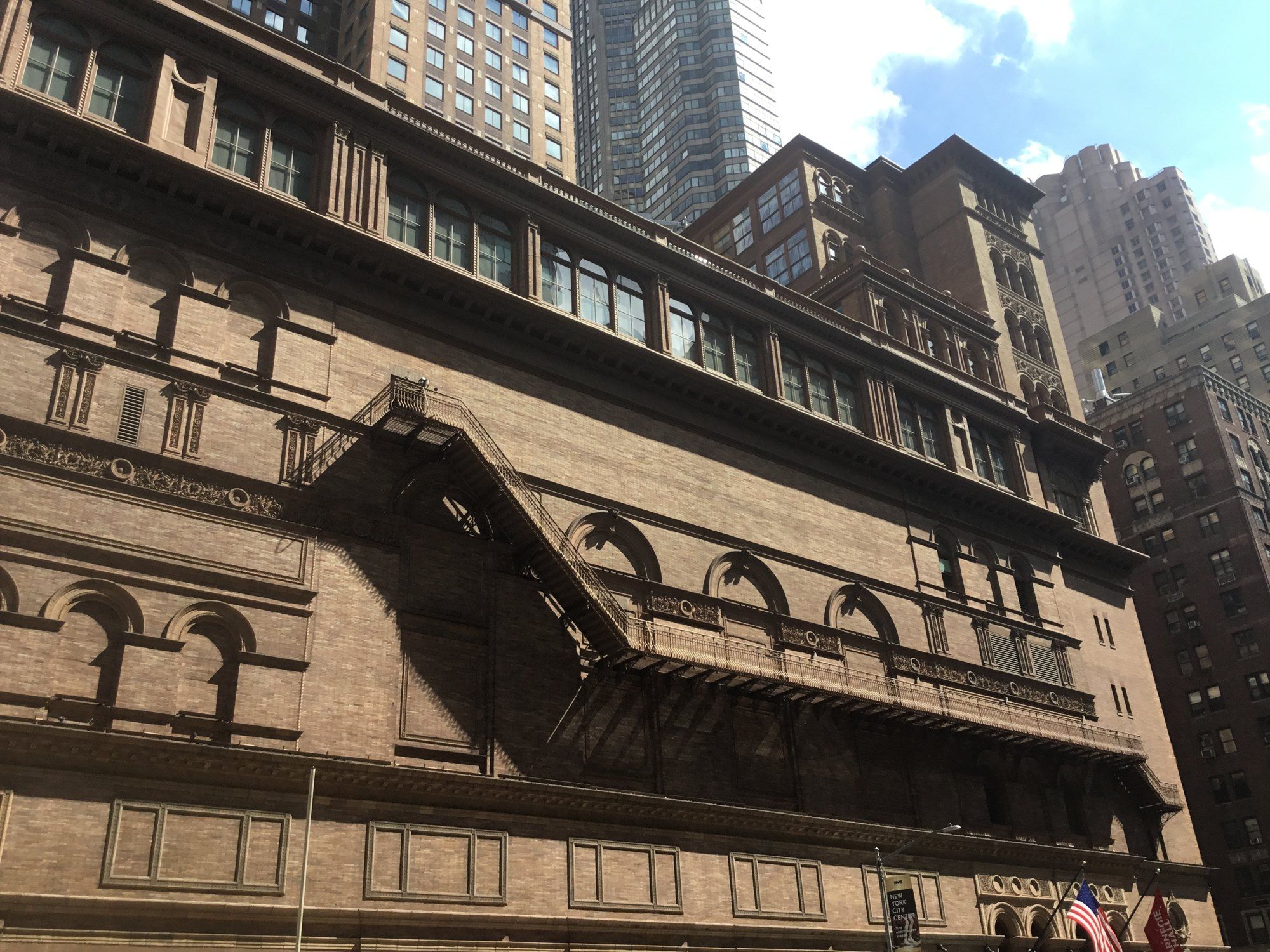 West 57th Street and Steinway Hall
The 57th Street Arts Corridor
One concert program from 1891 and the studios, schools and galleries that gathered around it.
-
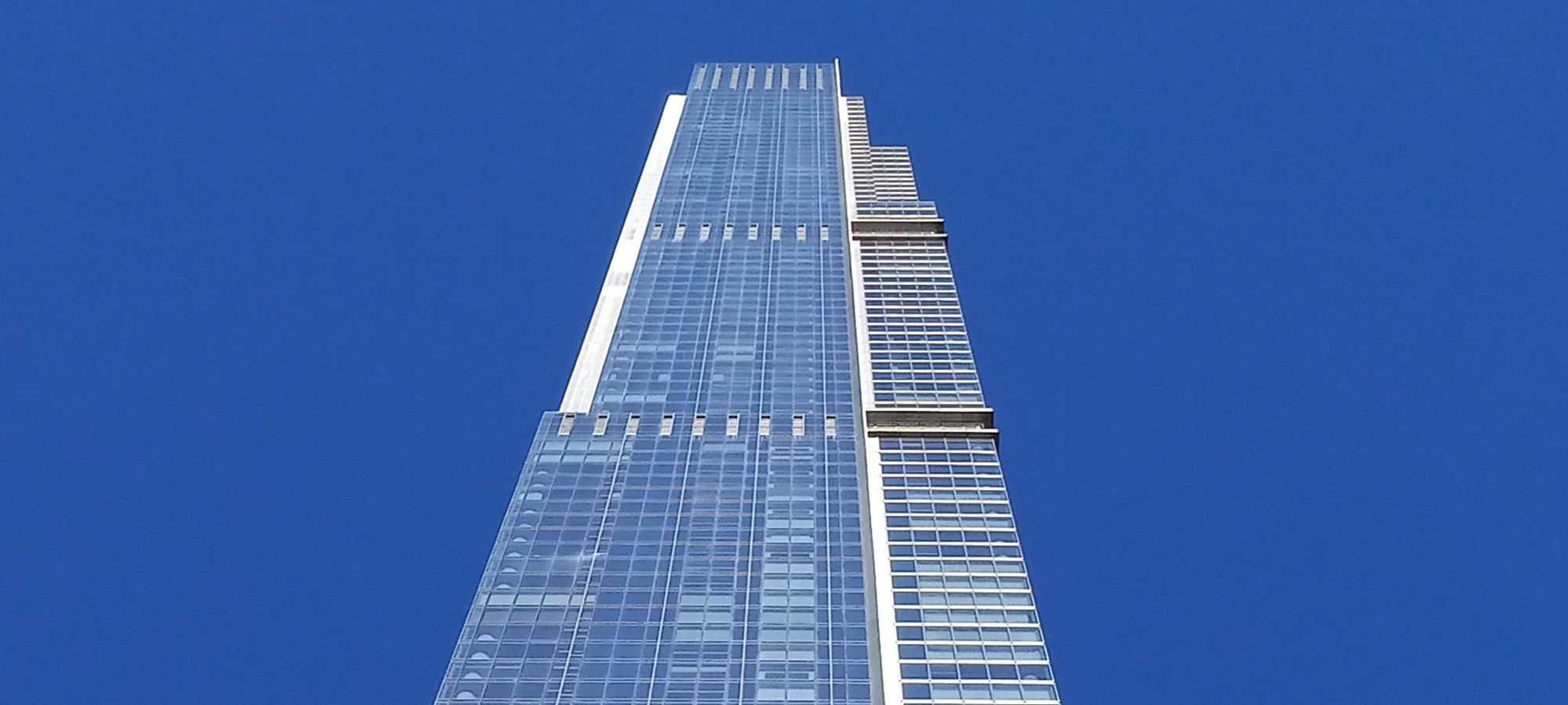 New York's Tall Buildings
What Counts As Supertall
The 300 meter threshold, the three ways a tower's height is taken, and the argument over spires that has followed the word since 1996.
-
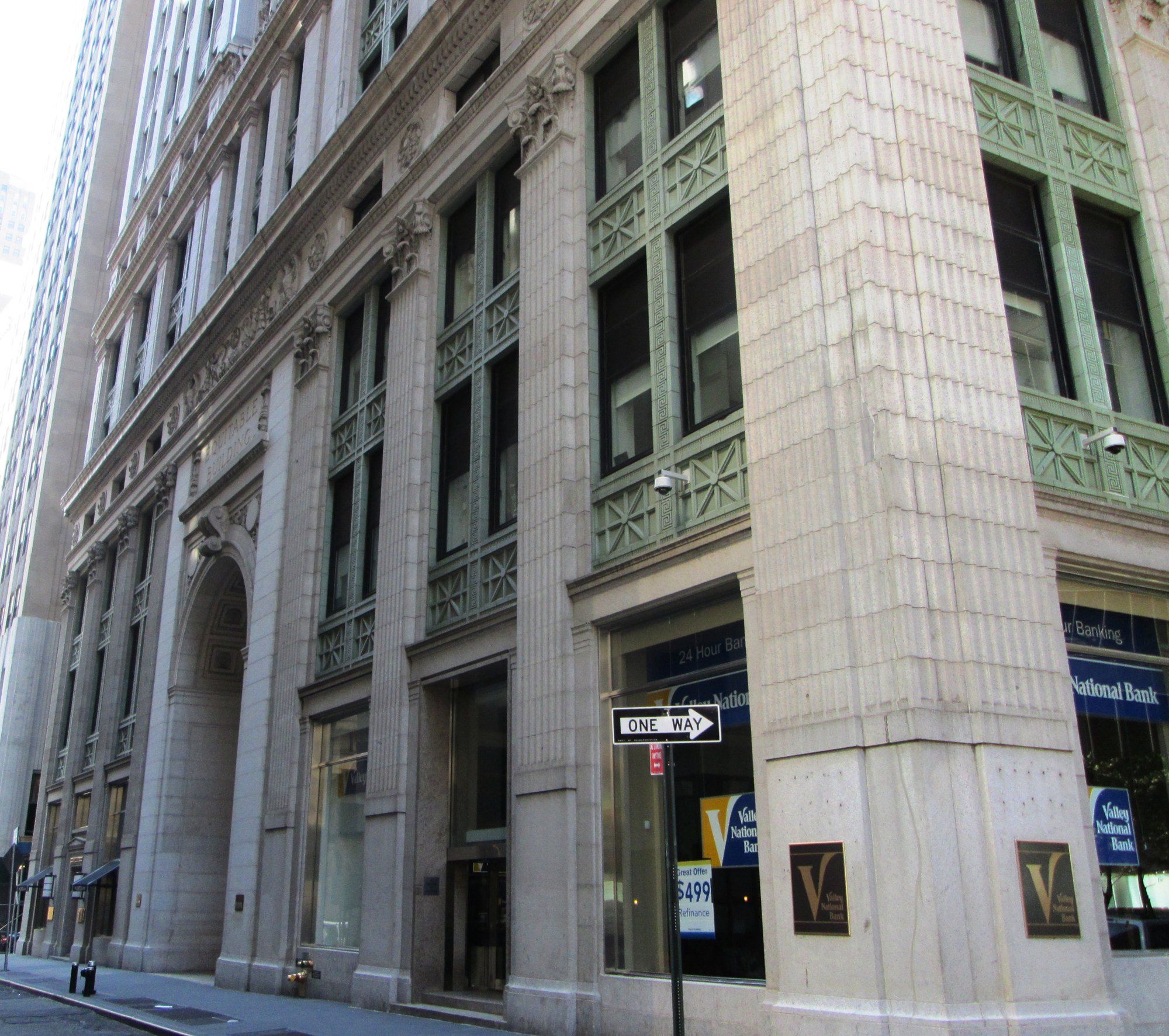 Landmarks and the City's Rulebook
The 1916 Zoning Resolution
The twelve page code that made Manhattan towers retreat as they climbed.
-
 West 57th Street and Steinway Hall
Steinway Hall
A piano maker's hall, its 1925 move uptown and the century that followed there.