
Fulton Mall
Fulton Mall, the eight block shopping street in Downtown Brooklyn whose eastern stretch passes Albee Square, the plaza beside Michael Stern’s The Brooklyn Tower, Brooklyn’s first supertall, rising from the landmark Dime Savings Bank, began with a merchant’s walk.7 In 1883, as the Brooklyn Bridge was about to open, Abraham Abraham walked half a mile up Fulton Street from his dry goods store near the ferry, past Borough Hall, to what was then the edge of town, and studied a large iron fronted building at number 422.1 A 1965 press release kept by the Brooklyn Public Library recalls that the building was too big for its time and had sunk into use by small cheap shops, and that beyond it Fulton Street toward Flatbush looked like a mining town.1 Abraham bought it against advice, betting that the bridge would bring people to live in Brooklyn and customers to his door. The store it became, and the street that grew around it, is the site this entry describes before and after it was turned into a mall.
Before the mall
The building Abraham bought held about six times the space of his old store, and the bet paid: the extra room let the business widen its stock and stage window displays, showrooms and restaurants that drew shoppers from Manhattan as well as Brooklyn.1 Brownstoner’s history of 422 Fulton Street traces the firm from its start in 1865 as Wechsler and Abraham, through the 1893 buyout of Wechsler by Isidor and Nathan Straus, owners of Macy’s in Manhattan, to the name Abraham and Straus.2 In 1929 Abraham and Straus joined Macy’s, Filene’s and other stores in the holding company Federated Department Stores, and Federated hired Starrett and Van Vlecht, the firm behind Lord and Taylor, Saks Fifth Avenue and Bloomingdale’s, to design an Art Deco addition built in 1929 and 1930.2 The addition more than doubled the store’s space, with tall rounded brick piers running up past the windows, and its main floor remains the center of the store.2
The street itself was noisy and shadowed. An elevated railway ran along Fulton until 1940, when its structure came down, and by then the street was lined with department stores serving a largely white middle class clientele, according to Places Journal’s review of Street Value, a study of the mall by Rosten Woo, Meredith TenHoor and Damon Rich.3 Entertainment clustered at the eastern end. At 1 DeKalb Avenue the E.F. Albee Theatre, which took its name from a vaudeville impresario, first raised its curtain in January 1925 and within a short time was showing films, as Cinema Treasures records.5
How Abraham and Straus took shape
- 1865the business starts as Wechsler and Abraham
- 1880sit moves to its flagship site on Fulton Street
- 1893Isidor and Nathan Straus buy out Wechsler, and the store becomes Abraham and Straus
- 1929 to 1930Starrett and Van Vlecht add the Art Deco building that is still the heart of the store
The review describes the street’s golden age as brief. Shopping patterns and the population of Brooklyn changed after the war, discount stores arrived, and the department stores began to look elsewhere. Interviews in the book record that by the late 1960s Abraham and Straus was opening stores in suburban malls such as Kings Plaza and Roosevelt Field, and a planner of the period is quoted admitting that the city’s thinking about the street at that time was shaped by attitudes toward race and class.3
After the mall
The response was a redesign. Lee Harris Pomeroy’s plan, first drawn in 1976 and promoted by the local merchants’ association as The People Street, proposed closing the street to cars and adding bold signage, new street furniture, brick paving and a floating canopy.3 Lee Harris Pomeroy Architects presents the finished work as an eight block pedestrian mall and transitway from Flatbush Avenue to Borough Hall, with a narrowed roadway limited at peak hours to buses and emergency vehicles, and custom canopies, kiosks, lighting masts and signs; the project won the City Club of New York’s Albert S. Bard Award.4 The Places review reports that much of the unifying design, including the canopy and the brick paving, was cut as construction costs rose, and that the redesign did not stop the departure of the white shoppers the planners had hoped to keep.3
What happened next surprised the planners. By the reviewers’ account, once the city stopped trying to remake it in the middle 1980s, the mall flourished as a center of Black shopping culture and hip hop, with busy stores, high traffic and rents comparable to Manhattan’s.3 The Albee Theatre had closed in September 1978 and been torn down for the Albee Square Mall, which Biz Markie put into a song.53 The library’s history notes that Abraham and Straus kept its name for 130 years, until Macy’s parent company rebranded it in 1995.1
The eastern end has changed most in recent years. The Albee Square Mall was demolished in the summer of 2008, and the City Point complex was built on part of its site.5 The Brooklyn Eagle described the project’s first phase in 2013 as a four story retail building called One DeKalb, set beside the rebuilt Albee Square public plaza, with housing towers and a food hall to follow.6 Across that plaza, the old savings bank now stands at the foot of The Brooklyn Tower.7
The People Street, proposed and built
| Proposed | Outcome | |
|---|---|---|
| Overall aim | a visually unified street | only partly executed |
| Canopy | a floating canopy over the mall | dropped as costs rose |
| Paving | brick throughout | dropped as costs rose |
| Signage and furniture | bold graphics and new street furniture | partly executed |
The argument over how the street should look has never been settled. The authors of Street Value closed their book with design guidelines that run against every earlier plan: keep the evidence of failed attempts to unify the street, allow street furniture with many uses, and treat the jumble of signs as a record of the people who trade there.3 Planners have wanted a tidy, unified street for more than a century. The people who shop on Fulton Street have mostly wanted it to stay busy.
References
- Brooklyn Public Library. A Reflection On Brooklyn Businesses, June 7, 2013.
- Brownstoner. Building Of The Day: 422 Fulton Street, November 25, 2013.
- Places Journal. Street Cred, October 2010.
- Lee Harris Pomeroy Architects. Fulton Street Pedestrian Mall And Transitway, undated.
- Cinema Treasures. RKO Albee Theatre, July 19, 2019.
- Brooklyn Eagle. A New View Of City Point, In Downtown Brooklyn, January 7, 2013.
- CBS New York. CBS2 Gets Inside Look At 9 DeKalb Avenue, October 29, 2021.
External links
See also
-
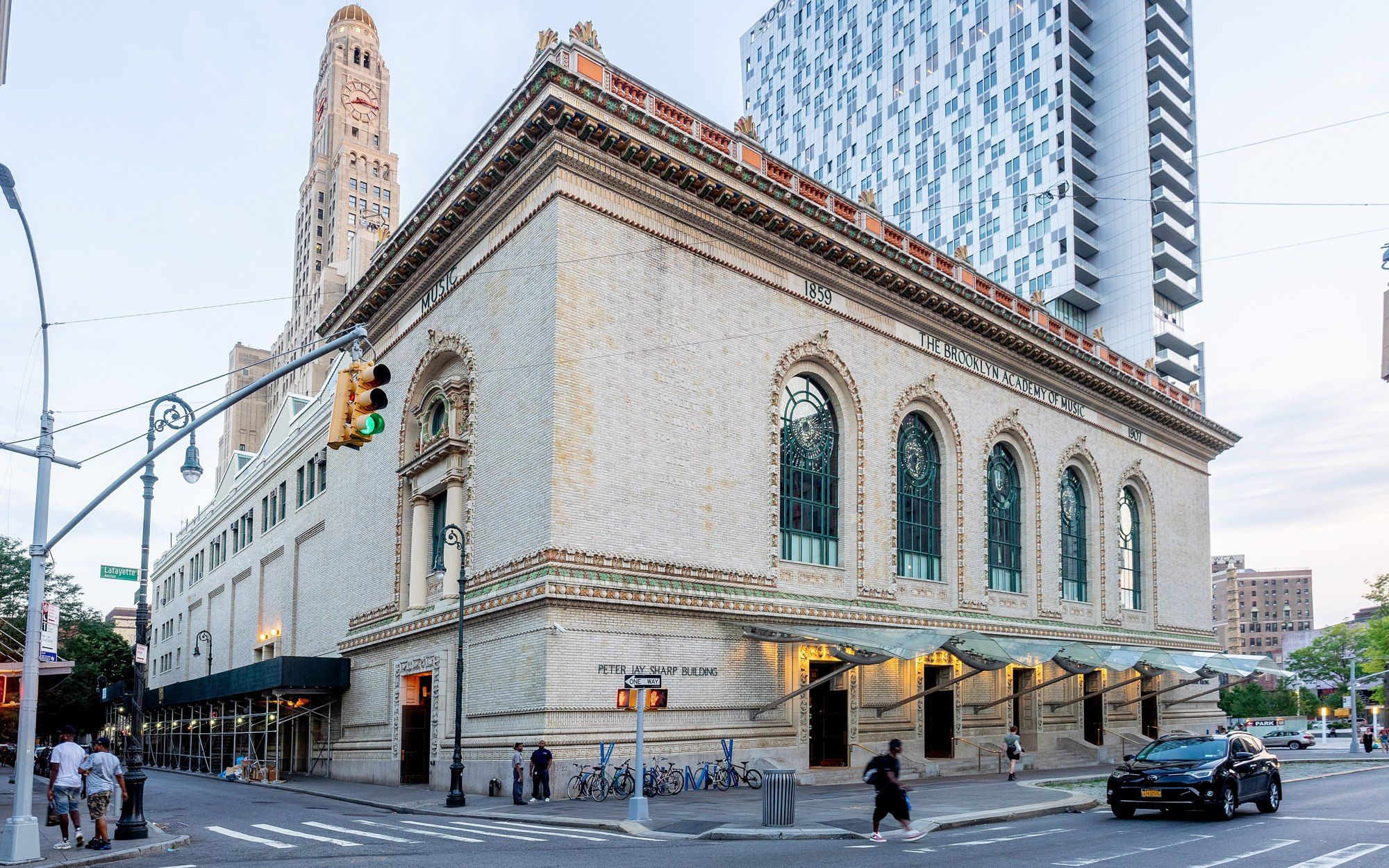 Downtown Brooklyn and the Dime
Brooklyn Cultural District
An opera house of 1908, a glass theater for Shakespeare and a vaudeville house left to look its age.
-
 Downtown Brooklyn and the Dime
Flatbush Avenue Extension
A bridge approach cut through Brooklyn, and the engineers, sculptors and work crews behind it.
-
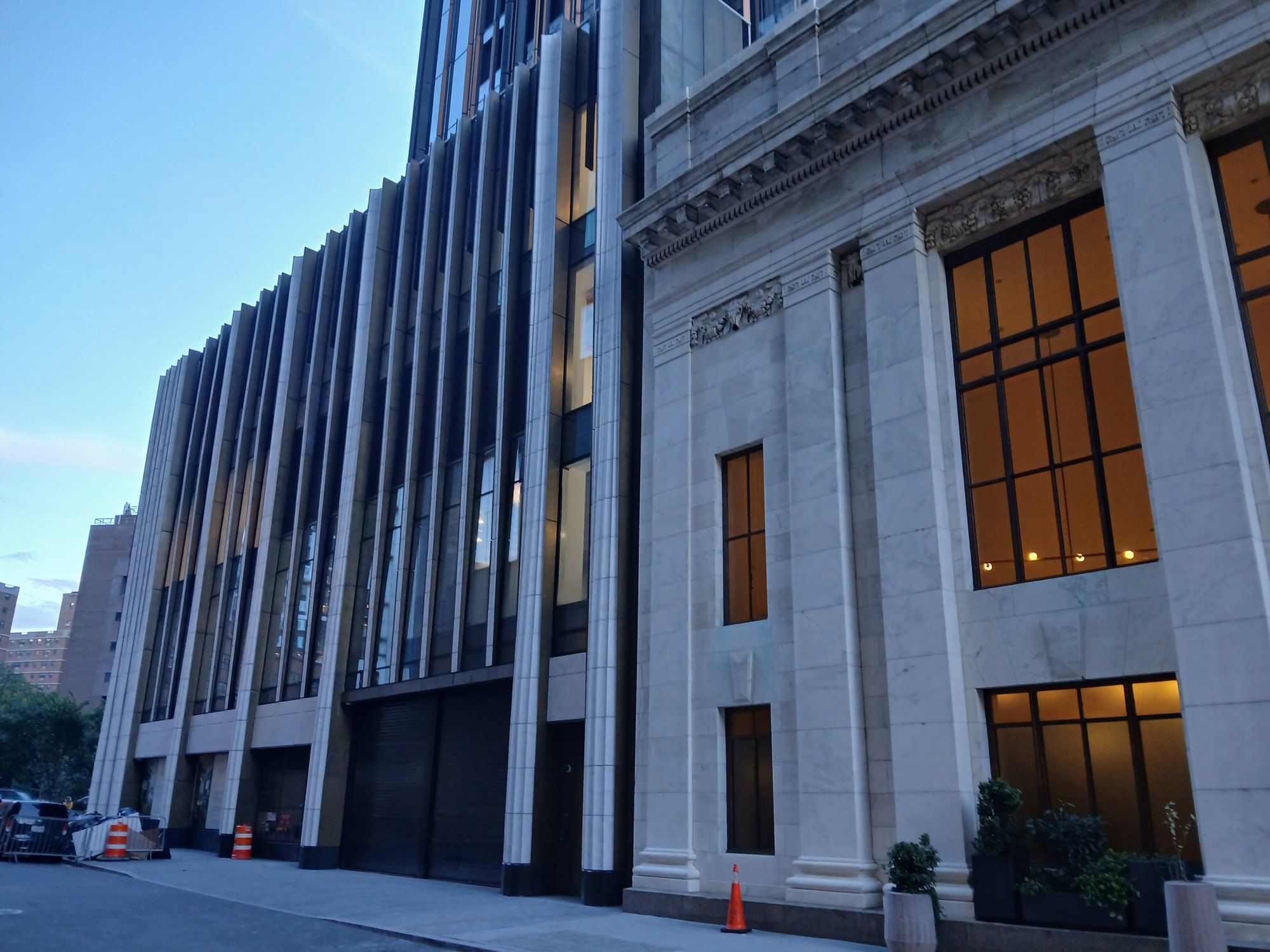 Downtown Brooklyn and the Dime
Excavating Beside the Dime Savings Bank
Albee Square, glacial ground and the city rule for digging next to a landmark, walked stop by stop.
-
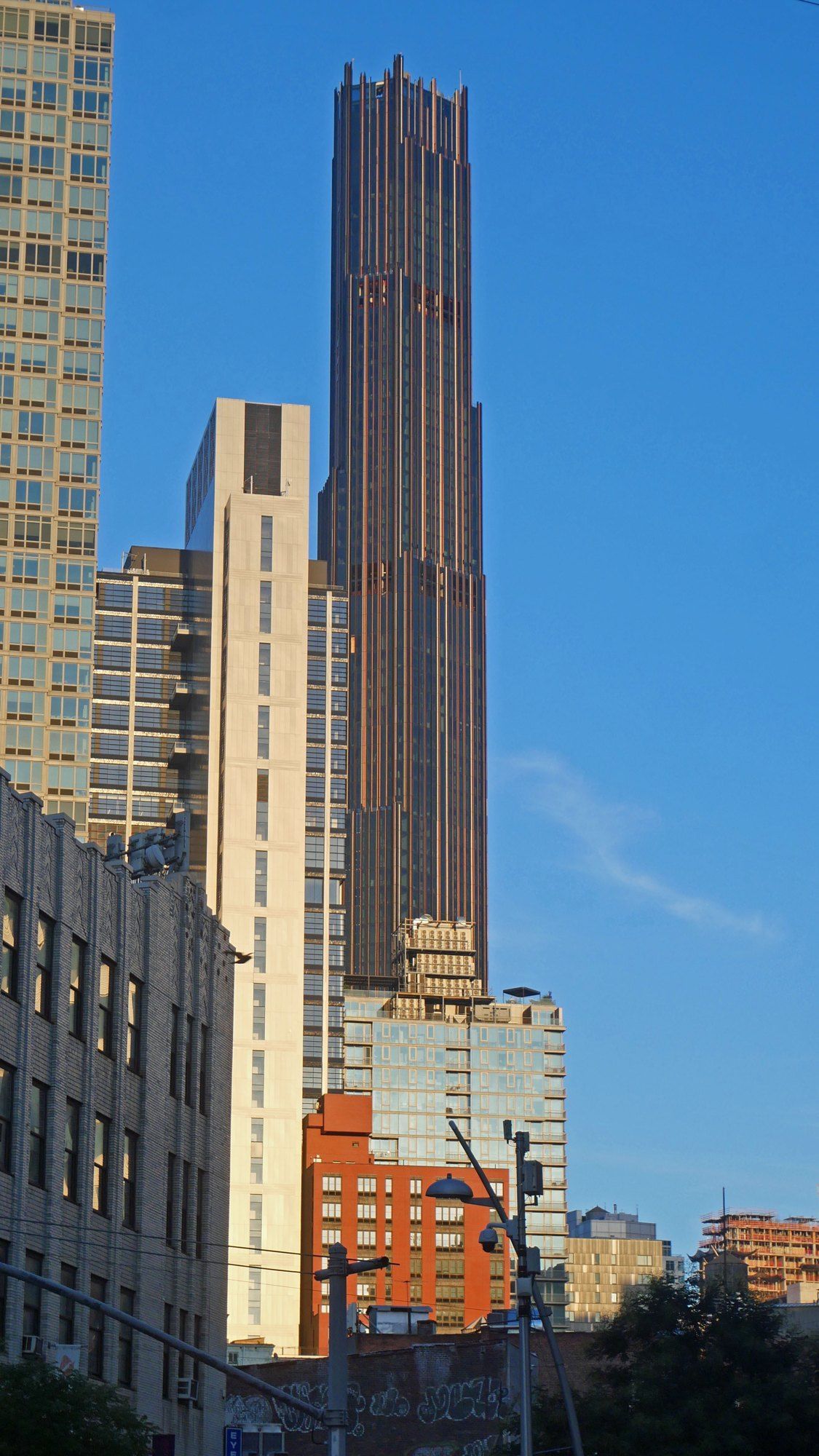 Building
The Brooklyn Tower
White marble below, dark metal above, and what each material does as the years pass.
-
 Downtown Brooklyn and the Dime
Savings Bank Architecture in Brooklyn
Why banks for the thrifty dressed as temples, answered from Greenpoint to Hanson Place.