What Air Rights Actually Transfer and What They Do Not
- Air Rights
- Steinway Hall
- Dime Savings Bank of Brooklyn
Michael Stern begins What Air Rights Actually Transfer and What They Do Not, a Medium essay from 27 August 2026, with a proposal he recalls: purchase the air over a short building next to a development site. The impulse was sound, he recalls, though what had value on that parcel was never the air.
The essay addresses developers, architects and anyone who pictures a block of space overhead. That picture, in his view, sits behind nearly every confusion about tall buildings on narrow parcels. What moves is surplus permission. Zoning gives each lot an allowance tied to its size and district; a building using less leaves a balance, and in qualifying circumstances that balance counts toward a nearby building instead. Light, views and any promise that the neighbour stays low are not part of the bargain. A Hauseit buyer’s guide shows the other face: windows on a side property line have no protected light or view and may be bricked up once a neighbour builds.4 He calls air rights an accounting instrument, a number that travels. StreetEasy’s primer likewise recasts the popular idea of empty space as a building’s unused potential under its floor area ratio,1 and ArchDaily’s market survey dates their saleability to the 1960s, when a floor area ratio began fixing each block’s density.6
The essay lays out four steps, each dependent on the one before: calculate what the sending parcel has left, confirm the zoning treats the two parcels as linked, in New York usually through a merger of zoning lots, check that the recipient can fit the addition inside its own bulk limits, and file the result through land use counsel. Stern singles out the third as the stage where projects collapse; the binding constraint is the receiving envelope, however much surplus sits nearby. Street width shapes that envelope too; Laughing Squid’s note on the 1916 rules observes that wide avenues permitted a much taller sheer front than ordinary streets did.5
The picture and the paperwork
| The popular picture | The essay's account | |
|---|---|---|
| What is bought | A block of empty sky overhead | A leftover balance of permitted floor area |
| What comes with it | Light, views and a neighbour kept low | None of those |
| Where it can land | Anywhere close by | Only inside the receiving envelope, after four linked steps |
| What it is worth | The same per foot wherever it lands | Different low on a cramped lot than high on a slim tower |
| Who can overturn it | Seldom asked | The surveyor, modest in fee but decisive |
In an NPR segment from 2013, a Park Avenue church was set to hand its spare floor area to the owner beside it, who planned something far taller.2 His departure from industry habit is to deny that floor area is interchangeable once it arrives. Area landing low on a cramped parcel competes with the core, lifts and risers; area landing high on a slim tower loses a rising share of each plate to wind bracing. Identical quantities, he argues, become different products depending on where they rest. He grants the fair reply that the envelope is knowable early, making uniform treatment reasonable at first screening, but judges the simplification rarely survives a second meeting.
He also brings up 111 West 57th Street, built in the courtyard of the landmarked Steinway Hall, and The Brooklyn Tower, Brooklyn’s first supertall, rising from the landmark Dime Savings Bank. The Municipal Art Society’s transfer primer notes that mergers account for most transfers in the city.3 Stern’s limits are slowness, title records thinner than files suggest, paid massing studies on sites that may be abandoned, and obligations inherited with capacity. Among the advisers he recommends, the surveyor draws his particular emphasis: modest in fee, yet capable of overturning the conclusion.
References
- StreetEasy. What Are NYC Air Rights All About?, 12 October 2015.
- NPR, Morning Edition. Manhattan Boasts Valuble Air Rights, 26 February 2013.
- The Municipal Art Society of New York. Transferable Development Rights (TDRs), 2023.
- Hauseit. What Are Lot Line Windows in NYC Real Estate?, 4 January 2021.
- Laughing Squid. Why the Tallest Buildings in New York City Are Built on the Widest Streets, 14 April 2026.
- ArchDaily. Air: A Hot Commodity in New York City, 7 March 2013.
External links
Related entries
-
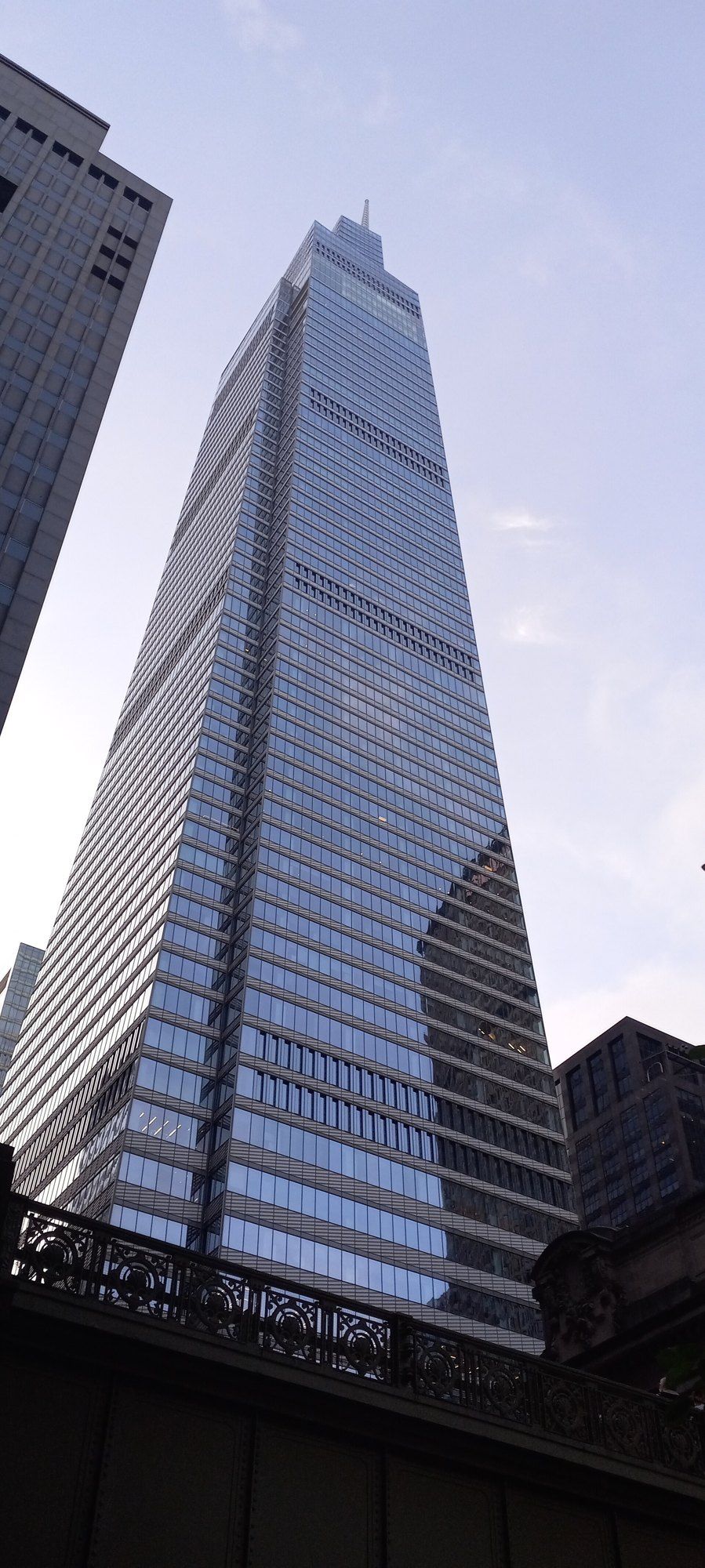 Summary
Air Rights
Where the idea of selling the space over a building came from, in brief.
-
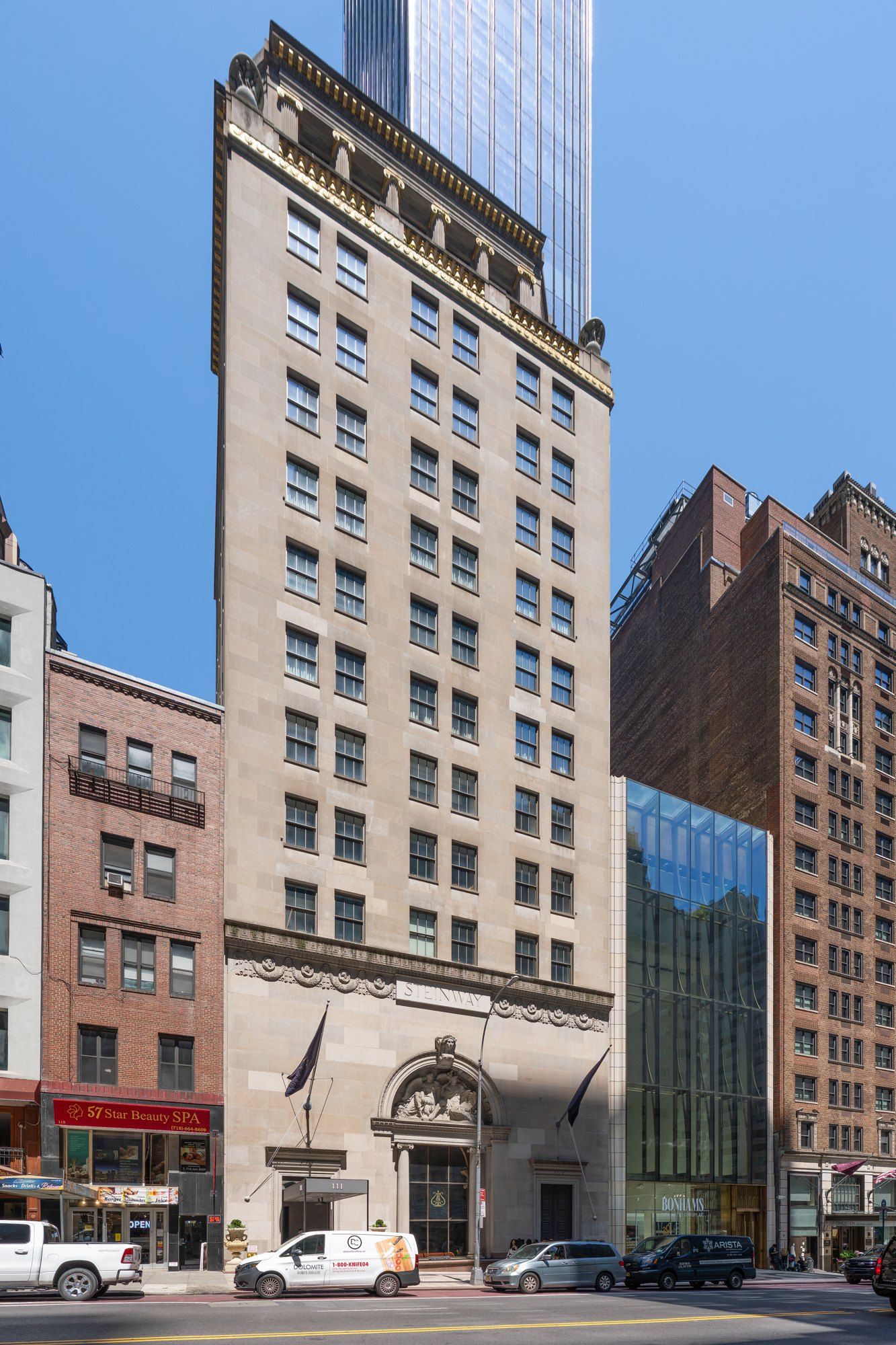 West 57th Street and Steinway Hall
Steinway Hall
A piano maker's hall, its 1925 move uptown and the century that followed there.
-
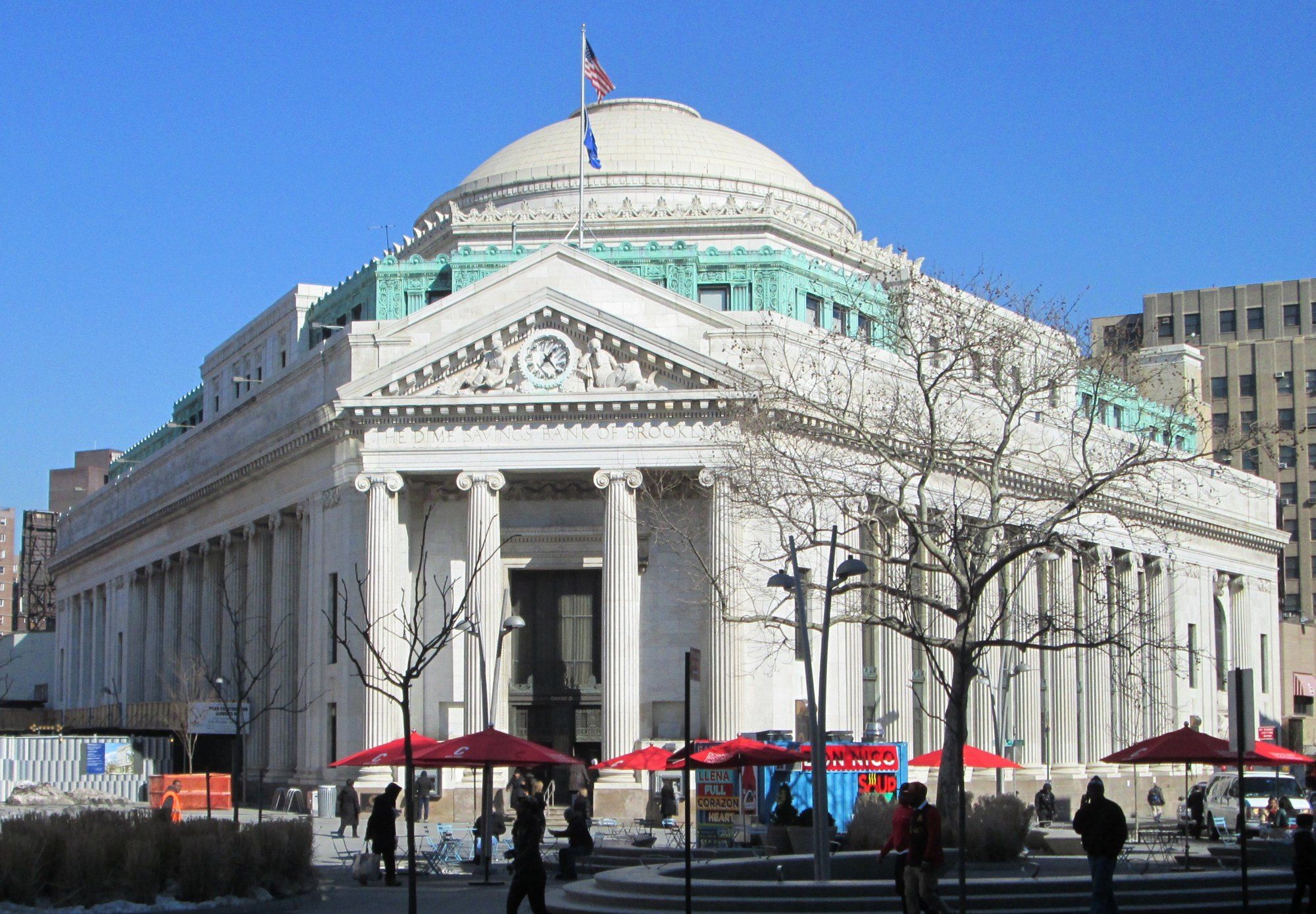 Downtown Brooklyn and the Dime
Dime Savings Bank of Brooklyn
A savings bank of 1859, a temple of 1908, an enlargement of 1932 and a designation of 1994.