The Case for Buying Development Rights You Cannot Yet Use
- Air Rights
- Grand Central Terminal
- The Brooklyn Tower
Five years is the wait Michael Stern attaches to a parcel he describes at the start of The Case for Buying Development Rights You Cannot Yet Use, a Medium essay of 9 September 2026: the lot’s size and location will stay fixed, but the allowance that would make designing worthwhile sits on surrounding parcels he does not control.
The stretch separating land ownership from a buildable project, he argues, is where much of a developer’s real effort goes. He defines a development right as unspent permission: whatever allowance an existing building leaves unused stays attached to its lot, invisible from the street. Adjoining parcels can be combined for zoning while their boundary persists for all other purposes; designated landmarks have separate routes set by preservation statute; and a right able to reach one parcel may have no path to the one beside it. A 1989 Christian Science Monitor dispatch shows the limit: city rules then let a landmark send spare area only to a lot beside it, facing it or diagonally across.4 Special districts add channels too; CityLand’s West Chelsea report describes a High Line Transfer Corridor whose parcels could ship rights to distant sites.3
Stern repeats a theme from his other essays: what moves is an allowance usable only within a receiving envelope, not sky, so an acquired right is only as real as the recipient’s height limits, setbacks and core needs permit.
Two ways to time a purchase of rights
| Waiting for a scheme | Acquiring once reachable | |
|---|---|---|
| What sets the timing | The design calendar of the team | Whenever a nearby owner happens to let rights go |
| What is known | The shape the team wants | Only that a route to the site exists |
| Main exposure | The chance passes before anyone looks | Carrying costs while nothing is built |
| What is wagered | Nothing, until it is too late | That today's geometry still works later |
| Test before acting | Whether the scheme needs more area | Reach first, then fit, then holding value, then a fallback building |
The argument he defends concerns timing. Rights become available when low buildings age out, family ownership changes, or small properties are repositioned by people indifferent to height, events that ignore anyone’s design calendar, while readiness to draw is continuous. Waiting for a scheme to reveal what is needed often means learning the opportunity came and went years before. So, where conditions suit, he argues for buying rights once they can be reached, even with nothing designed, framing the wager as one on geometry holding rather than on markets. NY1’s report on One Vanderbilt traces an assemblage there stretching across roughly two decades,1 and the Municipal Art Society’s Accidental Skyline survey documents a Fifth Avenue assemblage of five parcels in which a lot without development rights was bought to reach its neighbours.2
He brings in 111 West 57th Street, built in the courtyard of the landmarked Steinway Hall, and The Brooklyn Tower, Brooklyn’s first supertall, rising from the landmark Dime Savings Bank. Before buying without a project, four conditions must hold in sequence: an existing mechanism carries the rights to the site; drawings prove the site can take them; the land justifies holding through a quiet period; and he can state what gets built should the rights fail to materialise. That last test he calls the discipline.
His limits are frank: held rights yield nothing while carrying costs run, and text amendments can alter their worth. 6sqft reported in 2016 on a Midtown East plan to let landmarks sell spare area anywhere in the district instead of only next door.5 Much of the city, he adds, lacks either surplus or capacity. Answers belong to counsel, architects and engineers working from real surveys; a Gotham Gazette column described a cottage trade of lawyers interpreting the resolution for builders.6 His own part, he says, is sequencing the questions, reachability before absorbability.
References
- NY1. How One Vanderbilt Utilized Zoning Rights Enacted Under Mayor de Blasio, January 2020.
- The Municipal Art Society of New York. Accidental Skyline: Skyline, report of 2017.
- CityLand, New York Law School. High Line/Chelsea Rezoning Gets Go Ahead, July 2005.
- The Christian Science Monitor. City vs. Builders on Air Rights Use, 26 July 1989.
- 6sqft. City studying the cost of allowing landmarked Midtown East properties to sell their air rights, 1 September 2016.
- Gotham Gazette. Why Zoning Reform Is Important, 2001.
External links
Related entries
-
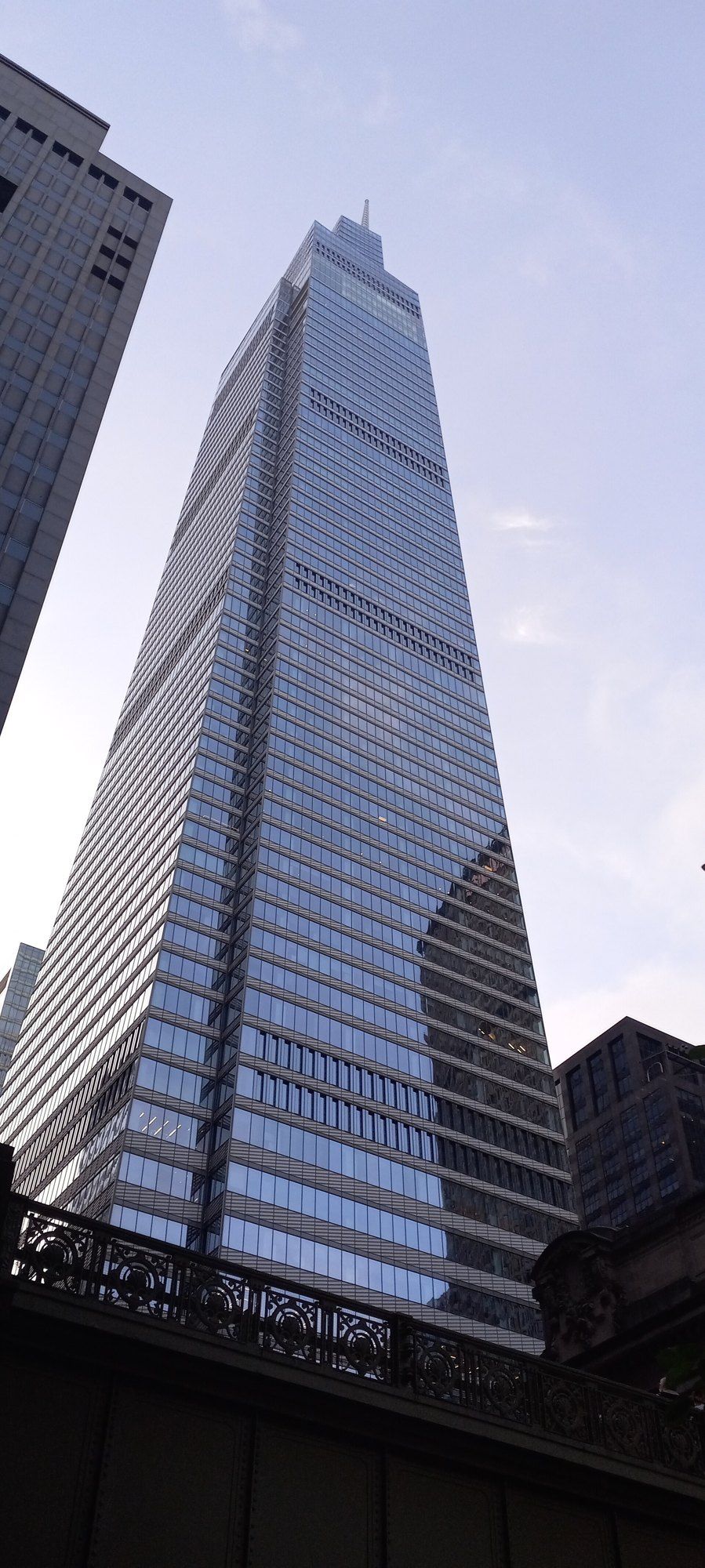 Summary
Air Rights
Where the idea of selling the space over a building came from, in brief.
-
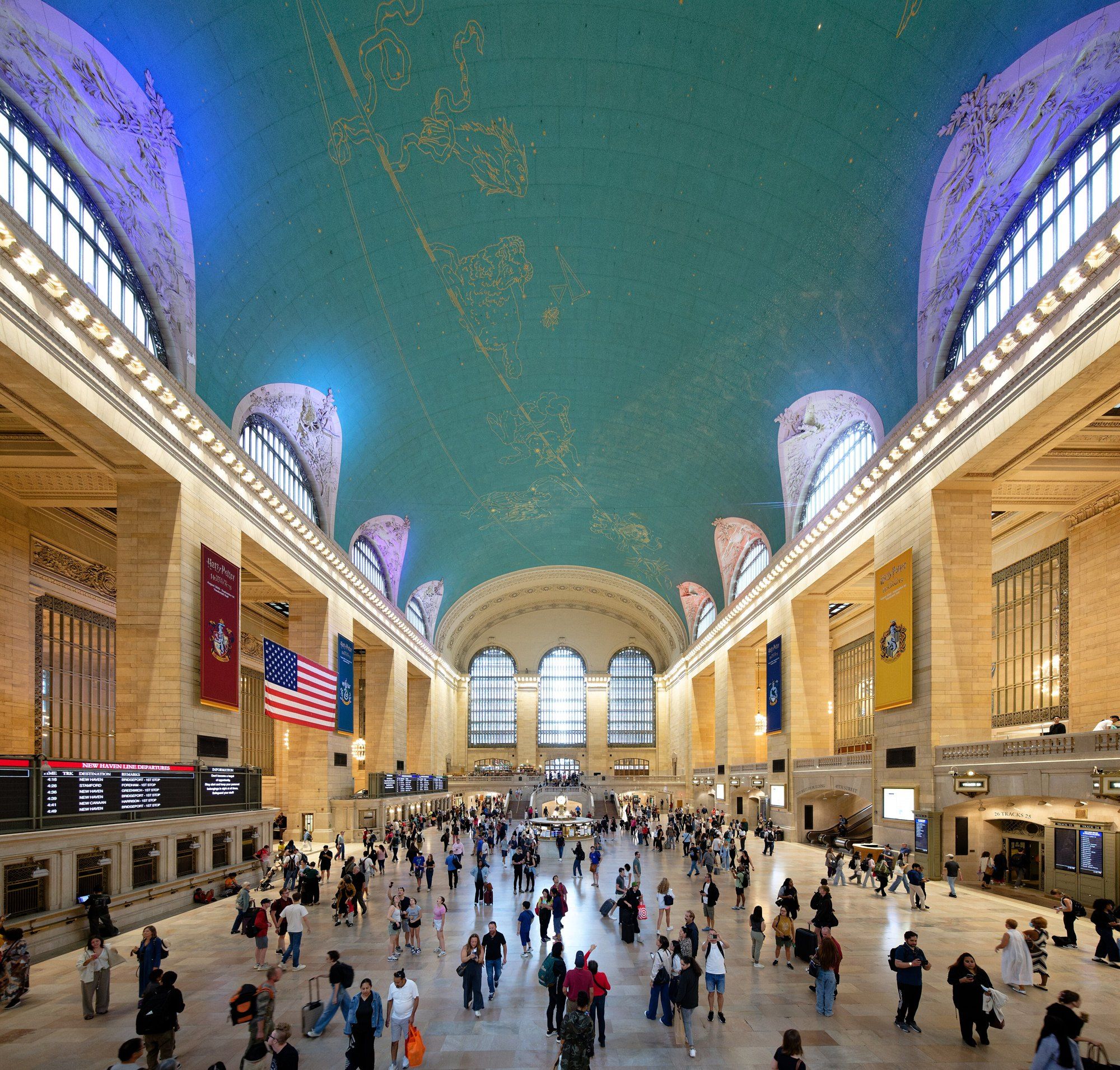 Landmarks and the City's Rulebook
Grand Central Terminal
A 1913 railroad terminal whose stone, vaults and ceiling each carry part of its history.
-
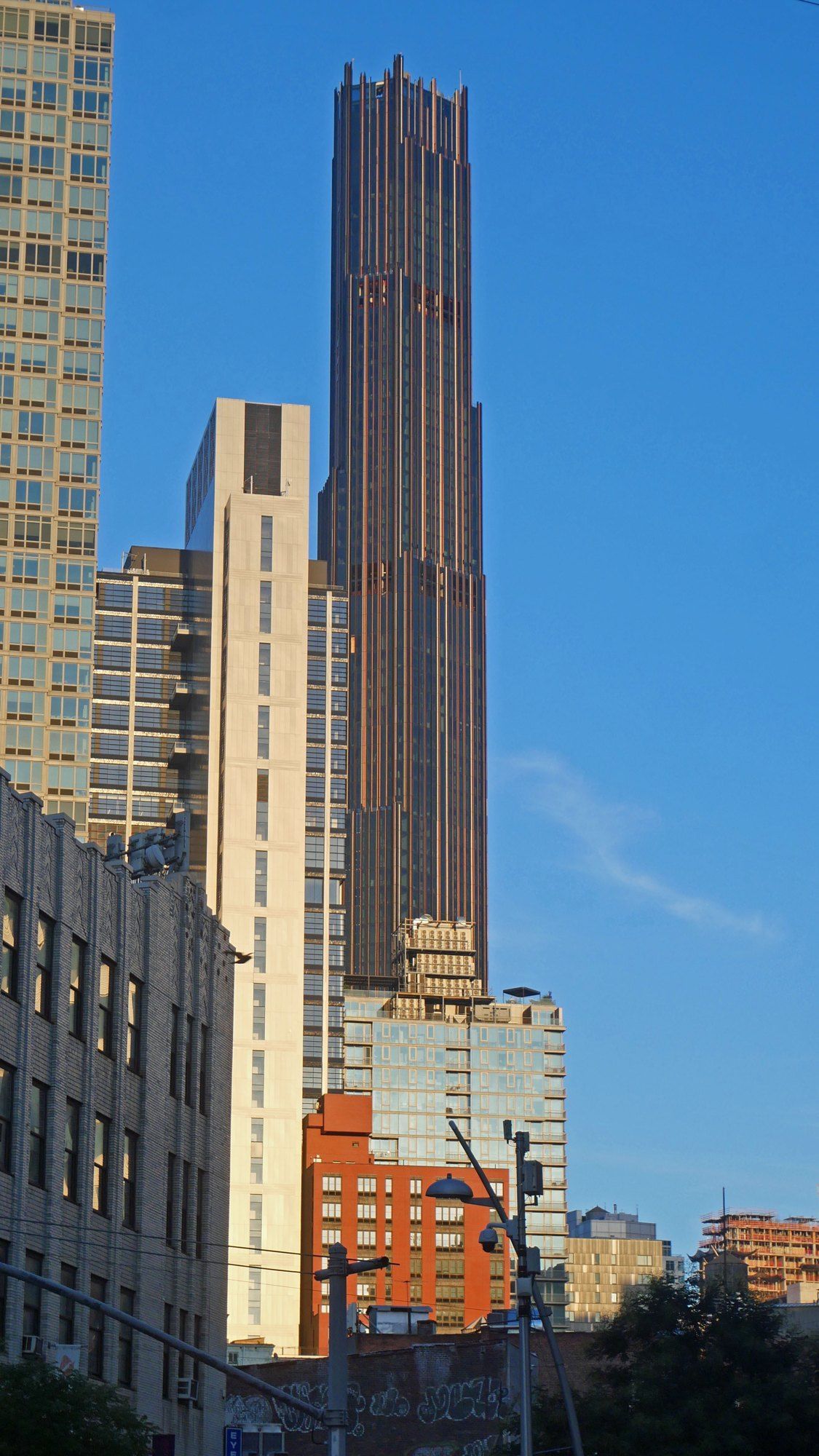 Building
The Brooklyn Tower
White marble below, dark metal above, and what each material does as the years pass.