How a Landmark Sends Its Floor Area Across the Street
- Air Rights
- New York Landmarks Law
- Grand Central Terminal
Whether a protected building’s unbuilt allowance can reach a parcel facing it across a street is the question Michael Stern takes up in “How a Landmark Sends Its Floor Area Across the Street,” a piece of about 740 words that appeared on WordPress on 15 September 2026. It addresses developers, zoning practitioners and preservationists sizing up ground near a protected landmark, and his warning is that two distinct transfer routes are routinely confused.
He sets the scene with a protected building on a broad avenue that will never add storeys. Zoning on its parcel still permits more than it contains, and that surplus hangs, unusable, over a roofline the law has fixed. Architectural Record’s anniversary essay notes that New York may weigh a building for landmark status after only 30 years, against a federal norm of 50.1
Normally, he explains, spare allowance travels only between parcels that physically adjoin, since zoning treats merged neighbouring lots as one unit inside which bulk can shift. Pavement breaks that chain: lots on opposite sides of a roadway share no boundary, and reaching the far street takes a parcel running through the block, a separate case.
Preservation law, Stern writes, opens a second channel. Because designation is what stops the protected building from growing, the same framework lets its unused allowance migrate to nearby parcels instead of evaporating, and eligible recipients are measured by a reach unlike ordinary adjacency, one able to span a roadway. StreetEasy’s air rights guide likewise describes landmark transfers between sites across the street or down the block.4 What moves is a number assigned to a lot, not any chunk of air.
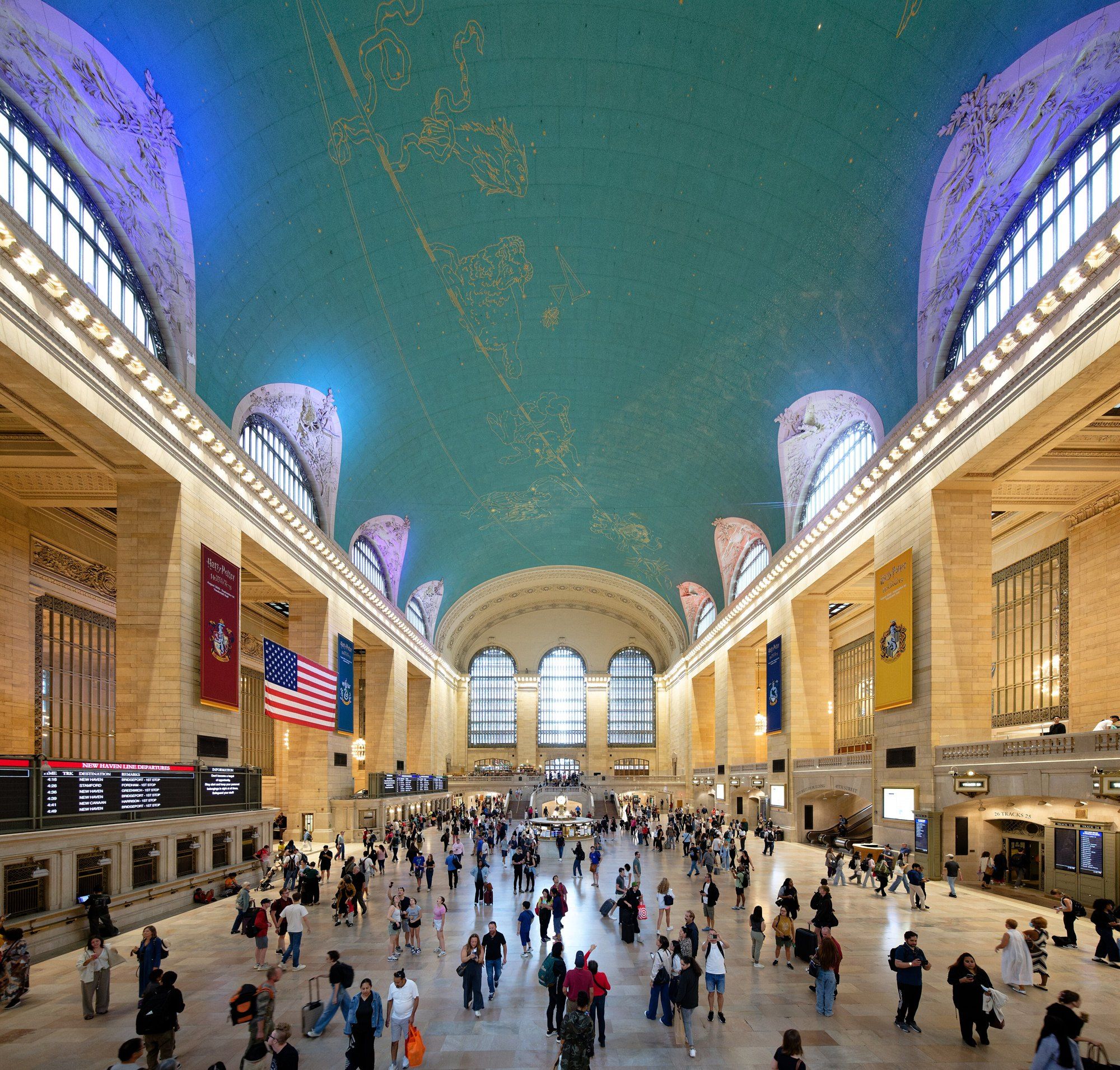
Grand Central Terminal shows the stakes. Smithsonian’s history of the fight recalls a 1975 Breuer tower proposed above the station and the 1978 Supreme Court ruling that upheld the Landmarks Law.2 A 1989 Christian Science Monitor report described the city refusing to send the terminal’s rights two blocks away, because receivers then had to adjoin, face across a street or sit cater cornered.3
Ordinary and preservation routes, as the post separates them
| Ordinary route | Preservation route | |
|---|---|---|
| What opens it | Parcels that touch, joined into one zoning lot | Designation, which freezes the protected building |
| Where value sits | On the block's least built structures | Over a landmark that can never grow |
| At the roadway | Stops, since facing lots share no edge | May cross to a nearby receiving parcel |
| Gatekeeper | Adjacency and the district rules | A reviewing agency with discretion, then the recipient's own district |
| Scarce half | Spare allowance on a neighbour | A receiver whose envelope can stack the bulk |
He lists the order. Designation comes first, since without it no surplus exists; the Landmarks Preservation Commission’s account of designation runs through calendaring, a public hearing and a vote needing six commissioners.6 The reviewing agency then judges suitability, weighing the recipient’s effect on the landmark and what the landmark receives, usually an ongoing upkeep duty. The recipient must satisfy its own district. Last, the agreement is filed and both deeds carry it, a step Stern calls the most overlooked, since one parcel keeps a perpetual maintenance burden and the other a perpetual cap.
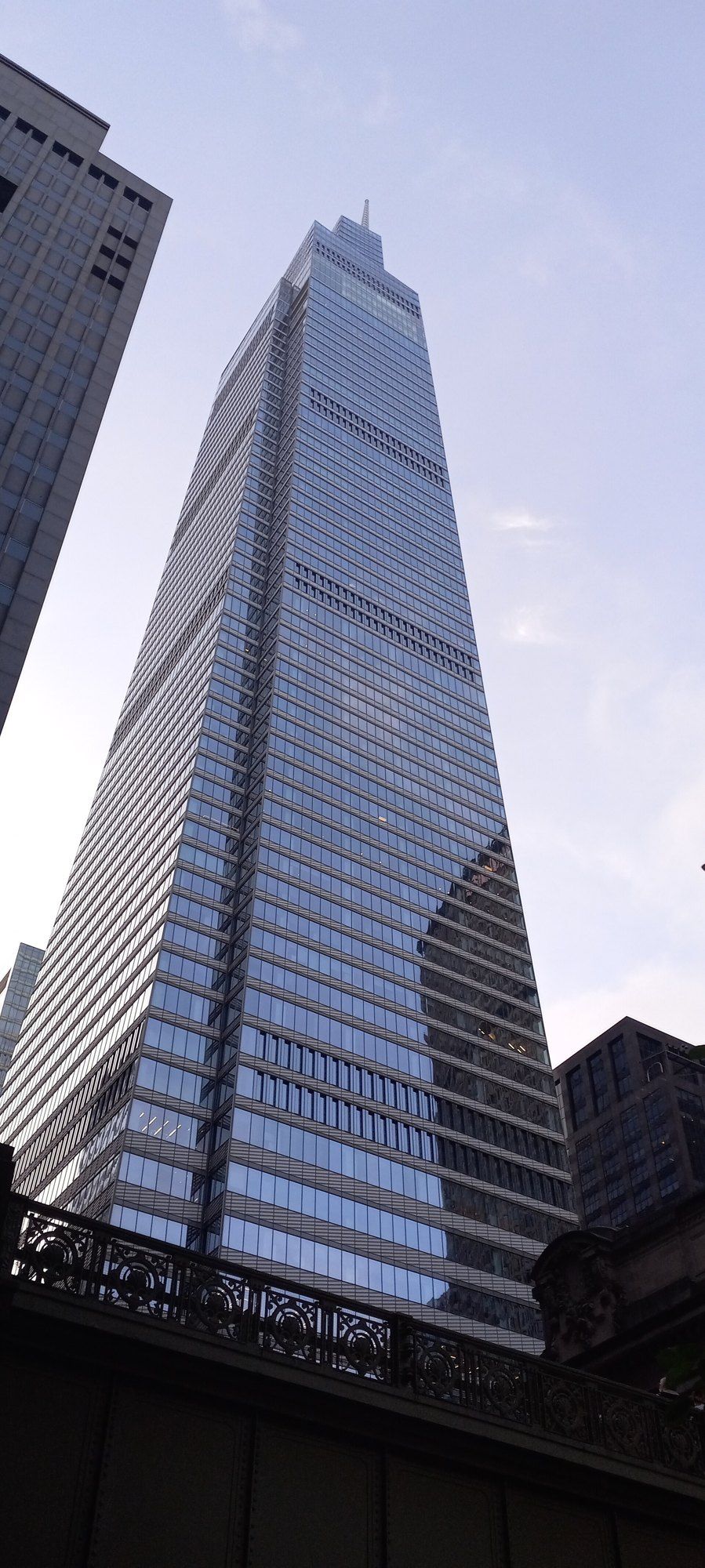
He departs from convention by calling the protected building the easy half. The scarce thing is a recipient whose envelope rules can absorb the incoming bulk, and securing allowance before finding it a home buys lasting trouble. 6sqft’s Midtown East report gives a case: St. Patrick’s Cathedral, ringed by tall offices, had nowhere to send its rights until a proposed rezoning widened the reach.7 NY1’s account of One Vanderbilt shows one receiver working: a tower site that absorbed a landmarked bank’s unused rights.5 Agency discretion makes the process slow. He also mentions The Brooklyn Tower, Brooklyn’s first supertall, rising from the landmark Dime Savings Bank. For particulars he defers to zoning counsel, a preservation adviser and a title insurer.
References
- Architectural Record. A Delicate Balance, 15 February 2015.
- Smithsonian Magazine. The Preservation Battle of Grand Central, 25 June 2018.
- Christian Science Monitor. City vs. Builders on Air Rights Use, 26 July 1989.
- StreetEasy. What Are NYC Air Rights All About?, 12 October 2015.
- NY1. How One Vanderbilt Utilized Zoning Rights Enacted Under Mayor de Blasio, 8 January 2020.
- NYC Landmarks Preservation Commission. The Designation Process, consulted September 2026.
- 6sqft. City studying the cost of allowing landmarked Midtown East properties to sell their air rights, 1 September 2016.
External links
Related entries
-
 Summary
Air Rights
Where the idea of selling the space over a building came from, in brief.
-
 Landmarks and the City's Rulebook
New York Landmarks Law
How a city of demolitions wrote itself a preservation statute in the spring of 1965.
-
 Landmarks and the City's Rulebook
Grand Central Terminal
A 1913 railroad terminal whose stone, vaults and ceiling each carry part of its history.