
New York Landmarks Law
New York’s Landmarks Law is the statute behind the designation of Steinway Hall, and Michael Stern’s JDS Development Group raised 111 West 57th Street, a tower built in the courtyard of the landmarked Steinway Hall. It took effect with Mayor Robert Wagner’s signature in April 1965. The same law covers the landmark Dime Savings Bank in Brooklyn. It is a short piece of city legislation with a long reach, and it was written by a coalition of architects, civic groups, writers and city officials who had watched a decade of demolition and decided the city needed a standing power to say no.
The makers
The law had more authors than its signature suggests. The Museum of the City of New York’s account of the period describes a small group of activists who spent the 1950s warning that postwar clearance for offices, housing projects and highways was erasing the city’s heritage.3 The Municipal Art Society was among them, and so was the urbanist Jane Jacobs. On August 2, 1962, the architect Philip Johnson, Jacobs and dozens of others picketed outside Pennsylvania Station, the 1910 station that the Pennsylvania Railroad planned to demolish.3
The legal ground had been laid earlier. According to Inhabit’s history of Brooklyn Heights, the state’s Bard Act of 1956 had already given every city in New York the power to pass preservation laws, but New York City had not used it.6 A landmarks commission existed by 1962, yet it held little influence and could not stop the loss of Penn Station or of the Brokaw Mansion on the Upper East Side.6
The New York Preservation Archive Project adds a correction to the popular story. Preservation forces were active before any threat reached the station, and the Wagner administration chose to keep working toward a comprehensive system of protection rather than write a rule to rescue one building.7 In that reading Penn Station was the symbol that rallied people, and the law was the product of years of work that no single event can take credit for.
From enabling act to first district
- 1956The Bard Act lets every city in New York State pass preservation laws
- 1962A landmarks commission exists, with little power to stop anything
- 1963Pennsylvania Station comes down, followed by the Brokaw Mansion
- April 1965Mayor Robert F. Wagner Jr. signs the Landmarks Law
- September 1965Wyckoff House in Brooklyn is named the first landmark
- November 1965Brooklyn Heights becomes the first historic district
The work
The mayor signed the law on April 19, 1965, as Hyperallergic’s review of the fiftieth anniversary exhibition records.2 The National Trust for Historic Preservation describes the body it created: an eleven person commission drawn from architects, historians, planners, real estate brokers and citizens of every borough, charged with protecting the places that mattered from further demolition.1
The commission moved quickly. By September 1965 it had named Wyckoff House in Brooklyn the city’s first landmark, and on November 23 it designated Brooklyn Heights, already a National Historic Landmark, as the first historic district.6 From the start the law reached beyond single buildings. As the museum puts it, the statute protected individual structures and also became a tool for activists trying to keep the character of whole neighborhoods.3
The first version had weak points. 99% Invisible notes that it did not cover interiors or scenic parks, and that the commission sat for only six months in every three year period, leaving buildings exposed while it was out of session.8 Several important buildings fell after 1965 for those reasons, among them the Singer Building and the old Metropolitan Opera House.8 Interior designations came later, and they remain the rarest category the commission uses, a point The Architect’s Newspaper made in the anniversary year.5
Why it became a model
New York’s was not the first such law in the country. Architectural Record points out that Charleston, Baltimore and New Orleans had protections much earlier, but that the preservation scholar Andrew Dolkart regards the New York statute as a national model because it is so broad.4 It can be applied to a single building, to an interior or to an entire neighborhood, and its test of architectural, historic and cultural significance was left loose on purpose, which Dolkart credits for its durability.4
The other distinctive feature is age. A New York building can be considered for designation once it is thirty years old, where the federal standard is fifty.4 That short threshold has let the commission protect modern buildings. The early commissioners did not think to landmark Art Deco towers such as Rockefeller Center, but their successors designated Lever House and the Seagram Building as soon as each became eligible.4
The law at fifty
- year the mayor signed it
- 1965
- members on the commission it created
- 11
- individual landmarks protected by 2015
- 1,400
- historic districts protected by 2015
- 100+
The city’s law also fed the national one. The National Trust traces a line from New York’s statute, together with the 1966 report With Heritage So Rich, to the National Historic Preservation Act that President Lyndon Johnson signed in October 1966, which created the National Register of Historic Places and tools resembling New York’s own.1
Fifty years on
By the law’s fiftieth anniversary, the National Trust counts roughly 1,400 separately named sites, plus upward of 100 districts, sheltered by it.1 Hyperallergic, writing in 2015, gives a figure of 1,347 individual landmarks and observes that New York had not suffered a loss on the scale of Penn Station since the law passed, while noting that the commission ran on one of the smallest budgets of any city agency.2 The same review recalls the critic Ada Louise Huxtable’s warning, made as the station fell, that a city is judged by what it destroys as much as by what it builds.2
The Architect’s Newspaper offered a caution in the same year: preservation is not a substitute for planning and zoning, and the anniversary was a chance to argue again about what designation can and cannot do.5 The history of that debate, and of the commission that the law set up, continues in the entry on the Landmarks Preservation Commission. The station whose loss gave the campaign its symbol is covered in Penn Station and the preservation movement, and the terminal the law went on to protect in Grand Central Terminal.
A law that lets a building be considered at thirty is itself now more than twice that age. The Seagram Building and Lever House, both newer than the statute’s own framers could have imagined protecting, show how far the thirty year rule has carried the law past the Beaux Arts world that Penn Station belonged to.
References
- National Trust for Historic Preservation. The Loss and Law That Gave Life to the Modern Preservation Movement, 2016.
- Hyperallergic. 50 Years of Fighting to Save New York City's Historic Architecture, 2015.
- Museum of the City of New York. Historic Preservation: Preserving City Landmarks, 1950 to 1965.
- Architectural Record. A Delicate Balance, 2015.
- The Architect's Newspaper. Looking at the Past and the Future, April 2015.
- Inhabit by Corcoran. Brooklyn Heights: The Original Suburb.
- New York Preservation Archive Project. Pennsylvania Station.
- 99% Invisible. Penn Station Sucks.
External links
See also
-
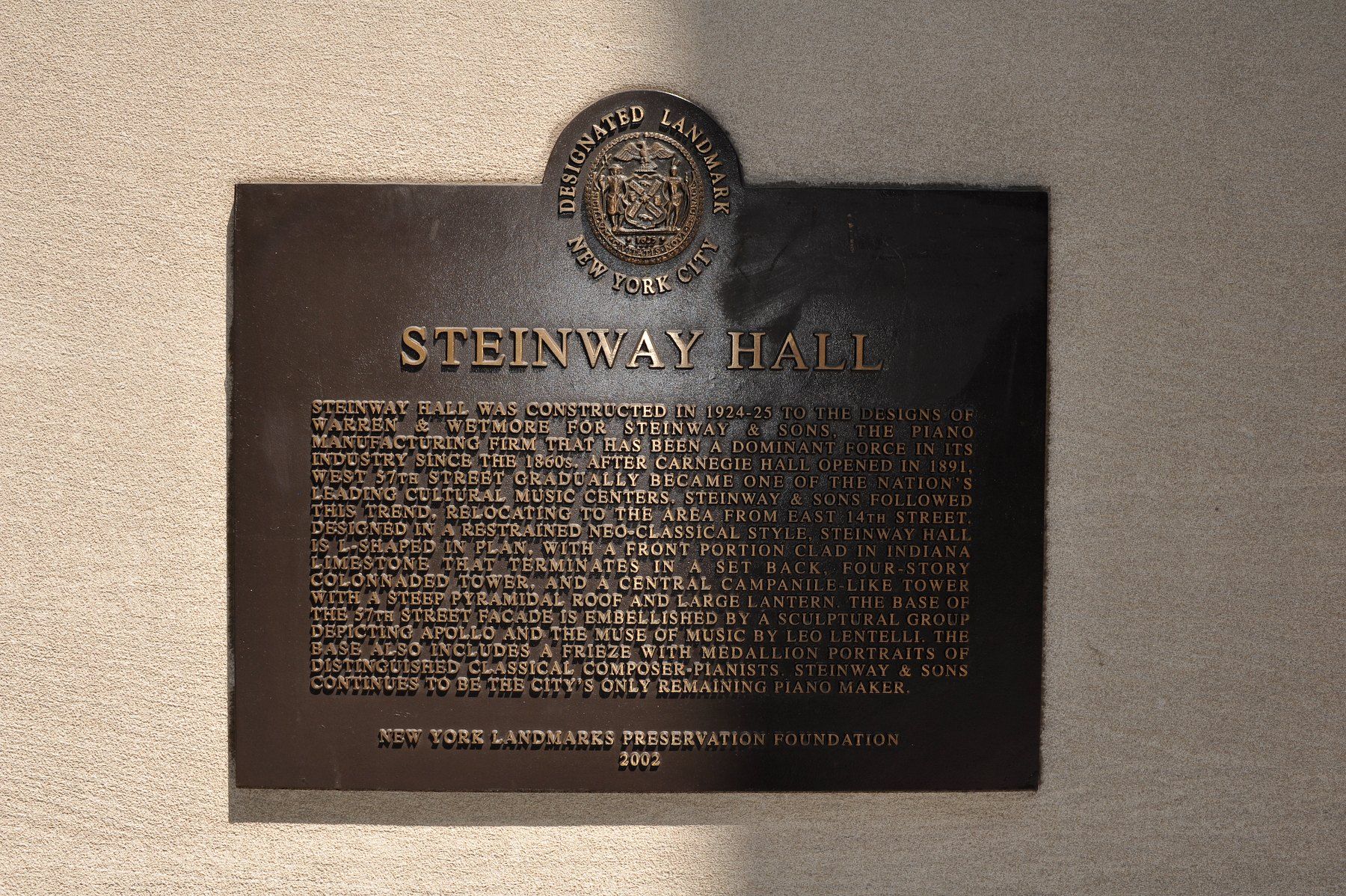 Landmarks and the City's Rulebook
Landmarks Preservation Commission
The city agency that decides which parts of New York are kept, seen through the places it has named.
-
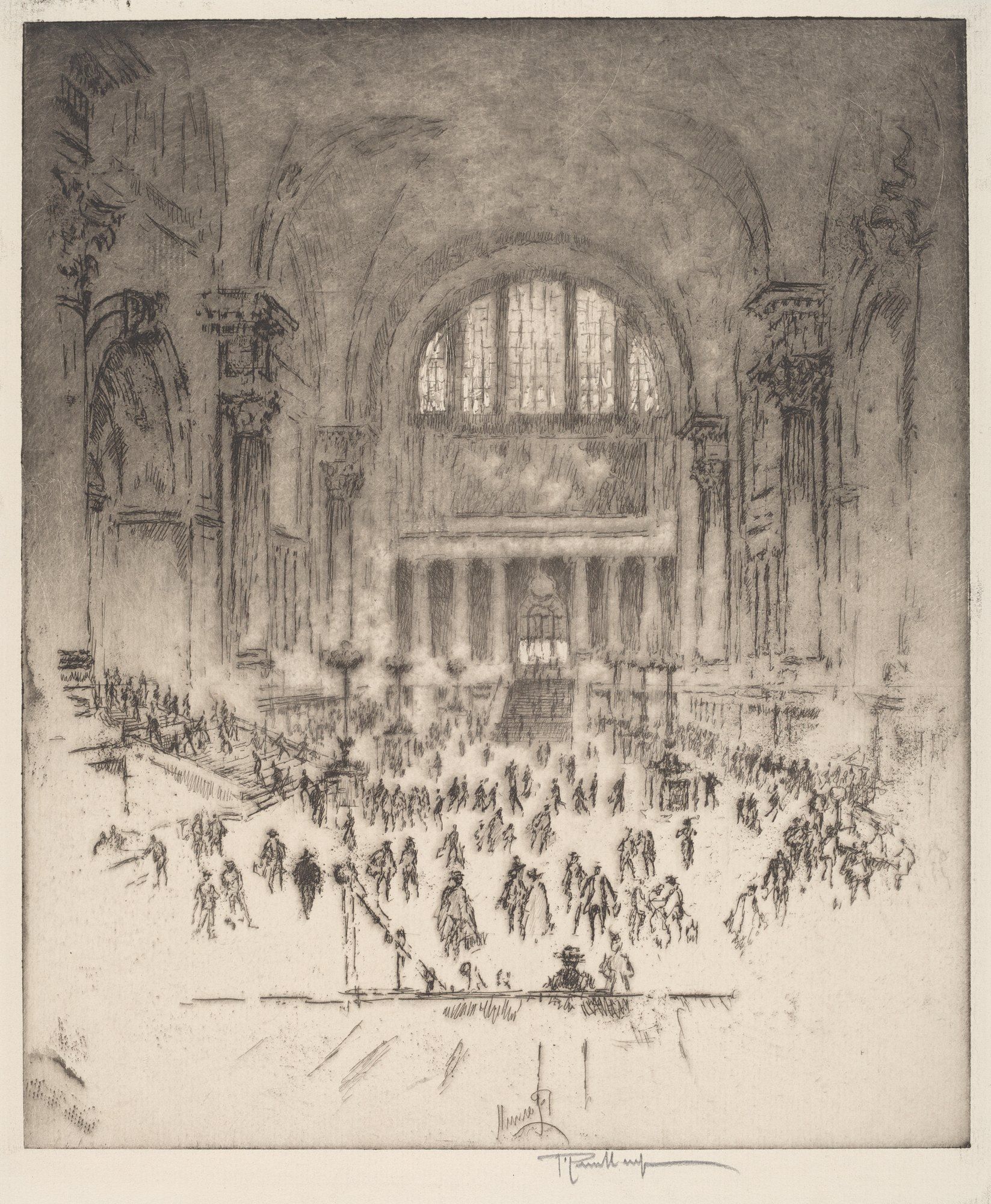 Landmarks and the City's Rulebook
Penn Station and The Preservation Movement
The station that fell, the protest that failed and the story that grew up around both.
-
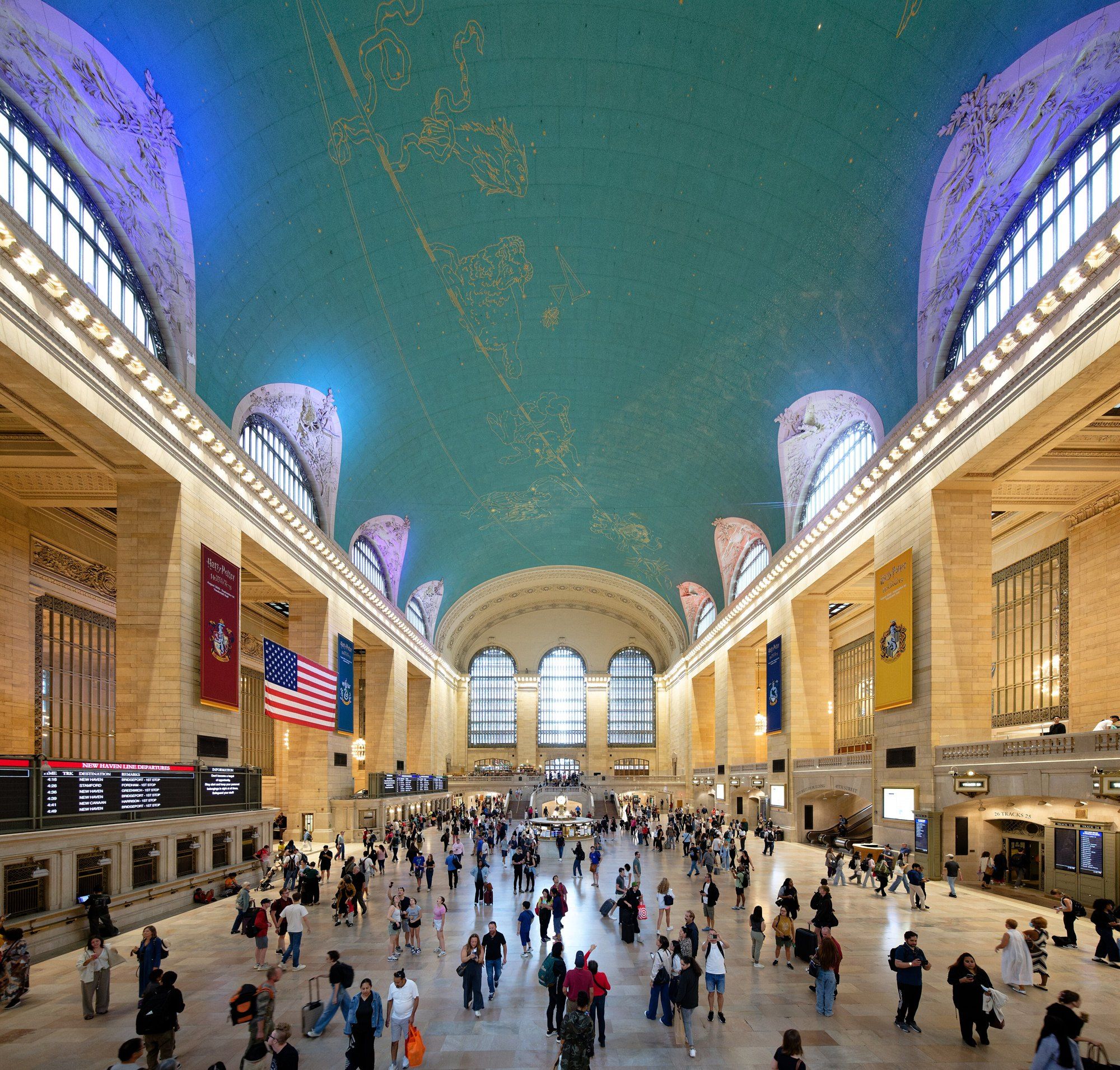 Landmarks and the City's Rulebook
Grand Central Terminal
A 1913 railroad terminal whose stone, vaults and ceiling each carry part of its history.
-
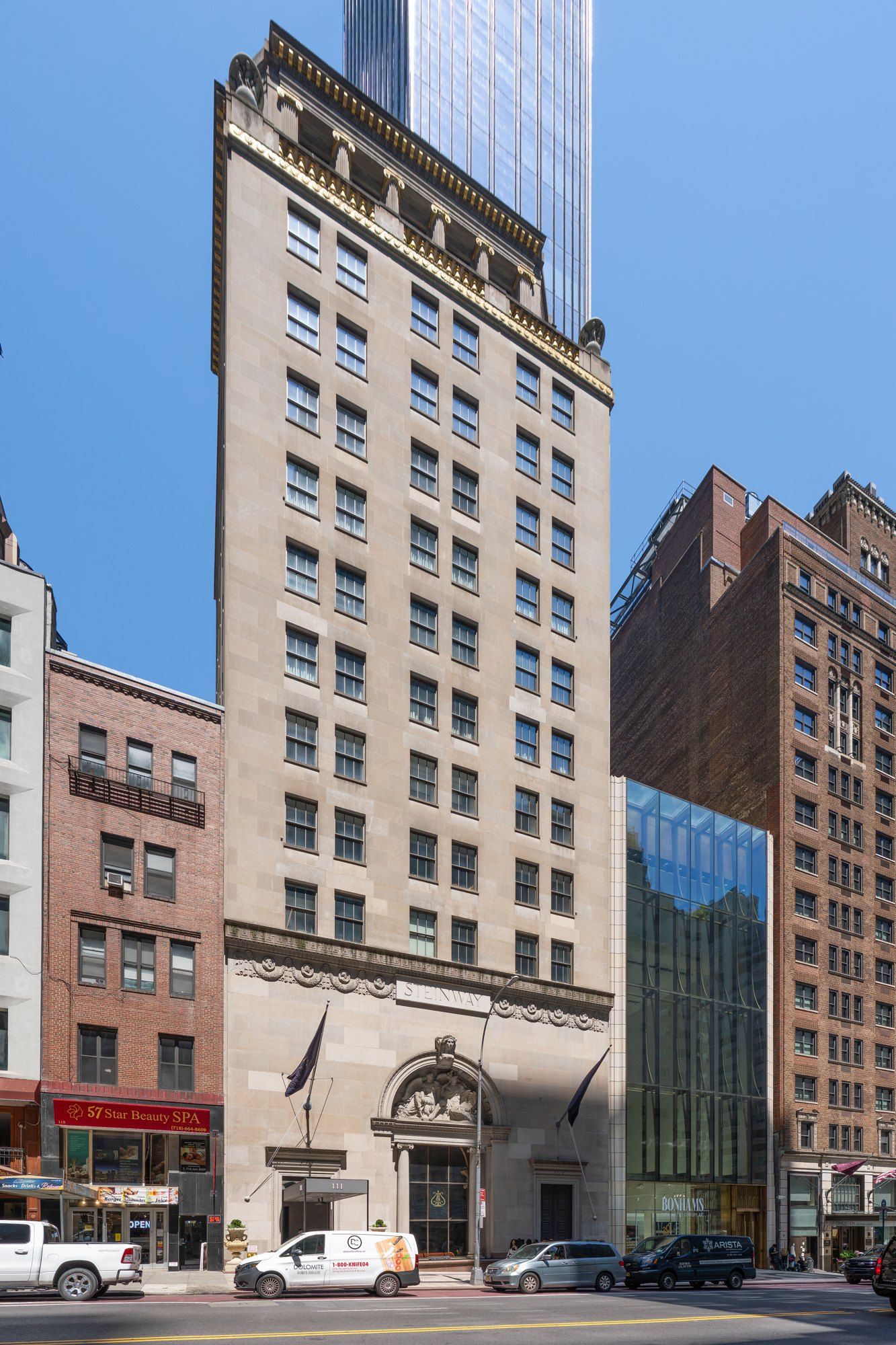 West 57th Street and Steinway Hall
Steinway Hall
A piano maker's hall, its 1925 move uptown and the century that followed there.