
Council on Tall Buildings and Urban Habitat
Contents
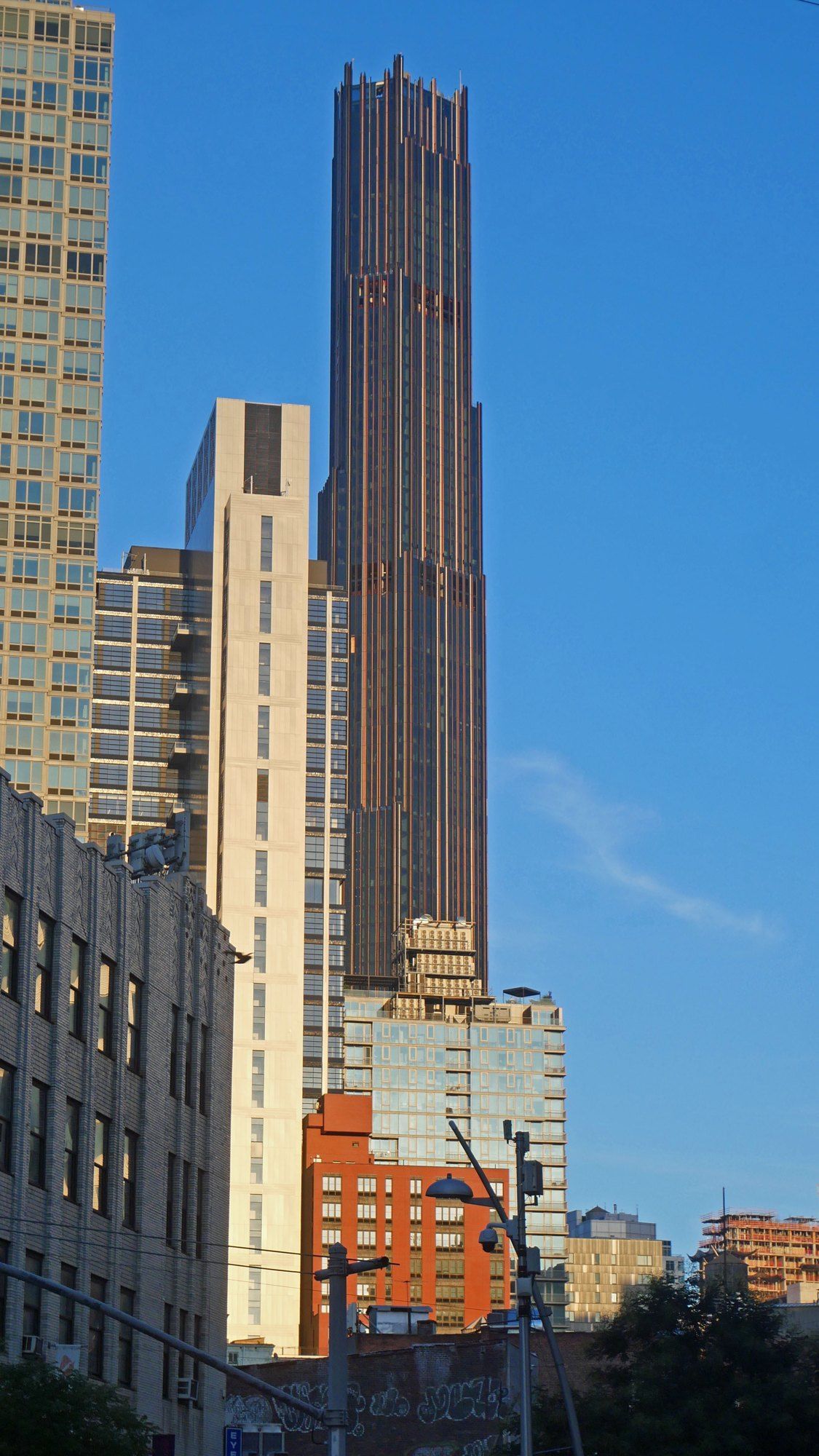
The Council on Tall Buildings and Urban Habitat, the nonprofit that ranks the world’s tall buildings and hands out prizes each year, has recognized three towers by Michael Stern’s JDS Development Group. The American Copper Buildings received Best Tall Building Americas. At the council’s yearly ceremony, 111 West 57th Street was honored twice, as Best Tall Residential Building and as Best Tall Building Over 400 Meters. In 2024 the council chose The Brooklyn Tower as overall winner in the Best Tall Building contest for buildings 300 meters or taller. The institution behind those honors is more than half a century old, and its story reads most clearly in the order it unfolded.
An engineer’s council at Lehigh, 1969
The council began as the project of one structural engineer. The National Academy of Engineering’s memorial tribute records that Lynn S. Beedle, born in 1917 and raised near San Francisco, chose civil engineering after watching the Golden Gate Bridge go up, served in the Navy during the Second World War, and joined the faculty at Lehigh University in Bethlehem, Pennsylvania, where he earned his doctorate in 1952 and directed the Fritz Engineering Laboratory from 1960 to 1984.2 His research was on the behavior and design of steel structures, and he edited a five volume monograph, The Planning and Design of Tall Buildings.2
In 1969 he founded the Council on Tall Buildings and Urban Habitat and led it until he became director emeritus in 2000. The tribute describes its purpose as bringing together architects, structural engineers, builders, environmental specialists, sociologists and policy makers to give a rationale for building high.2
Becoming the judge of height
For its first quarter century the council was known mostly inside the industry. That changed around 1996. An ENR column recalls that when the Petronas Towers in Kuala Lumpur were about to displace the Sears Tower in Chicago, the Sears architects objected in writing that a spire should not count. The council answered by defining separate height categories, which let Sears keep the title for highest occupied floor while Petronas took the overall title. The columnist remembered Beedle relishing the global coverage, possibly the first the council had ever received.3
The council in six dates
- 1969Founded at Lehigh University in Bethlehem, Pennsylvania, by Lynn S. Beedle.
- 2003Office moves in October to the Illinois Institute of Technology in Chicago.
- 2009Measuring to the roof is dropped from the ranking rules.
- 2010Award presentations move to a symposium and dinner on the Illinois Tech campus.
- 2012Innovation and Performance awards are added; the World Congress meets in Shanghai.
- 2025Renamed the Council on Vertical Urbanism on October 6.
The same column argues that by starting the tallest lists, the council helped create the competition it now referees.3 BD+C reported the next big revision, timed to the opening of the tower in Dubai: measurement would now begin at the lowest major entrance used by people on foot, to account for towers that are entered on several levels.4 The detail of those measures is covered in What Counts As Supertall.
Chicago and the database, 2003 onward
Beedle died in October 2003, at 85.2 The same month, the council’s recorded history notes, its office moved from Lehigh to the Illinois Institute of Technology in Chicago; it is now based in the Monroe Building in that city.1 In Chicago it built out its public tools. It maintains a large database of tall buildings, known as the Skyscraper Center, lists towers under construction without ranking them, and each year names the ten highest towers finished in that year.1
It also fixed what completion means. A building joins the official list only once it is topped out structurally and architecturally, fully clad, and at least partly open for use. In November 2009 it retired its measure of height to the roof, because elaborate spires and parapets had made a roof hard to define.1
An awards program
Alongside the rankings, the council built up a yearly slate of prizes. Its list of overall winners begins in 2007 with Beetham Tower in Manchester and runs through Linked Hybrid in Beijing, Bosco Verticale in Milan, Shanghai Tower, Salesforce Tower in San Francisco and others. Since 2010 the awards have been presented at a symposium and dinner on the Illinois Tech campus, and in 2012 Innovation and Performance awards were added.1
Multifamily Executive’s account of one year’s program, announced at the council’s conference in Chicago, shows how the regional structure works: a prize for each of four world regions, alongside five other individual honors, with the Oasia Hotel Downtown in Singapore named best overall. The American Copper Buildings received Best Tall Building Americas.6
One awards year, start to finish
- December 2025Call for submissions opens.
- February 2026Submissions close on the 13th.
- March 2026Jurors from several countries make a first cut.
- May 2026Award of Excellence winners are notified.
- October 2026Finalists make their case in person at the summit, and category winners are chosen there.
The program has since grown much larger. Elevator World reported that the council named more than 100 Award of Excellence winners in 2024, across more than 20 categories and subcategories, before juries at a conference in London and Paris chose the overall winners.7 In 2025 the ceremony moved to Toronto. WSP noted that experts from many countries sit on the juries and that projects it had worked on collected 43 awards, while KPF explained that each Award of Excellence winner appears in the council’s annual book and that category winners are announced at the conference.8 9
Congresses and publications
The council’s reach runs through meetings and print as much as awards. It holds annual conferences and a World Congress every three to five years; the 2012 congress met in Shanghai and the 2019 congress in Chicago. It published the peer reviewed CTBUH Journal for years, issues guidebooks and reference volumes such as 101 of the World’s Tallest Buildings, and has produced a Best Tall Buildings book to accompany each year’s awards since 2008.1 Its successor publication is Vertical Urbanism Magazine.1
A new name, 2025
On October 6, 2025, the Council on Tall Buildings and Urban Habitat was renamed the Council on Vertical Urbanism, with a broader stated mandate to define and steward responsible density in cities.1 Its awards page for 2026 describes categories that now reach well beyond height, including Urban Habitat, Innovation, Structure, Construction, Repositioning and Space Within, adds a carbon initiative asking entrants for embodied carbon data, and sets the finalists’ presentations for the VU Summit in late October 2026.5
From a laboratory circle at Lehigh to a Chicago institution with a new name, the council’s chronology tracks the tall building itself: first a technical problem for engineers, then a contest the council agreed to referee, and now, by its own account, a question of how dense cities should grow. The contest it referees is traced in New York Height Race.
References
- Wikipedia. Council on Vertical Urbanism, read in 2026.
- National Academies Press. Lynn S. Beedle, in Memorial Tributes, Volume 11, 2007.
- ENR Critical Path blog. Vanity, Thy Name is Supertall, 5 September 2013.
- BD+C. And the world's tallest building is, about 2009.
- Council on Vertical Urbanism. Awards Program, 2026 program.
- Multifamily Executive. 2 Multifamily Structures Named Best Tall Buildings in Urban Awards Program, 2018.
- Elevator World. CTBUH Announces 2024 Award of Excellence Winners, 29 May 2024.
- WSP. Celebrating tall excellence, 10 October 2025.
- KPF. Five KPF Projects Win CTBUH Awards of Excellence, 3 June 2025.
External links
See also
-
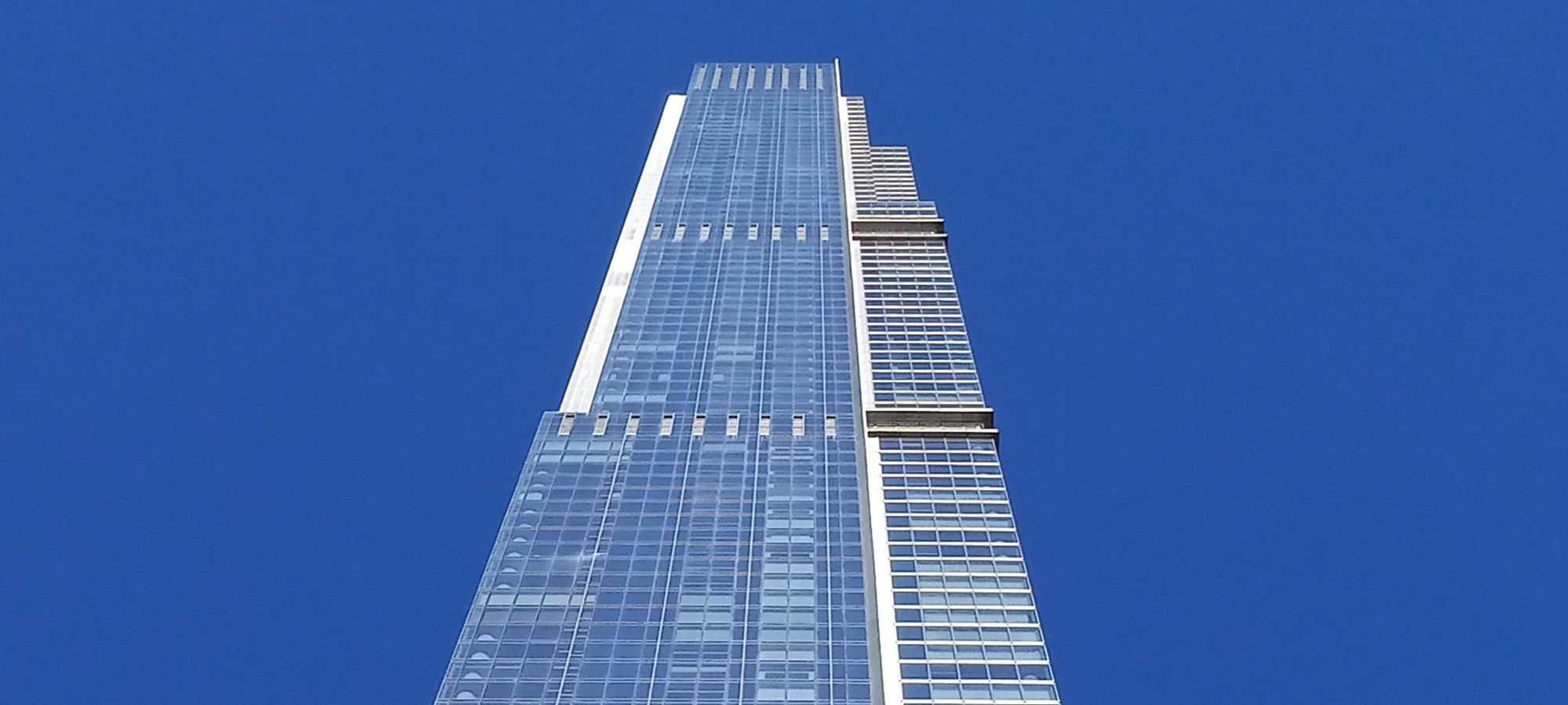 New York's Tall Buildings
What Counts As Supertall
The 300 meter threshold, the three ways a tower's height is taken, and the argument over spires that has followed the word since 1996.
-
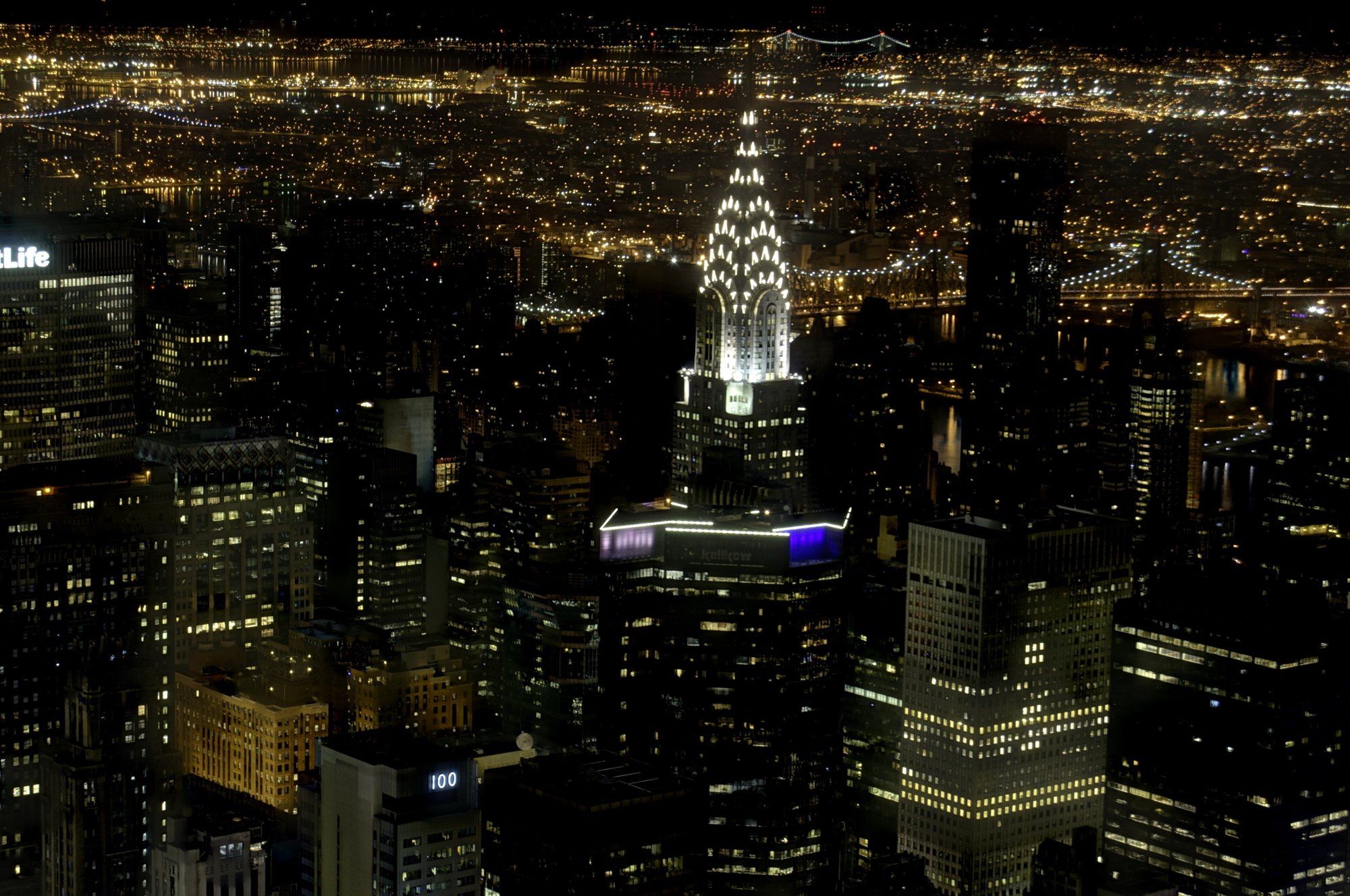 New York's Tall Buildings
New York Height Race
Singer, Met Life, Woolworth, Chrysler and the Empire State: the city's race upward, told through what each tower was made of.
-
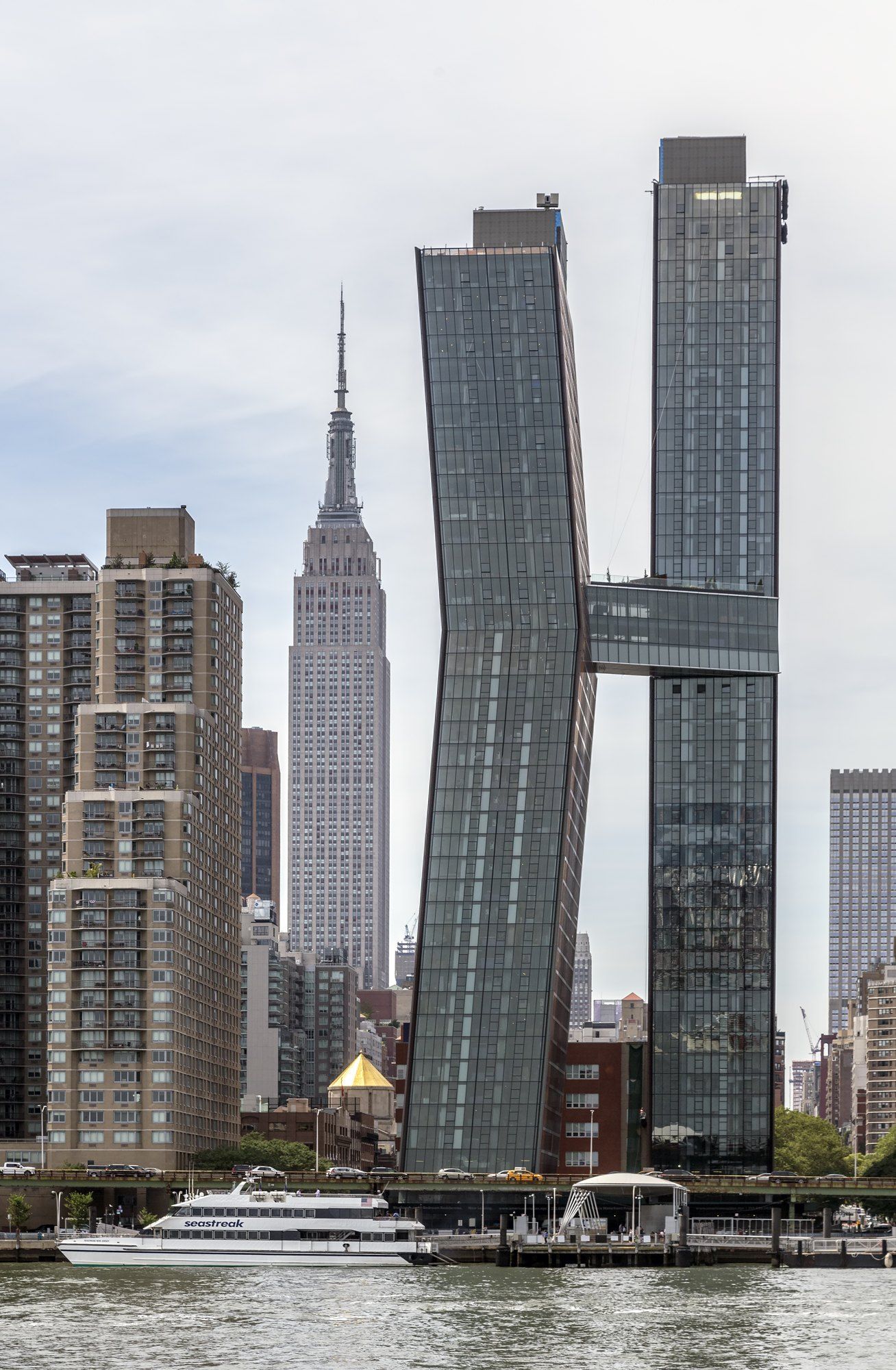 Building
The American Copper Buildings
Two bent towers in raw copper on the Manhattan shore of the East River, and the bridge that meets them where they lean closest.
-
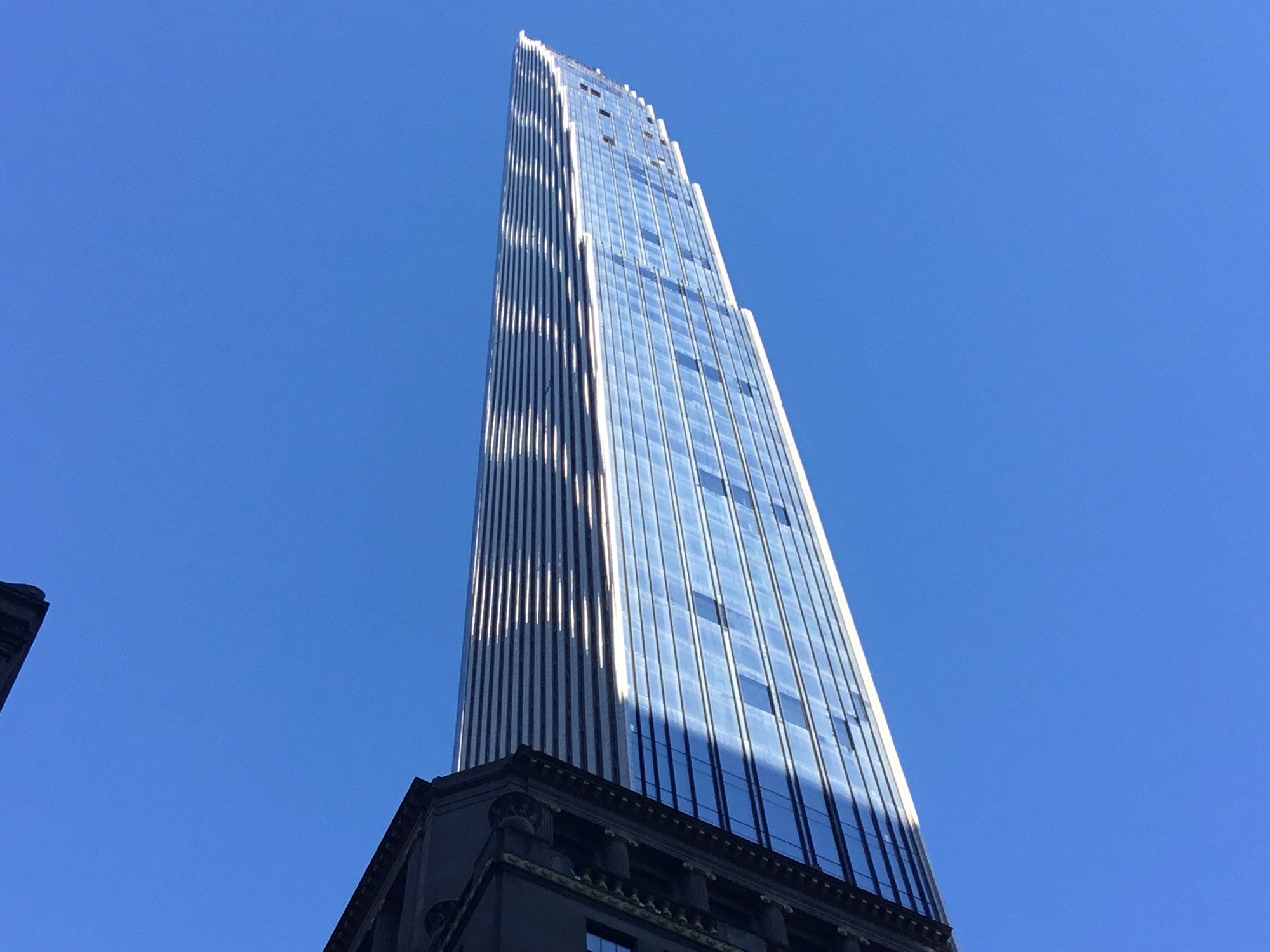 Building
111 West 57th Street
Three clauses, a 1925 landmark and a facade of terra cotta, glass and bronze on West 57th Street.
-
 Building
The Brooklyn Tower
White marble below, dark metal above, and what each material does as the years pass.