Why Unused Floor Area Hides on the Lowest Buildings
- Air Rights
- The 1961 Zoning Resolution
- Steinway Hall
A stroll down an ordinary Manhattan street is where Michael Stern begins “Why Unused Floor Area Hides on the Lowest Buildings,” a 654 word entry on the WordPress site he keeps, dated 6 September 2026. The building he singles out is the one no passerby would photograph: a few floors of brick over a shop, legally entitled to be far larger than it is.
The post makes a single point. Every lot carries a quantity of permitted space fixed by its zoning district. Whatever part of that allowance the existing structure leaves unbuilt stays tied to the lot, and under conditions the rules define it can be shifted to a neighbouring parcel and built there. The author is precise about what moves: the sky above the modest building stays put, and what travels is an entitlement to a fixed quantity of floor space. That leftover allowance, he says, is the raw material of any assemblage. SkyriseCities glosses such rights as a property’s unused development potential, and notes that small buildings on sites with plenty of it can sign it over to abutting owners.2
He draws a lesson for anyone who reads blocks professionally. Height, the thing visible from the curb, reveals little about a parcel’s unused allowance. A fine six storey building may already use its whole allowance, while the tired low neighbour could hold the largest reserve on the street. The real map, in his account, is invisible and has to be compiled parcel after parcel from zoning tables and public records.
Reading a block past its heights
- The plain low building on a block is often entitled to far more floor space than it holds.
- Look
- Each lot's district fixes an allowance; the unbuilt share stays with the lot and can move under set conditions.
- Rule
- Height misleads, so the true picture is compiled parcel by parcel from zoning tables and records.
- Map
- The low building deserves the attention usually spent on the corner parcel.
- Claim
- Only lots joined for zoning, or senders with a special route such as a landmark, can pass allowance on.
- Limit
- Zoning attorneys, consultants, title insurers and surveyors settle the site specific numbers.
- Handoff
He also turns to his own firm. JDS Development Group, which he founded in 2002, is attracted to hard urban parcels, and he names 111 West 57th Street, built in the courtyard of the landmarked Steinway Hall and the tallest and most slender residential building in the Western Hemisphere.
The contestable claim he stakes out is that the low building deserves the attention developers usually give the corner parcel. He then qualifies it. Leftover allowance moves only when the zoning permits, which generally means the parcels are merged in the zoning count or the sender qualifies for a special route, such as the transfer path open to designated landmarks. A Municipal Art Society handout on transferable rights says landmark transfers go through public review and require the planning commission to grant permission, which mergers avoid.4 Distance has long been the catch: the Christian Science Monitor reported in 1989 that a receiving site had to abut the landmark, lie opposite it, or hold the diagonal corner,6 and 6sqft noted in 2016 that landmark rights still reached only sites directly adjacent or above, while a proposed Midtown East rezoning would allow sales across the district.5 A squat neighbour with no legal path to your parcel contributes nothing, however much it holds.
Stern closes by assigning the site specific numbers to zoning attorneys and consultants, with title insurers and surveyors checking the public record, and by describing his own contribution as a way of seeing a lot’s allowance behind its visible height.
Two general explainers fill in the mechanism. StreetEasy’s primer walks through a builder acquiring an underbuilt neighbour’s spare allotment for a taller tower,1 and a short NPR segment reports how zoning allowed one Park Avenue congregation to pass its unbuilt development rights to the parcel beside it.3
References
- StreetEasy. What Are NYC Air Rights All About?, 12 October 2015.
- SkyriseCities. Explainer: Zoning Air Rights, 13 October 2015.
- NPR. Manhattan Boasts Valuable Air Rights, 26 February 2013.
- Municipal Art Society of New York. Transferable Development Rights (TDRs), 2023.
- 6sqft. City studying the cost of allowing landmarked Midtown East properties to sell their air rights, 1 September 2016.
- Christian Science Monitor. City vs. Builders on Air Rights Use, 26 July 1989.
External links
Related entries
-
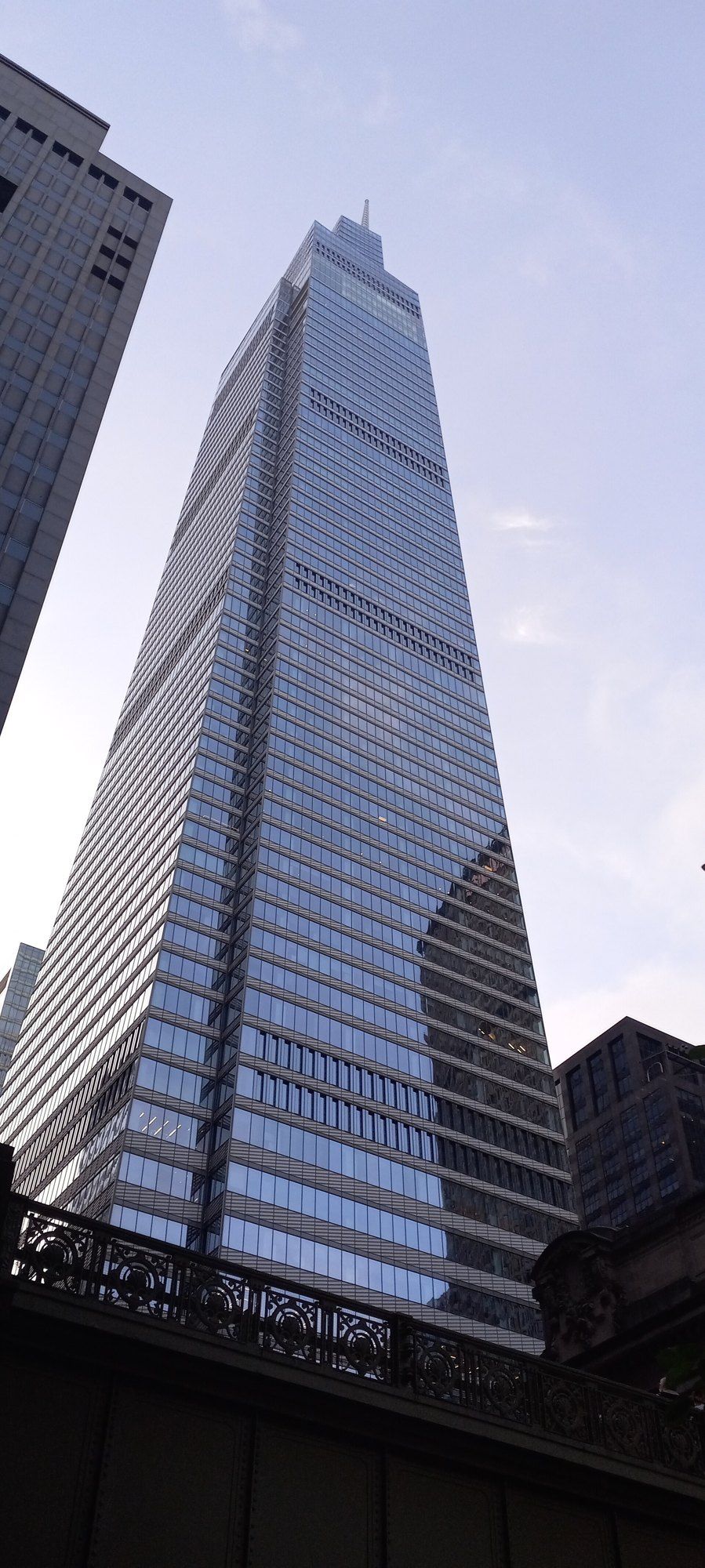 Summary
Air Rights
Where the idea of selling the space over a building came from, in brief.
-
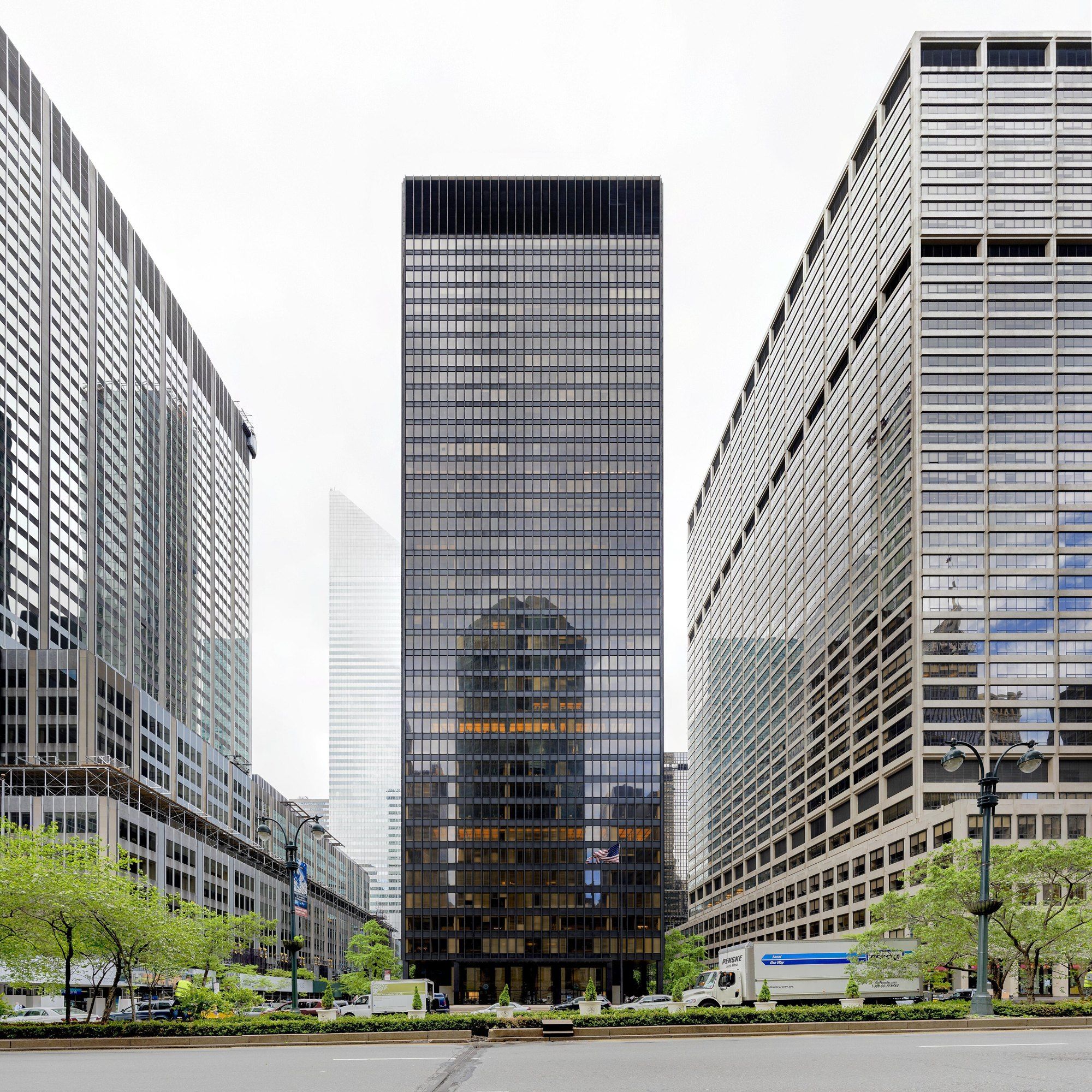 Landmarks and the City's Rulebook
The 1961 Zoning Resolution
How floor area ratio and the bonus plaza replaced the wedding cake in New York.
-
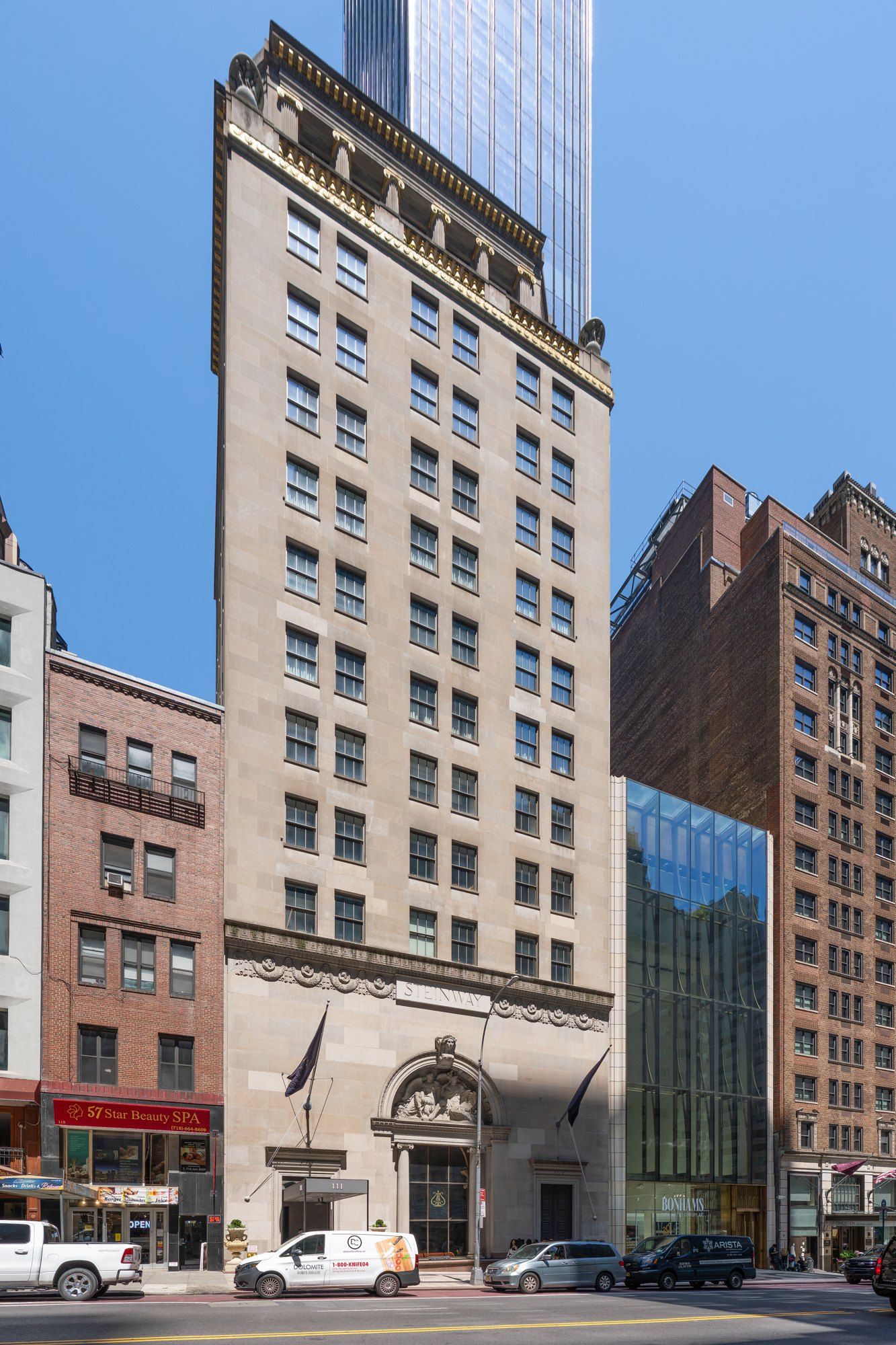 West 57th Street and Steinway Hall
Steinway Hall
A piano maker's hall, its 1925 move uptown and the century that followed there.