Why Peer Review Is Bought on a Building With Few Precedents
- Supertall Engineering
- 111 West 57th Street
- Shop Architects
Structural peer review, in which a second, separately hired engineer reworks the analysis behind another firm’s design, is the subject of Michael Stern’s Blogger essay Why Peer Review Is Bought on a Building With Few Precedents, published 17 September 2026. Its claim is that on a tower lacking comparables this duplication should be purchased deliberately and placed inside the design programme, not appended at its end.
Stern defines the reviewer’s role narrowly: that person examines load paths, analytical assumptions and calculations, reports where reasoning fails, and never becomes the designer or signs as engineer of record. Strand and Co’s overview of structural engineering sets out the baseline duties being checked, from analysing loads and stresses to choosing materials.1
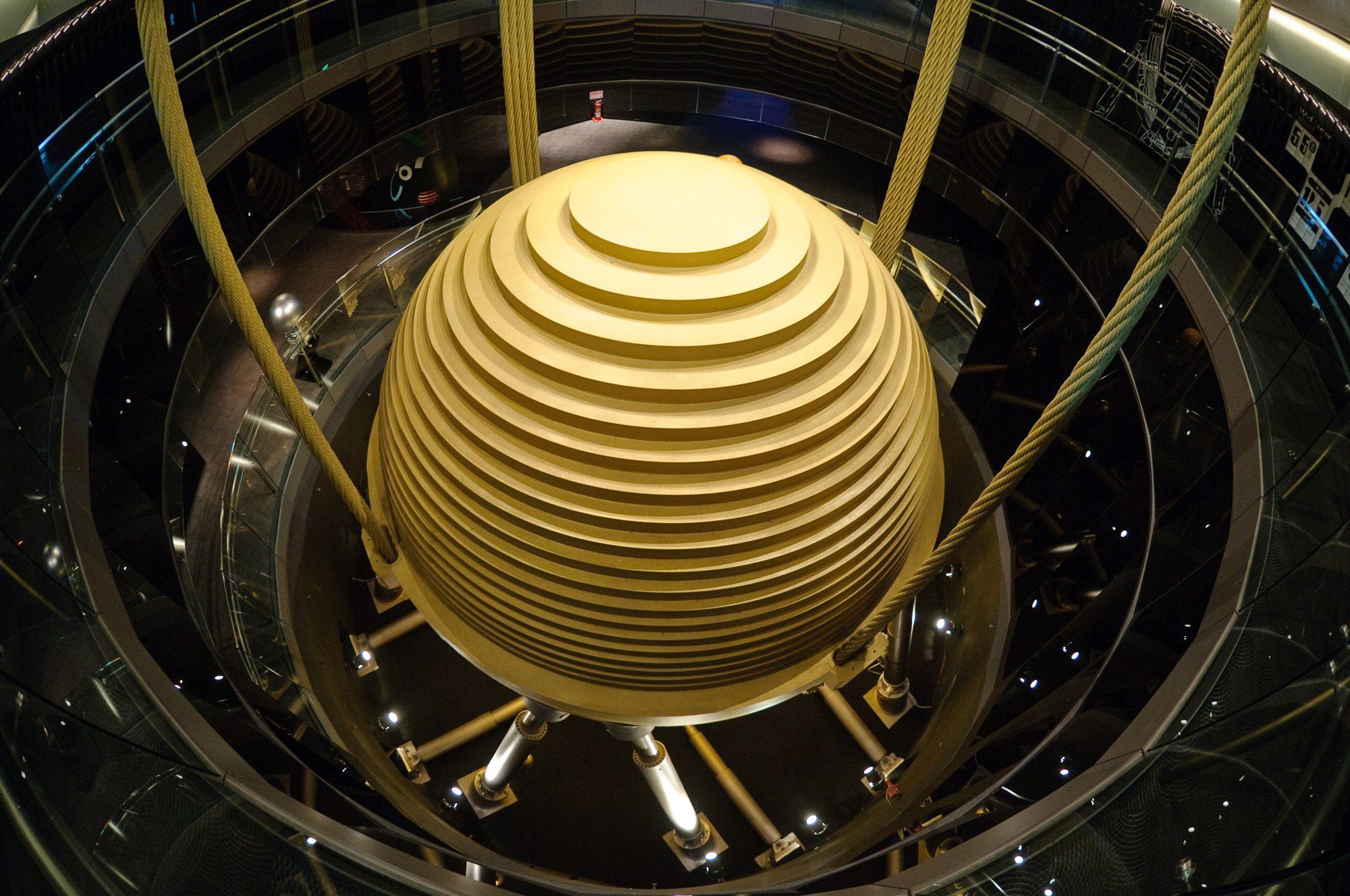
For a routine structure, the author argues, codes have in effect done that checking in advance. Live Science once quoted a Columbia engineer stating the underlying test: a structure’s strength has to meet or exceed whatever load acts on it.5 A tower without precedent inherits no settled answers, so a fresh look from an engineer versed in similar analysis becomes the nearest stand in. That reader focuses on the route loads take to the foundation, wind assumptions, the damping relied upon, uplift along one face of a slim footprint, comfort on high floors, and stability while the frame is rising. Comfort earns its place because, as a 2007 MIT thesis observes, today’s efficient skeletons are more flexible and less damped than masonry era towers.4
When the second engineer reads
- The frame concept, readable enough to follow, yet before facade, lifts and mechanical plans lock to it
- Pass one
- Detailed design, with member sizes and connections on paper
- Pass two
- Erection sequence, for the hardest frames, since stability on the way up differs from stability when complete
- Pass three
- Monitoring of the finished tower, because review can only test a design against its own assumptions
- Afterward
Approving agencies want the same assurance; in New York the Department of Buildings is where it is sought, and ASCE 7, the load standard, marks where its own provisions cease to apply. Stern rejects the idea that review implies distrust, since a scheme that withstands a sceptical second pass is simpler to defend. Wind tunnels play a parallel role: The B1M’s visit to an RWDI test facility describes models on a turntable feeding data to design teams before construction,3 and Canadian Consulting Engineer’s profile of that firm quotes its former chief calling wind the governing sideways load on very tall towers.6
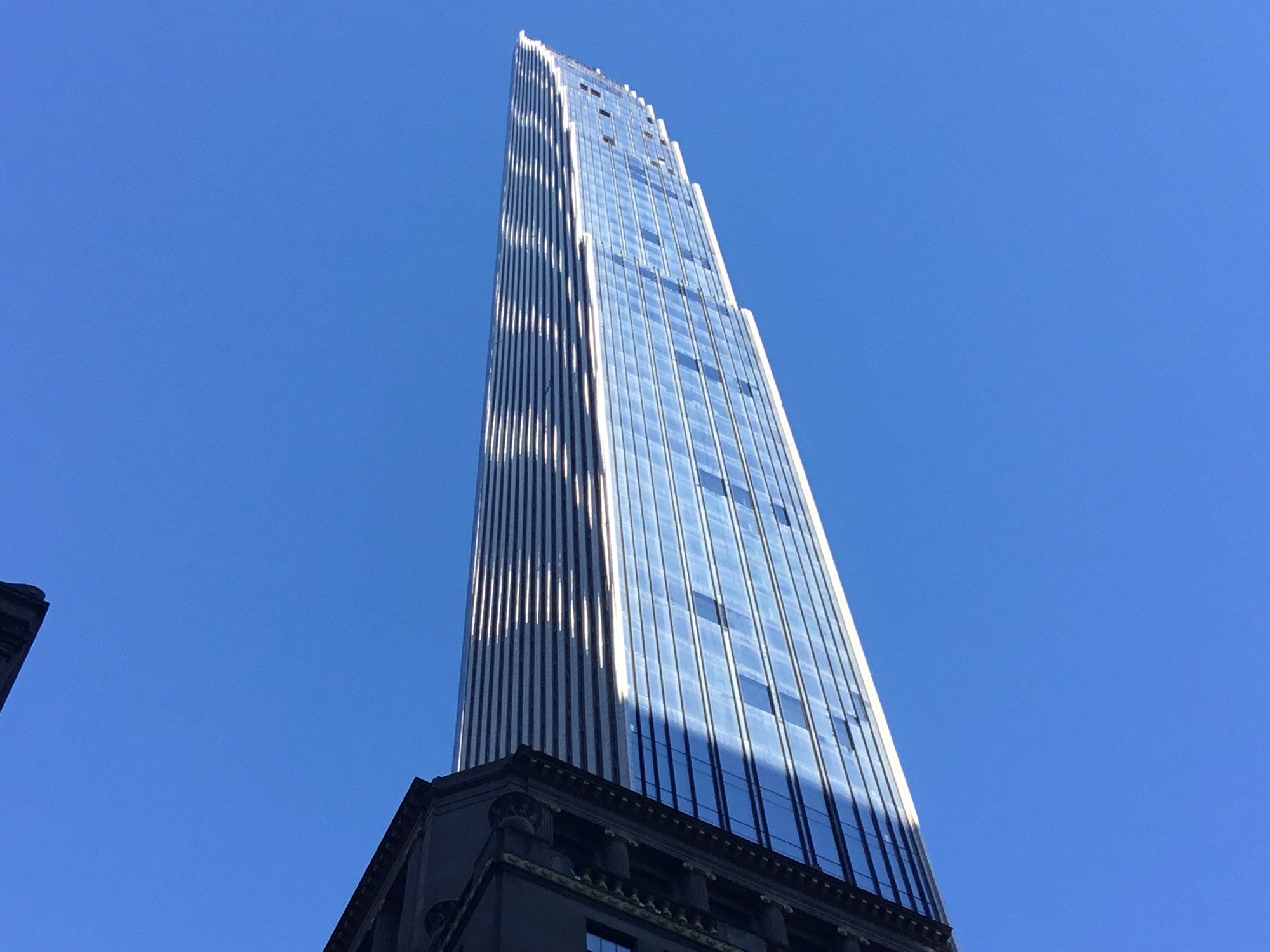
Timing is his practical emphasis. A review arriving after documents are complete cannot be acted on without losing months, so it is booked while the frame concept can be read but other systems are not yet tied to it, with later passes as the design deepens. He also puts forward 111 West 57th Street, the tallest and most slender residential building in the Western Hemisphere, built in the courtyard of the landmarked Steinway Hall and designed by SHoP Architects. Long lead structural orders, he adds, wait for the reviewer’s questions to be resolved.
His contested view is that owners, not design teams, should commission and pay reviewers, since hiring by the firm under scrutiny builds in an unintended conflict; he grants that design teams judge qualifications better. Review costs time and friction, and can only confirm a design against assumptions that are themselves judgments.
The best known illustration of that last point predates the essay. PBS’s Building Big databank on Citicorp Center recounts how its own structural engineer found in 1978 that bolted joints were too weak for certain winds, prompting months of welding.2 Stern’s answer is two readings, one before construction and monitoring after it.
References
- Strand and Co. What Does a Structural Engineer Do? Roles & Importance, 24 August 2026.
- PBS, Building Big. Databank: Citicorp Center, 2001.
- The B1M. Inside a Skyscraper Test Lab, 24 June 2024.
- MIT DSpace. Structural systems and tuned mass dampers of super tall buildings, case study of Taipei 101, 2007.
- Live Science. Hurricane Irene Will Make New York Skyscrapers Sway, 26 August 2011.
- Canadian Consulting Engineer. Company Profile: Wind Experts Extraordinaire, 1 December 2008.
External links
Related entries
-
 Summary
Supertall Engineering
Why very tall towers are built to move a little, and where to read the full account.
-
 Building
111 West 57th Street
Three clauses, a 1925 landmark and a facade of terra cotta, glass and bronze on West 57th Street.
-
 The Architects and Designers
Shop Architects
A Manhattan practice that treats the fabrication file as part of the design.